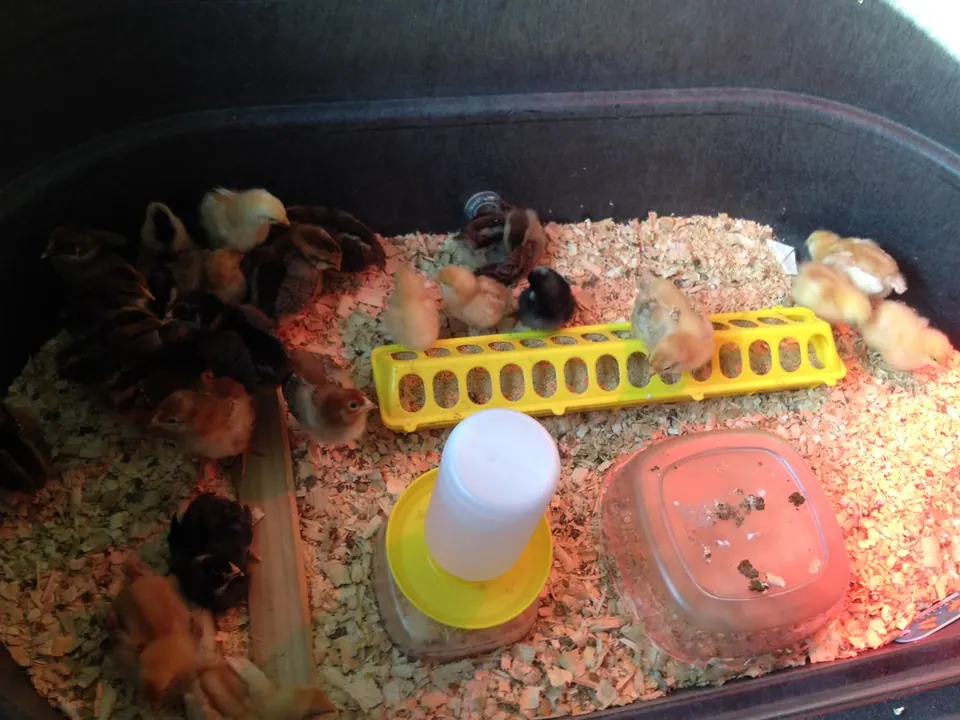
- A brooder heat plate warms chicks by contact, like a hen, and draws a fraction of a heat lamp's power: 15–42 W for most plates here versus 250 W for a typical lamp bulb.
- RentACoop 12x12 and Premier 1 12x12 are the well-documented 20-chick plates; go 16 x 16 for 30 chicks.
- Brinsea EcoGlow Safety 1200 runs at 18 W low voltage and lists 35 newly hatched or 20 older chicks.
- Chick ratings are for day-olds. As chicks grow, fewer fit under one plate, so size up or add a second plate.
The best brooder heat plate is a low-wattage panel on adjustable legs that chicks walk under to warm up, and walk away from when they are warm enough. It replaces an overhead heat lamp, which heats air and bedding and is a known cause of coop and garage fires.
We compared nine plates from seven brands on listed size, wattage, chick rating, height range and safety features. One limit to know up front: maker chick counts are for newly hatched chicks, and only Brinsea gives a separate figure for older chicks.
Our picks
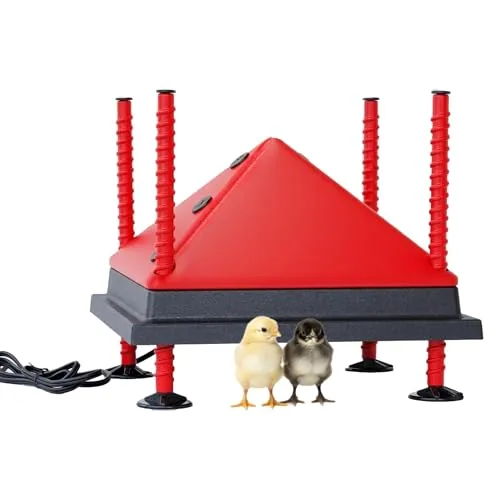
RentACoop 12x12 Heating Plate, Anti-Roost Cone
- Chicks
- Up to 20 chicks
- Heated area
- 12 x 12 in
- Wattage
- 22 W
- Height adjustment
- 25 settings, 1–9 in, tiltable
RentACoop's 12 x 12 in plate draws 22 W, warms up to 20 chicks per the maker, and offers 25 height settings from 1 to 9 in plus tilt, so you can make a warm end and a cool end. A foldable anti-roost cone keeps chicks and droppings off the top. RentACoop says the center underside reaches about 107°F.
Best for: A typical first batch of 10–20 chicks
Skip if: You are brooding 25 or more
- 25 height settings, 1–9 in
- Tilts for a gradient
- Anti-roost cone included
- Fixed output, no thermostat
- Rating is for newly hatched chicks
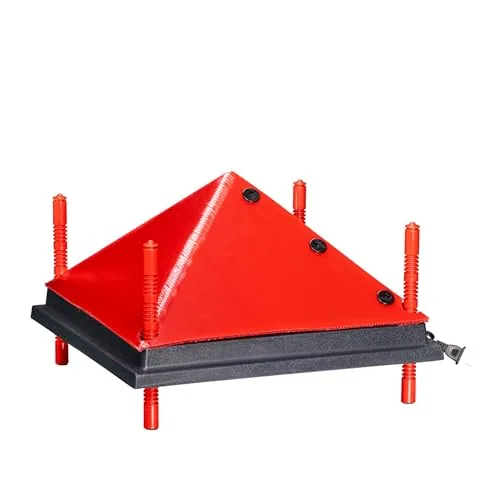
RentACoop 16x16 Heating Plate, Up to 30 Chicks
- Chicks
- Up to 30 chicks
- Heated area
- 16 x 16 in
- Wattage
- 42 W
- Height adjustment
- 25 settings, 1–7 in, tiltable
The RentACoop 16 x 16 in plate uses 42 W and warms up to 30 chicks from hatch day, with 25 height settings from 1 to 7 in, tilt and the foldable anti-roost cone. It comes with a 6 ft cord.
Best for: Larger batches, ducklings, turkey poults
Skip if: Your brooder box is small; the plate needs floor space around it
- 30-chick rating
- Tilt and height adjust
- Cone included
- Height range tops out at 7 in
- Largest footprint
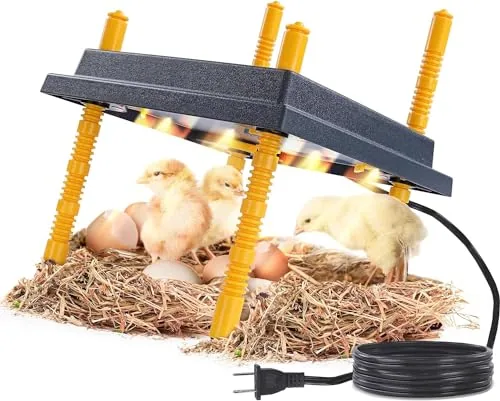
Premier 1 Chick Heating Plate 12x12, 20 Chicks
- Chicks
- Up to 20 chicks
- Heated area
- 12 x 12 in
- Wattage
- 22 W
- Height adjustment
- 1.5–6 in legs
Premier 1's 12 x 12 in plate uses 22 W, warms up to 20 chicks and adjusts from 1.5 to 6 in on its legs. Premier 1 describes the underside as warm but not hot, and positions it as a lower-fire-risk alternative to a heat lamp.
Best for: Keepers who want a plain, proven plate
Skip if: You want a cover in the box; it is sold separately or in kits
- 22 W
- 1.5–6 in legs
- Simple design
- No anti-perch cover with this listing
- No tilt
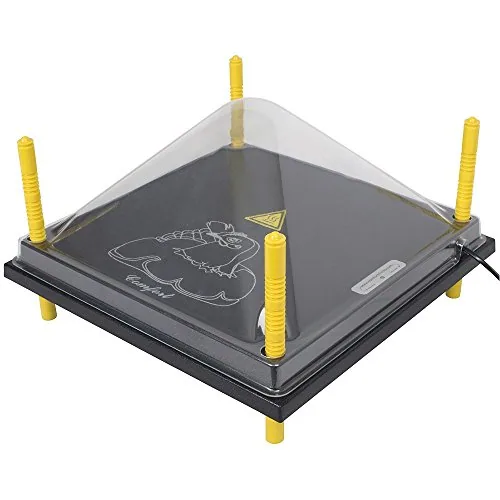
Premier 1 Chick Heating Plate Kit 16x16, 30 Chicks
- Chicks
- Up to 30 chicks
- Heated area
- 16 x 16 in
- Height adjustment
- 1.5–6 in push-button legs
- Includes
- Anti-perch cover; 70 in cord
Premier 1's 16 x 16 in kit warms up to 30 chicks, adjusts 1.5–6 in with push-button legs, and includes a rugged anti-perch cover and a 70 in cord. Premier 1 lists it for ducklings, goslings, poults and keets as well.
Best for: Mixed young poultry in one brooder
Skip if: You need to know wattage; it is not given in the listing
- Anti-perch cover included
- Push-button legs
- Multi-species
- Wattage not listed
- 6 in maximum height
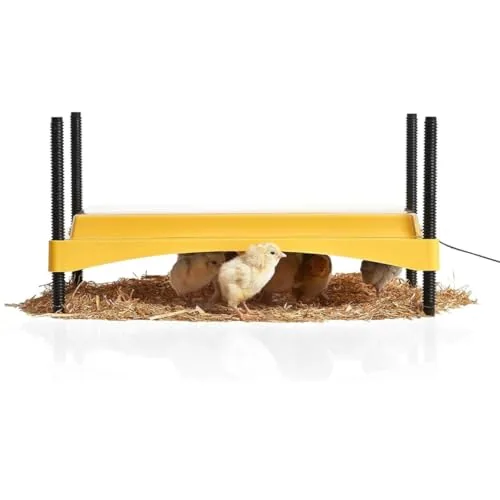
Brinsea EcoGlow Safety 1200 Brooder, Up to 35 Chicks
- Chicks
- Up to 35 newly hatched or 20 older chicks
- Wattage
- 18 W, low voltage
- Height adjustment
- Screw-on legs, height and angle
- Cord
- 10 ft
Brinsea lists the EcoGlow Safety 1200 at 18 W and low voltage, for up to 35 newly hatched or 20 older chicks, with screw-on legs for height and angle, an indicator light, a 10 ft cord, a clear cover for cleaning and a 3-year warranty.
Best for: Families and classrooms who want low-voltage heat
Skip if: Your brooder is in a cold barn; check Brinsea's minimum room temperature first
- Low voltage, 18 W
- Rating for older chicks too
- 10 ft cord
- Check the manual's room-temperature limit
- Heated area size not listed
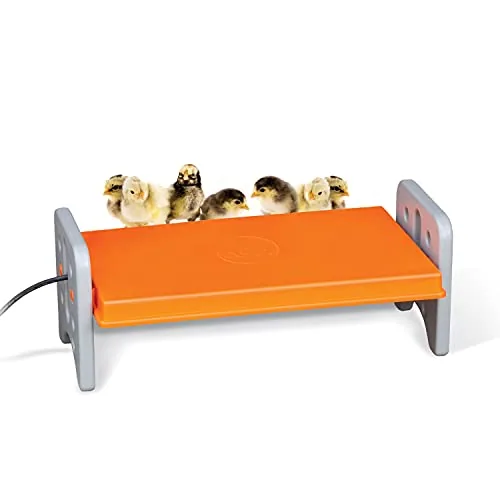
K&H Thermo-Poultry Brooder Plate, Large 40W
- Chicks
- Up to 30 newborn chicks (fewer as they grow)
- Heated area
- 20 x 11.5 x 8 in
- Wattage
- 40 W
- Height adjustment
- Pegged shelf, adjustable
K&H's Thermo-Poultry Brooder Large measures 20 x 11.5 x 8 in, uses 40 W, adjusts on a pegged shelf with no tools, and is recommended for up to 30 newborn chicks, fewer as they grow. K&H says the whole product is MET Labs certified.
Best for: Keepers who want a third-party safety listing
Skip if: You want fine height steps; the shelf is pegged
- MET Labs certified
- Indicator light
- No tools to assemble
- 40 W is on the high side for plates
- Pegged steps, not stepless
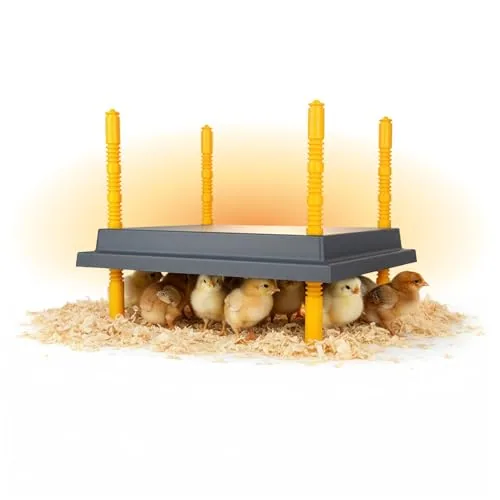
Hatching Time Warmzy 10x10 Brooder Plate, 15W
- Chicks
- 15–20 chicks (by breed and setup)
- Heated area
- 10 x 10 in
- Wattage
- 15 W
- Height adjustment
- Four adjustable legs
Hatching Time's Warmzy is a 10 x 10 in, 15 W plate with four adjustable legs, rated for 15–20 chicks depending on breed and setup. The maker is clear that it warms chicks under the plate rather than heating a whole coop.
Best for: Small batches in a box or tote
Skip if: You want an anti-roost cover included
- 15 W
- Four adjustable legs
- Clear use guidance
- No cover listed
- Smaller warm area
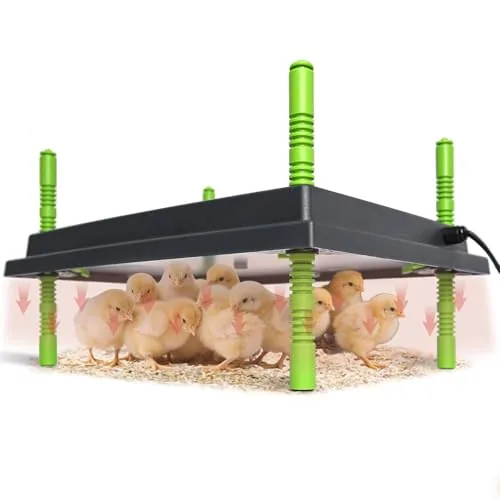
Shaledig 12x16 Chick Brooder Heater Plate, 30W
- Chicks
- Up to 40 chicks (as listed)
- Heated area
- 12 x 16 in
- Wattage
- 30 W
- Height adjustment
- Adjustable
Shaledig's 12 x 16 in plate draws 30 W with a built-in limiter that stops heating at 167°F and restarts below 131°F. The maker says the panel surface holds 122–149°F in rooms of 50–86°F, and lists up to 40 chicks.
Best for: Keepers who want a documented temperature limiter
Skip if: You plan on the listed 40 chicks; that leaves under 5 sq in of plate per chick
- Overheat limiter
- Room-range stated
- Larger plate
- 40-chick claim is generous for the plate size
- Height range not listed
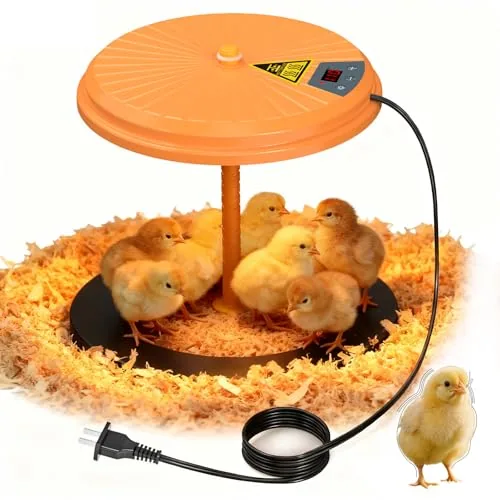
Lewisia 35W Chick Heater Plate, Temperature Control
- Heated area
- 9.4 in diameter plate
- Wattage
- 35 W
- Height adjustment
- Pole up to 7.8 in
- Temperature
- Digital, 50–149°F, overheat cut-off
Lewisia's 35 W plate is 9.4 in across on a pole that rises to 7.8 in, with a digital control from 50 to 149°F and an overheat cut-off. A thermostat lets you turn the heat down instead of only raising the plate.
Best for: Keepers who want to set a temperature
Skip if: You want a large plate for many chicks
- Digital temperature control
- Overheat cut-off
- Tall pole
- Small round plate
- Chick rating not listed
Heat plates compared
| Product | Heated area | Wattage | Height adjustment | Chicks |
|---|---|---|---|---|
| RentACoop 12x12 Heating Plate, Anti-Roost Cone | 12 x 12 in | 22 W | 25 settings, 1–9 in, tiltable | Up to 20 chicks |
| RentACoop 16x16 Heating Plate, Up to 30 Chicks | 16 x 16 in | 42 W | 25 settings, 1–7 in, tiltable | Up to 30 chicks |
| Premier 1 Chick Heating Plate 12x12, 20 Chicks | 12 x 12 in | 22 W | 1.5–6 in legs | Up to 20 chicks |
| Premier 1 Chick Heating Plate Kit 16x16, 30 Chicks | 16 x 16 in | — | 1.5–6 in push-button legs | Up to 30 chicks |
| Brinsea EcoGlow Safety 1200 Brooder, Up to 35 Chicks | — | 18 W, low voltage | Screw-on legs, height and angle | Up to 35 newly hatched or 20 older chicks |
| K&H Thermo-Poultry Brooder Plate, Large 40W | 20 x 11.5 x 8 in | 40 W | Pegged shelf, adjustable | Up to 30 newborn chicks (fewer as they grow) |
| Hatching Time Warmzy 10x10 Brooder Plate, 15W | 10 x 10 in | 15 W | Four adjustable legs | 15–20 chicks (by breed and setup) |
| Shaledig 12x16 Chick Brooder Heater Plate, 30W | 12 x 16 in | 30 W | Adjustable | Up to 40 chicks (as listed) |
| Lewisia 35W Chick Heater Plate, Temperature Control | 9.4 in diameter plate | 35 W | Pole up to 7.8 in | — |
Specs as listed by the maker or seller; check the listing before you buy.
Listed power draw: plates vs a heat lamp bulb
Watts as listed; the heat lamp figure is a listed 250 W infrared bulb
How many chicks fit under a heat plate?
Divide plate area by the maker's chick rating and you get the warm space per day-old chick. A bigger number leaves more room as chicks grow:
Plate area per chick at the maker's rating
| Plate | Area | Rated chicks | Sq in per chick |
|---|---|---|---|
| RentACoop 16x16 | 256 sq in | 30 | 8.5 |
| Premier 1 16x16 | 256 sq in | 30 | 8.5 |
| K&H Large (20 x 11.5) | 230 sq in | 30 | 7.7 |
| RentACoop 12x12 | 144 sq in | 20 | 7.2 |
| Premier 1 12x12 | 144 sq in | 20 | 7.2 |
| Hatching Time Warmzy 10x10 | 100 sq in | 15–20 | 5.0–6.7 |
| Shaledig 12x16 | 192 sq in | 40 | 4.8 |
Source: Calculated by us from listed size and rating
Brinsea is the only maker here to give a second figure for older chicks (35 newly hatched, 20 older), which shows how ratings shrink with age. If your batch is near a plate's limit, buy the next size up or use two plates. The brooder temperature chart includes a heat-plate rating check.
Brooder temperature at chick level, under the heat source
| Chick age | °F | °C | Floor space per chick |
|---|---|---|---|
| Week 1 | 92–95°F | 33–35°C | ¼ sq ft |
| Weeks 2–3 | 85–90°F | 29–32°C | ½ sq ft |
| Weeks 3–5 | 80–85°F | 27–29°C | ¾ sq ft |
| Weeks 5–8 | 70–80°F | 21–27°C | 1 sq ft |
| Week 8 on | Room temperature | — | 1½ sq ft, more for large breeds |
Source: Penn State Extension, Brooding of Domestic Fowl. Watch the chicks too: huddled under the heat means cold, crowded at the edges means too hot.
Why use a heat plate instead of a heat lamp?
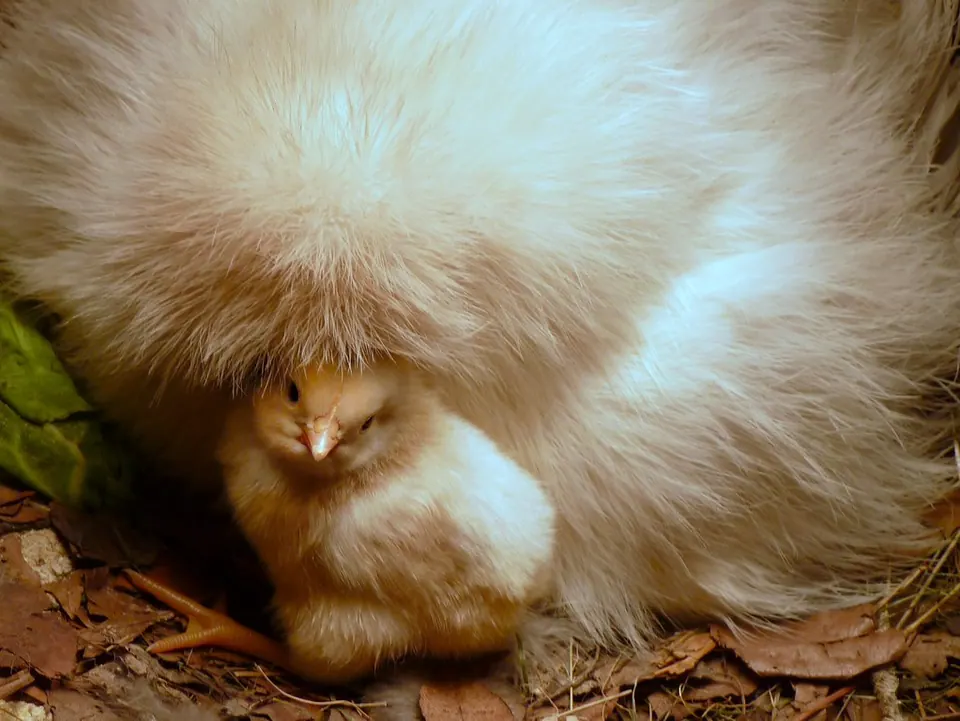
Plates also let chicks keep a normal day and night, since they give no light. The trade-off: a plate warms only what touches it, so a very cold room may be too much for it. Several makers state a minimum room temperature in their manuals. Full detail is in heat plate vs heat lamp and the Brinsea EcoGlow review.
How to set up a heat plate
- Pick the size
Match the rating to your chick count with room to spare, then check the plate fits your brooder with open floor on all sides.
- Set the height
Chicks should just touch the underside with their backs. Tilt one end higher (RentACoop, Brinsea) for a range of sizes.
- Pre-warm and check
Run it 24 hours before chicks arrive. Measure under the plate at chick level; Penn State gives 92–95°F for week 1.
- Watch, then adjust
Spread out and active is right. Huddled and peeping: lower the plate or warm the room. Avoiding the plate: raise it.
- Raise it weekly
Follow the maker's height guide as chicks grow, and add the anti-roost cover so droppings stay off the top.
Heat plate mistakes to avoid
- Buying for the day-old count. Ratings drop as chicks grow.
- Plate too high. Chicks cannot reach the warmth and pile up elsewhere.
- No cover. Chicks roost on top by week 2 and foul the surface.
- Cold garage, no backup. In a very cold room, check the manual's minimum temperature before relying on a plate alone.
- Cord in the litter. Route cords outside the brooder where chicks cannot peck them.
Which heat plate should you choose?
- Up to 20 chicks: RentACoop 12x12 or Premier 1 12x12.
- Up to 30 chicks or ducklings: RentACoop 16x16 or the Premier 1 16x16 kit.
- Low voltage and an older-chick rating: Brinsea EcoGlow Safety 1200.
- Third-party electrical certification: K&H Thermo-Poultry Large.
- Want a thermostat: Lewisia 35W.
- Small tote brooder: Hatching Time Warmzy.
Pair your plate with a pen from best chick brooders, read how to set up a brooder, and browse chicks and brooding or the first flock collection.
For a typical batch of 10–20 chicks, the RentACoop 12x12 is the most adjustable plate here, with 25 height settings, tilt and an anti-roost cone. The Premier 1 12x12 is a simpler alternative, and both makers offer 16 x 16 versions for 30 chicks. If you want low voltage and an honest older-chick rating, choose the Brinsea EcoGlow Safety 1200. Any plate beats an unsecured heat lamp on fire risk.
We compared listed plate size, wattage, chick rating, height range, covers, thermostats and safety listings. Plate area per chick is our calculation from the listed size and rating. Brooder temperatures and space come from Penn State Extension; heat-lamp safety from Penn State, UMN and fire-marshal guidance. We did not brood chicks under these plates or measure their surface temperature.