Calendar

Backyard chicken calendar, month by month

Hatching season, summer heat, molt and fall prep, and winter care: what to do each month in a colder northern or a warmer southern yard, adapted from extension, CDC and USDA guidance.

Updated November 2026 · 11 sources

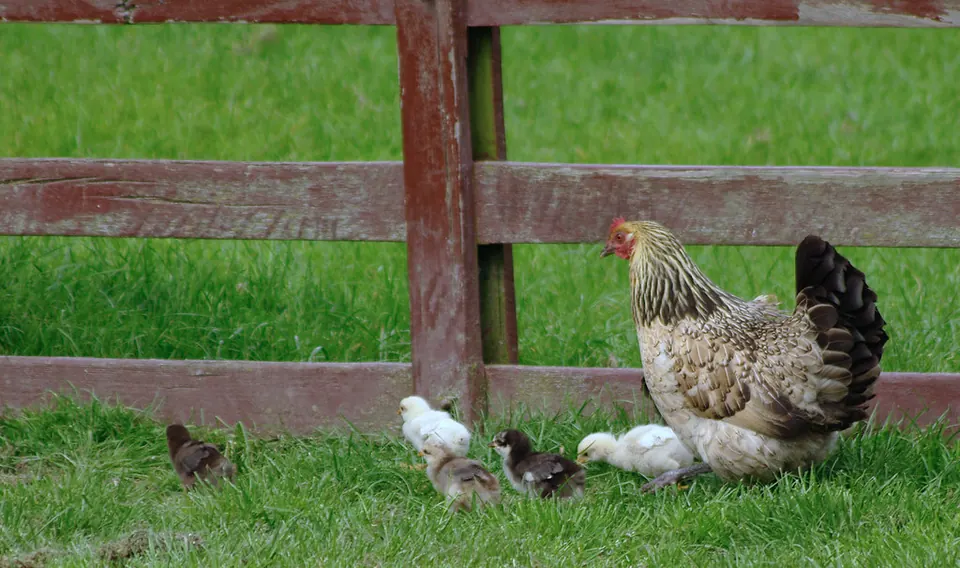
A hen and her chicks foraging on grass by a wooden fence
Photo: possumgirl2, CC BY-SA 2.0, via Flickr
Your weather decidesTiming varies with your climate, elevation and each year’s weather, and these are general reminders adapted from extension, CDC and USDA guidance, not a vet plan. Call a veterinarian or your state poultry lab about sick birds.

This month

November

Winter care

Winter care: before the first hard freeze

Chickens handle cold better than damp. The jobs are liquid water, dry air without drafts and safe heat if you use any.

  • Switch to a heated waterer or base before the first hard freeze Gear
  • Close drafts at roost level but keep ventilation open up high (moisture causes frostbite) How-to
  • If you add heat below 35°F (UMN), use a coop-rated heater, never a loose lamp How-to
  • Fewer eggs in short days is normal; check age, molt, stress and feed before worrying How-to

Timing varies with your climate, elevation and each year’s weather, and these are general reminders adapted from extension, CDC and USDA guidance, not a vet plan. Call a veterinarian or your state poultry lab about sick birds. Full calendar and sources.

The whole year

Colder north · Long, freezing winters (roughly the northern half of the US and higher elevations)

Hatching seasonSummer heatMolt & fall prepWinter care

01JanuaryWinter care

Deep winter: water, dry air and safe heat

  • Switch to a heated waterer or base before the first hard freeze Gear
  • Close drafts at roost level but keep ventilation open up high (moisture causes frostbite) How-to
  • Check combs and wattles for frostbite on the coldest nights How-to
  • Plan this year's flock: how many birds and how much coop space you really have Open tool

02FebruaryHatching season

Hatching season starts: get the incubator ready

  • Order or check your incubator and candler; test-run it for 24 hours Gear
  • Check local rules on hens, roosters and egg sales before you order chicks How-to
  • Plan this year's flock: how many birds and how much coop space you really have Open tool
  • Expect hens to eat up to 25% more feed in cold weather (UMN) Open tool

03MarchHatching season

Peak hatching and chick season

  • Set eggs and mark day 0, candling days, lockdown and hatch day on a calendar Open tool
  • Candle around day 7 and day 14 (chickens) and remove clear or stopped eggs How-to
  • Run the brooder for a day before chicks arrive and check the temperature at chick level Open tool
  • Wash hands after touching chicks; keep children under 5 from handling them (CDC) How-to

04AprilHatching season

Chicks in the brooder, eggs picking up

  • Use a heat plate, or secure a heat lamp with a chain, never by its cord or a clamp alone How-to
  • Wash hands after touching chicks; keep children under 5 from handling them (CDC) How-to
  • Spring migration: keep feeders under cover and quarantine new birds for 30 days How-to
  • Keep a hatch log: temperature, humidity, turning and candling results Open tool

05MayHatching season

Last hatches and moving chicks outdoors

  • Move fully feathered chicks out once nights stay mild; introduce them to the flock slowly How-to
  • Planning a classroom hatch? Line up homes for the chicks before you set eggs How-to
  • Check latches, hardware cloth and run cover for gaps before predators find them How-to
  • Watch for broody hens; let one sit on eggs or break the habit How-to

06JuneSummer heat

Summer starts: shade, water and airflow

  • Give shade and cool, fresh water in more than one spot; check it twice on hot days How-to
  • Open vents and windows high in the coop so hot, moist air can escape How-to
  • Collect eggs at least once a day, and refrigerate them in hot weather How-to
  • Check vents and under wings for mites and lice; treat only with a labeled product, per the label How-to

07JulySummer heat

Hottest weeks: watch for heat stress

  • Give shade and cool, fresh water in more than one spot; check it twice on hot days How-to
  • Open vents and windows high in the coop so hot, moist air can escape How-to
  • Collect eggs at least once a day, and refrigerate them in hot weather How-to
  • Check latches, hardware cloth and run cover for gaps before predators find them How-to

08AugustSummer heat

Late summer: mites, lice and storm prep

  • Check vents and under wings for mites and lice; treat only with a labeled product, per the label How-to
  • Give shade and cool, fresh water in more than one spot; check it twice on hot days How-to
  • Before storms, check that the coop roof and run cover are tied down How-to
  • Re-check your feed cost per dozen as laying picks up Open tool

09SeptemberMolt & fall prep

Molt and fall prep begin

  • Expect a molt as days shorten: fewer eggs and loose feathers are normal How-to
  • Keep a complete layer feed in front of molting hens; go easy on scratch and treats How-to
  • Fall migration: keep wild birds away from feed and water, and report sudden deaths (USDA) How-to
  • Check latches, hardware cloth and run cover for gaps before predators find them How-to

10OctoberMolt & fall prep

Molt continues; get the coop ready for cold

  • Deep-clean the coop and refresh bedding before cold weather How-to
  • Switch to a heated waterer or base before the first hard freeze Gear
  • Close drafts at roost level but keep ventilation open up high (moisture causes frostbite) How-to
  • Fall migration: keep wild birds away from feed and water, and report sudden deaths (USDA) How-to

11NovemberWinter care

Winter care: before the first hard freeze

  • Switch to a heated waterer or base before the first hard freeze Gear
  • Close drafts at roost level but keep ventilation open up high (moisture causes frostbite) How-to
  • If you add heat below 35°F (UMN), use a coop-rated heater, never a loose lamp How-to
  • Fewer eggs in short days is normal; check age, molt, stress and feed before worrying How-to

12DecemberWinter care

Cold, short days and holiday quiet

  • Check combs and wattles for frostbite on the coldest nights How-to
  • Expect hens to eat up to 25% more feed in cold weather (UMN) Open tool
  • Turn deep litter and add fresh bedding so it stays dry How-to
  • Gift ideas for the chicken keeper in your life Gear

Based on: Brooding of Domestic Fowl; Caring for chickens in cold weather; Winter and your backyard chickens (ANR-66); How should I take care of backyard chickens in winter?; Important Incubation Factors; Healthy Pets: backyard poultry safety; Defend the Flock; Safety tips to prevent a chicken coop fire; Preventing heat stress in poultry.

Sources

  1. Brooding of Domestic Fowl — Penn State Extension
  2. Important Incubation Factors — Mississippi State University Extension
  3. Caring for chickens in cold weather — University of Minnesota Extension
  4. Preventing heat stress in poultry — University of Minnesota Extension
  5. Raising chickens for eggs — University of Minnesota Extension
  6. Winter and your backyard chickens (ANR-66) — Ohio State University Extension
  7. How should I take care of backyard chickens in winter? — UNH Extension
  8. Cold weather and backyard poultry (2024) — University of Arkansas Cooperative Extension
  9. Healthy Pets: backyard poultry safety — CDC
  10. Defend the Flock — USDA APHIS
  11. Safety tips to prevent a chicken coop fire — Clark County (WA) Fire Marshal