Free tool

Brooder temperature chart by week

Chicks cannot keep themselves warm for their first weeks. Penn State Extension’s schedule starts at 92–95°F at chick level and steps down about 5°F a week until the birds are feathered. Add the hatch date to see where your chicks are today.

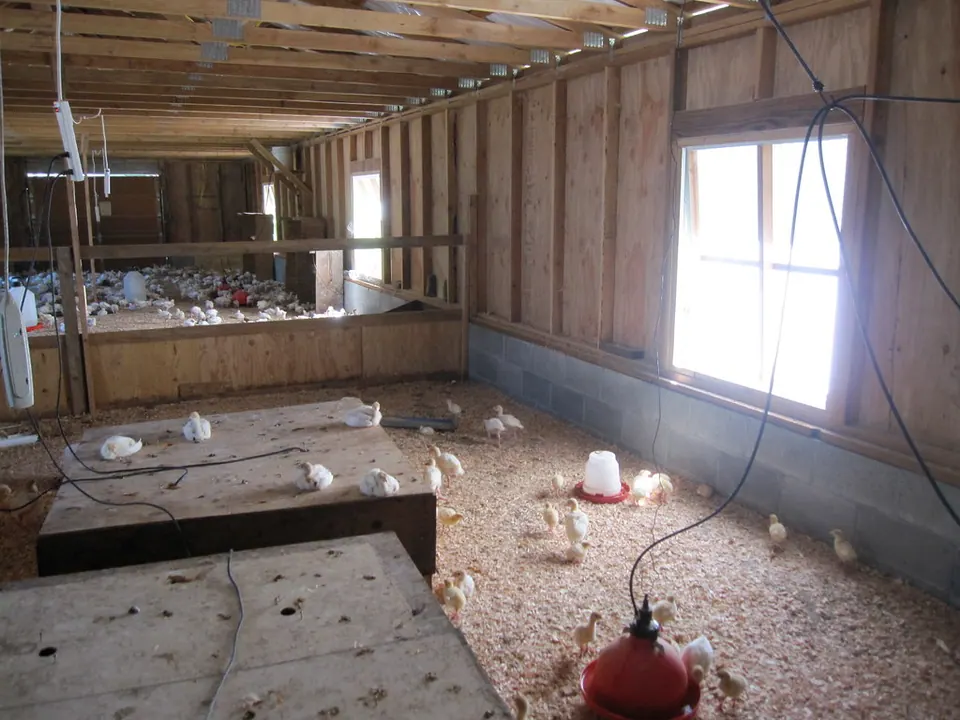
Inside a brooder house: chicks on shavings with red waterers and lamps
Photo: fishermansdaughter, CC BY 2.0, via Flickr
Show temperatures in
We highlight the row for your chicks’ age.
Heat plate check (optional)

Temperature at chick level, by age

60°F70°F80°F90°F100°F92–95°FWk 185–90°FWk 2–380–85°FWk 3–570–80°FWk 5–8Room temperatureWk 8+
Source: Penn State Extension, Brooding of Domestic Fowl
Chick ageAt chick levelFloor space per chick
Week 192–95°F¼ sq ft
Weeks 2–385–90°F½ sq ft
Weeks 3–580–85°F¾ sq ft
Weeks 5–870–80°F1 sq ft
Week 8 onRoom temperature1½ sq ft, more for large breeds

Heat plate
  • Chicks warm up by touching the plate’s underside, like a hen; you raise the legs as they grow (follow the maker’s height guide).
  • Rated by chick count in the manual: compare it with your brood using the check above.
  • Low wattage and no exposed bulb. Some makers say their plates need a minimum room temperature: check the manual before using one in a cold garage.
Heat lamp
  • Penn State: secure the heat source so it cannot move or slip, hang it with a chain or cable, and keep lamps at least 20 inches from flammable materials.
  • UMN: never hang a heat lamp by its cord. Fire marshals warn against spring clamps alone and long-term extension cords.
  • Measure at chick level under the lamp, and give chicks room to move away from the heat.
Read the chicks
  • Spread out evenly and active: comfortable (Penn State).
  • Huddled under the heat: too cold. Crowded at the edges, panting: too hot.
  • Penn State gives one schedule for chicks; ducklings, poults and quail chicks may differ, so follow your hatchery’s guidance too.
Heat lamps cause coop and garage fires every year. Fire marshals recommend heat plates or lamps secured with a chain or cable, never a clamp alone or the cord; keep lamps at least 20 inches from bedding and walls (Penn State).

Where to measure

Measure at the chicks’ level, directly under the heat source (Penn State). With a heat plate, chicks warm themselves by touching the underside, so the air in the brooder can be cooler than the chart; follow the maker’s height settings.

Brooder temperature at chick level, under the heat source

Chick age°F°CFloor space per chick
Week 192–95°F33–35°C¼ sq ft
Weeks 2–385–90°F29–32°C½ sq ft
Weeks 3–580–85°F27–29°C¾ sq ft
Weeks 5–870–80°F21–27°C1 sq ft
Week 8 onRoom temperature—1½ sq ft, more for large breeds

Source: Penn State Extension, Brooding of Domestic Fowl. Watch the chicks too: huddled under the heat means cold, crowded at the edges means too hot.

Watch the chicks, not just the thermometer

Evenly spread, busy chicks are comfortable. A tight huddle under the heat means they are cold; chicks pressed against the edges, panting or with wings held out are too hot. Give them room to move away from the heat.

Questions

What temperature should a brooder be for week-old chicks?
Penn State gives 92–95°F at chick level for the first week, then lower it by about 5°F a week.
When can chicks stop using heat?
Penn State’s schedule reaches room temperature around week 8 for fully feathered chicks; weather and breed shift this.
Is a heat plate safer than a heat lamp?
Fire marshals recommend heat plates because there is no exposed hot bulb. Any heat source must be secured and kept clear of bedding.
How many chicks fit under a heat plate?
Use the maker’s rating in the manual and the check in this tool; ratings drop as chicks grow.

Sources

  1. Penn State Extension, Brooding of Domestic Fowl
  2. University of Minnesota Extension, Caring for chickens in cold weather
  3. Clark County (WA) Fire Marshal, Safety tips to prevent a chicken coop fire