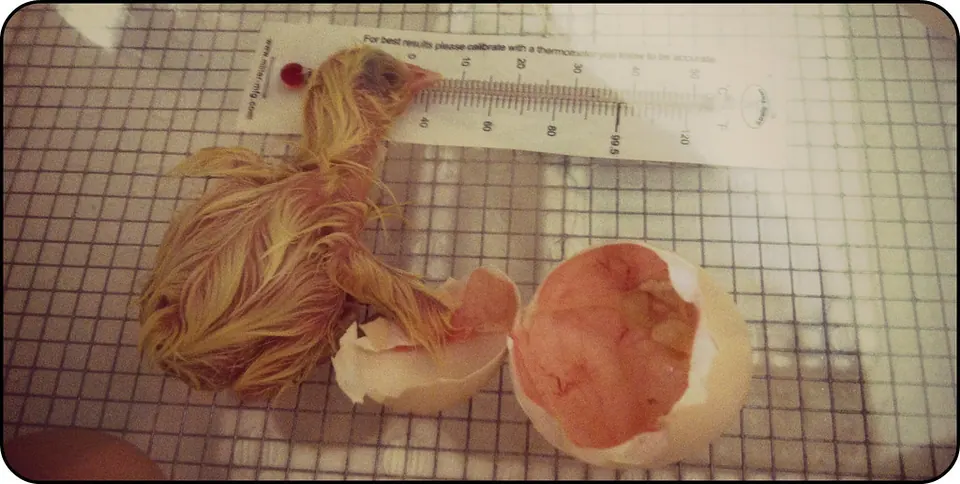
- The best incubator for beginners turns eggs automatically, stops turning on its own for lockdown, uses a fan, and lets you add water without lifting the lid.
- Nurture Right 360 and Brinsea Mini II Advance list all four; the Mini II EX adds automatic humidity.
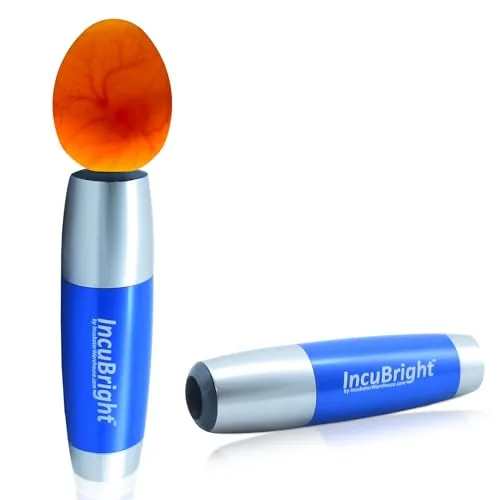
- A combo kit such as the Nurture Right 360 Deluxe bundles a candler and water filler, so you have the basics on day one.
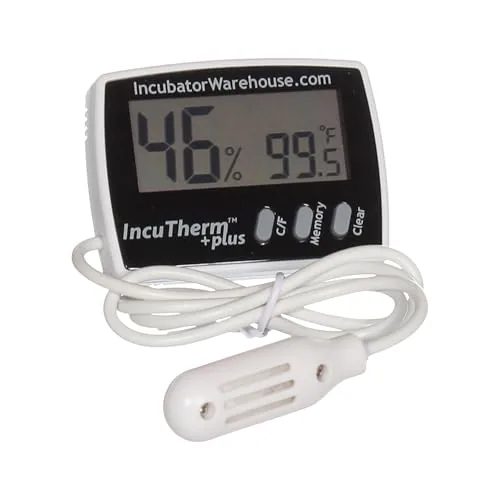
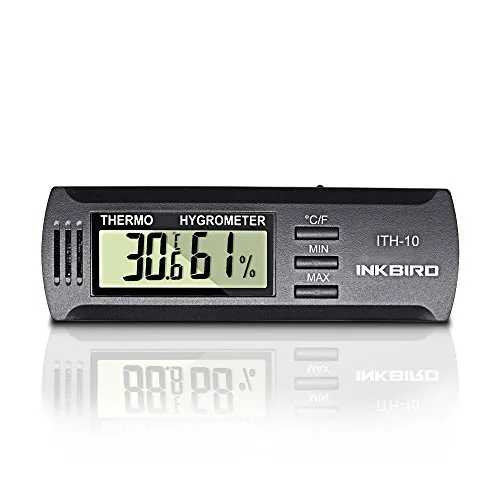
- Start small: one tray of fresh, fertile eggs from a hatchery or local breeder, a separate thermometer-hygrometer, and a brooder ready before hatch day.
The best incubator for beginners is not the biggest or the one with the most buttons. It is the one that removes the mistakes new hatchers make most: forgetting to turn eggs, forgetting to stop turning at lockdown, and opening the lid to add water. This list ranks seven models from five brands by how much of that the listing says the machine handles for you.
Every pick is judged on maker specs and published guidance from Mississippi State University Extension, Brinsea and 4-H embryology programs. No incubator can promise a hatch rate; egg fertility, storage and room temperature matter just as much.
Our picks
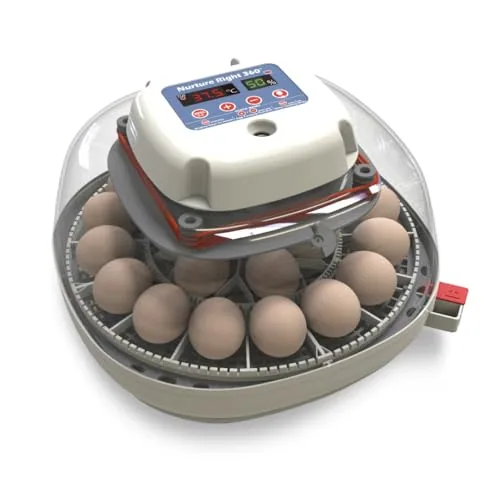
Nurture Right 360 Incubator, 22 Eggs, Auto Turner
- Egg capacity
- 22 chicken, 12–18 duck or 22–24 pheasant eggs
- Turning
- Automatic with auto-stop
- Humidity
- Display and control knob
- Fan
- Forced-air (360° induced airflow)
The Nurture Right 360 lists forced air (360° induced airflow), automatic turning with auto-stop, and a digital temperature and humidity display with a control knob. Its 22-chicken-egg tray is large enough for a family hatch but not so big that a learning mistake costs dozens of eggs.
Best for: Families doing a first hatch of chicken or duck eggs
Skip if: You want humidity managed automatically
- Turns and stops by itself
- Humidity shown on the display
- Sees eggs from every side
- You still add the water
- Quail need an extra tray
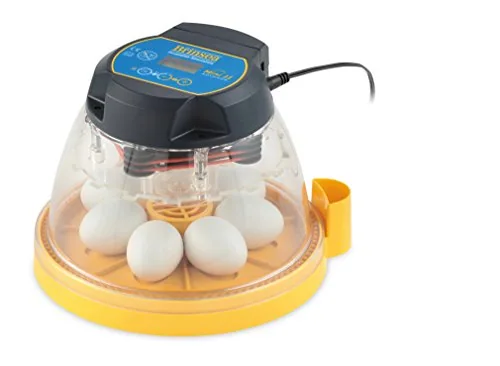
Brinsea Mini II Advance 7-Egg Incubator
- Egg capacity
- 7 chicken eggs; 12 small eggs with optional insert
- Turning
- Automatic with auto-stop
- Humidity
- Manual, external water top-up
- Fan
- Forced-air (fan-assisted)
Brinsea's Mini II Advance holds 7 chicken eggs and lists automatic turning with auto-stop, fan-assisted air, a countdown to hatch day, an external water top-up and alarms for room temperature and high/low incubator temperature. The alarms are the useful part for a beginner: they tell you when the room or the unit drifts.
Best for: A first try with a few eggs, or a classroom
Skip if: You want more than 7 eggs per batch
- Room-temp alarm
- Countdown to hatch
- Water top-up from outside
- Small capacity
- Small-egg insert sold separately
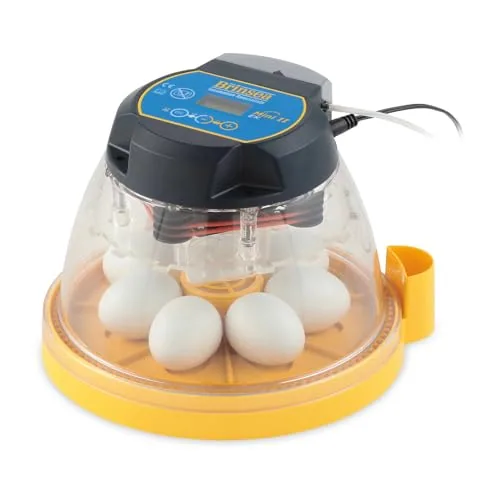
Brinsea Mini II EX 7-Egg Incubator, Auto Humidity
- Egg capacity
- 7 chicken eggs or 12 small eggs (inserts included)
- Turning
- Automatic, programmable intervals
- Humidity
- Automatic, integrated humidity pump
- Fan
- Forced-air (fan-assisted)
The Mini II EX adds an integrated humidity pump, so you set a target %RH and the unit adds water itself. Brinsea lists programmable turning intervals, a display for temperature (°F or °C), %RH and turning status, and alarms. It ships with inserts for 7 chicken or 12 small eggs.
Best for: Beginners who cannot check the incubator during the workday
Skip if: You prefer the simplest possible menu; the EX has more settings
- Automatic humidity
- Small-egg insert included
- %RH on screen
- Same 7-egg size as the Advance
- Programmable turning means you must set the lockdown stop correctly
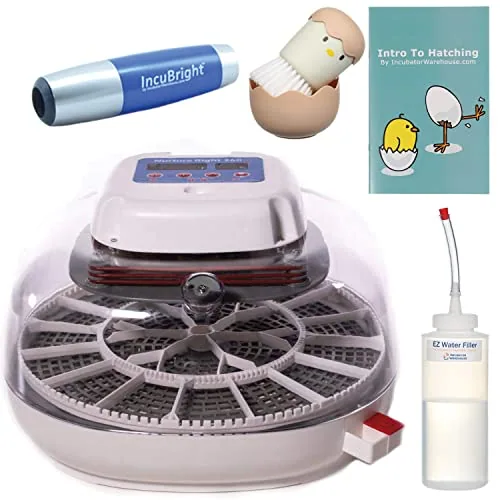
Nurture Right 360 Deluxe Incubator Combo Kit
- Egg capacity
- 22 chicken eggs (Nurture Right 360)
- Turning
- Automatic (Nurture Right 360)
This Deluxe Combo Kit packages the Nurture Right 360 with a water trough filler, an IncuBright candler, a cleaning brush and a hatching guide. For a beginner, the candler and filler are the two accessories most likely to be missing on day 7 and day 18.
Best for: Gift buyers and first-timers who want everything in one box
Skip if: You already own a candler
- Candler included
- Water filler reaches troughs without fuss
- Same 360 incubator as above
- Check stock: kit listings come and go
- Humidity still manual
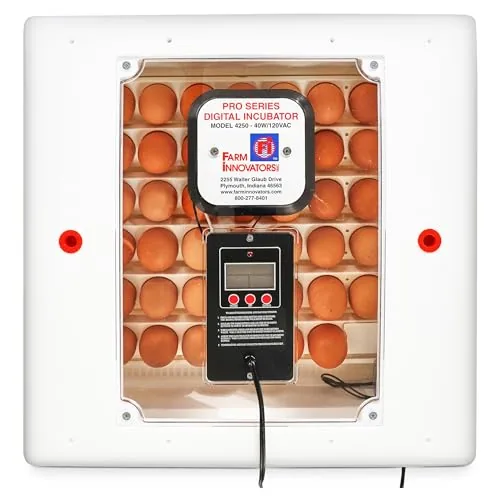
Farm Innovators 4250 Circulated Air Incubator, 41 Eggs
- Egg capacity
- 41 eggs
- Turning
- Automatic
- Humidity
- Manual, E-Z Fill water channels
- Fan
- Forced-air
Farm Innovators lists the 4250 for 41 eggs with an automatic turner, an integrated fan, a factory preset of 100°F, a display of temperature, humidity and days to hatch, a Hi/Lo notification light, easy-fill water channels and an egg candler in the box. It measures 18 x 18 x 8 in.
Best for: Beginners hatching for a growing flock or a 4-H project
Skip if: You only have a handful of eggs; a large foam unit is harder to keep humid when mostly empty
- 41-egg auto turner
- Candler included
- Factory preset temperature
- No auto-stop listed, so lift eggs off the turner at lockdown
- Manual humidity
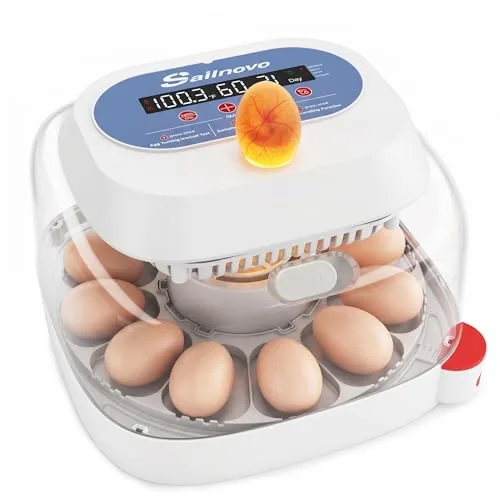
Sailnovo 12-Egg Incubator, 4 Modes
- Egg capacity
- 12 eggs
- Turning
- Automatic every 2 hours; stops 3 days before hatch
- Humidity
- Manual, external A/B water ports and vents
- Fan
- Forced-air
The Sailnovo 12 lists three preset modes plus a custom mode, a circulating fan, automatic turning every 2 hours that stops 3 days before hatch, external A/B water ports, a humidity alarm and a built-in candler. It defaults to chicken mode at power-on.
Best for: A low-cost first hatch or homeschool project
Skip if: You want a maker with published manuals and spare parts
- Auto-stop before hatch
- Outside water ports
- Built-in candler
- Check its sensors with your own hygrometer
- Manual humidity
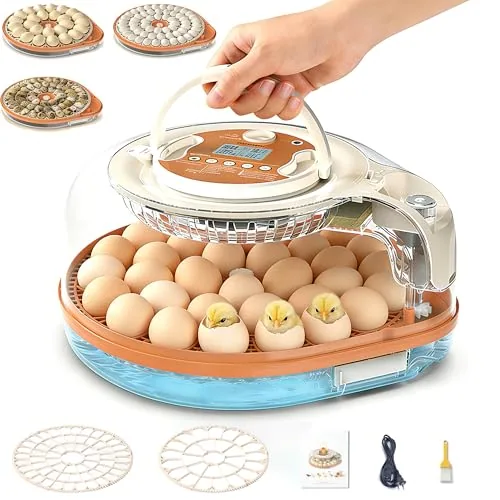
HOWOOLUA 26-Egg Incubator, Auto Turn & Humidity
- Egg capacity
- 26 eggs
- Turning
- Automatic with auto-stop
- Humidity
- Automatic, sensor-based
- Display
- Preset hatch days; built-in candler
HOWOOLUA lists the 26-egg model with automatic turning and smart stop, preset hatch days, sensor-based automatic humidity and a built-in candler. It is a budget route to an incubator that adds moisture on its own.
Best for: Beginners who want automatic humidity at a lower spec tier
Skip if: You want independent documentation of accuracy
- Automatic humidity
- Auto-stop turning
- 26-egg tray
- Sensor accuracy is not stated
- Fan type not stated in the listing
Beginner incubators compared
These are the specs that matter most to a first-timer. Dashes mean the listing does not say.
| Product | Egg capacity | Turning | Humidity | Fan | Display |
|---|---|---|---|---|---|
| Nurture Right 360 Incubator, 22 Eggs, Auto Turner | 22 chicken, 12–18 duck or 22–24 pheasant eggs | Automatic with auto-stop | Display and control knob | Forced-air (360° induced airflow) | Digital temperature and humidity |
| Brinsea Mini II Advance 7-Egg Incubator | 7 chicken eggs; 12 small eggs with optional insert | Automatic with auto-stop | Manual, external water top-up | Forced-air (fan-assisted) | Digital countdown; room-temp and high/low temp alarms |
| Brinsea Mini II EX 7-Egg Incubator, Auto Humidity | 7 chicken eggs or 12 small eggs (inserts included) | Automatic, programmable intervals | Automatic, integrated humidity pump | Forced-air (fan-assisted) | Temp °F/°C, %RH, turning status; alarms |
| Nurture Right 360 Deluxe Incubator Combo Kit | 22 chicken eggs (Nurture Right 360) | Automatic (Nurture Right 360) | — | — | — |
| Farm Innovators 4250 Circulated Air Incubator, 41 Eggs | 41 eggs | Automatic | Manual, E-Z Fill water channels | Forced-air | Temp, humidity, days to hatch; Hi/Lo light |
| Sailnovo 12-Egg Incubator, 4 Modes | 12 eggs | Automatic every 2 hours; stops 3 days before hatch | Manual, external A/B water ports and vents | Forced-air | LED temp/humidity; humidity alarm; built-in candler |
| HOWOOLUA 26-Egg Incubator, Auto Turn & Humidity | 26 eggs | Automatic with auto-stop | Automatic, sensor-based | — | Preset hatch days; built-in candler |
Specs as listed by the maker or seller; check the listing before you buy.
Beginner checklist: what each pick handles for you
| Incubator | Auto turning | Stops for lockdown | Fan | Water from outside | Auto humidity |
|---|---|---|---|---|---|
| Nurture Right 360 | ✓ | ✓ | ✓ | ~ not stated | ✗ |
| Brinsea Mini II Advance | ✓ | ✓ | ✓ | ✓ | ✗ |
| Brinsea Mini II EX | ✓ | ~ programmable | ✓ | ✓ | ✓ |
| Farm Innovators 4250 | ✓ | ✗ not listed | ✓ | ✓ | ✗ |
| Sailnovo 12 | ✓ | ✓ | ✓ | ✓ | ✗ |
| HOWOOLUA 26 | ✓ | ✓ | ~ not stated | ~ not stated | ✓ |
Source: Maker listings, November 2026
What a beginner should know before the first hatch
Those four numbers run a chicken hatch. Other species need different days and humidity, which the table below lists. The incubation calculator converts them into calendar dates you can download.
Incubation by species: forced-air settings, with the still-air offset
| Species | Days to hatch | Forced-air temp | Still-air temp | Wet-bulb, days 1 to lockdown → last 3 days | Relative humidity | Stop turning (day) |
|---|---|---|---|---|---|---|
| Chicken | 21 | 100°F (37.8°C) | 102–103°F | 85–87°F → 90°F | 45–50% → 65% or more | 18 |
| Duck (most breeds) | 28 | 100°F (37.8°C) | 102–103°F | 85–86°F → 90°F | 55–60% → 70% or more | 25 |
| Muscovy duck | 35–37 | 100°F (37.8°C) | 102–103°F | 85–86°F → 90°F | 58–60% → 65% or more | 31 |
| Coturnix quail | 17 | 100°F (37.8°C) | 102–103°F | 85–86°F → 90°F | 40–50% → 65% or more | 15 |
| Bobwhite quail | 23–24 | 100°F (37.8°C) | 102–103°F | 84–87°F → 90°F | 40–50% → 65% or more | 20 |
| Turkey | 28 | 99°F (37.2°C) | 101–102°F | 84–86°F → 90°F | 58–60% → 65% or more | 25 |
| Goose | 28–34 | 99°F (37.2°C) | 101–102°F | 86–88°F → 90°F | 58–60% → 65% or more | 25 |
| Guinea fowl | 28 | 100°F (37.8°C) | 102–103°F | 85–87°F → 90°F | 58–60% → 65% or more | 25 |
| Pheasant | 23–28 | 100°F (37.8°C) | 102–103°F | 86–88°F → 92°F | 58–60% → 65% or more | 21 |
| Peafowl | 28–30 | 99°F (37.2°C) | 101–102°F | 84–86°F → 90°F | 58–60% → 65% or more | 25 |
| Chukar partridge | 23–24 | 100°F (37.8°C) | 102–103°F | 81–83°F → 90°F | 58–60% → 65% or more | 20 |
Days, temperatures, wet-bulb and stop-turning days: Mississippi State University Extension, Important Incubation Factors. Still-air: add 2–3°F, measured at the top of the eggs (MSU). Relative humidity: Brinsea, Humidity during incubation for chickens, ducks and quail; other species show MSU's general 58–60%. Follow your incubator's manual first.
Read the full walk-through in how to incubate chicken eggs, day by day and learn what you are looking for in how to candle eggs.
Your first hatch, step by step
- Test-run the incubator
Run it empty for 24–48 hours in the room where it will live. Compare the display with a separate thermometer-hygrometer at egg height.
- Get fresh, fertile eggs
Buy hatching eggs from a hatchery or local breeder, or collect your own if you keep a rooster. Grocery eggs are not fertile.
- Set and record
Let eggs reach room temperature, set them, and note the date and readings in a printable hatch log.
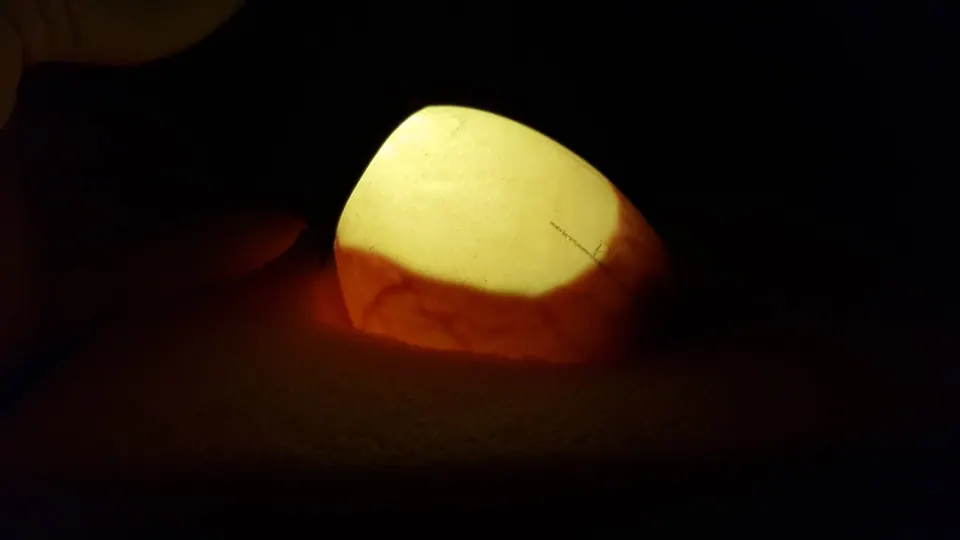
- Candle on days 7 and 14
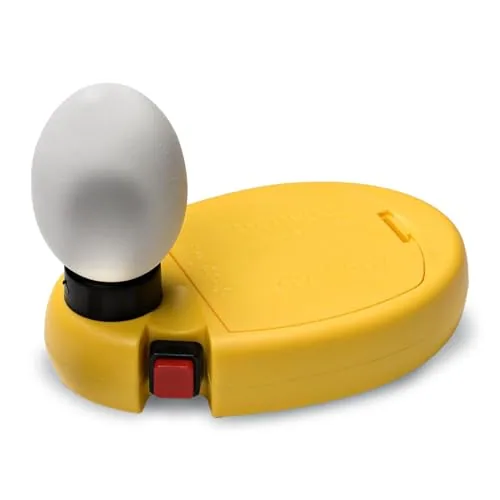
Remove clear or bloody-ring eggs to protect the rest. A bright LED candler makes this easier.
- Lockdown on day 18
Stop turning, raise humidity per your manual and keep the lid closed until chicks are dry and fluffy.
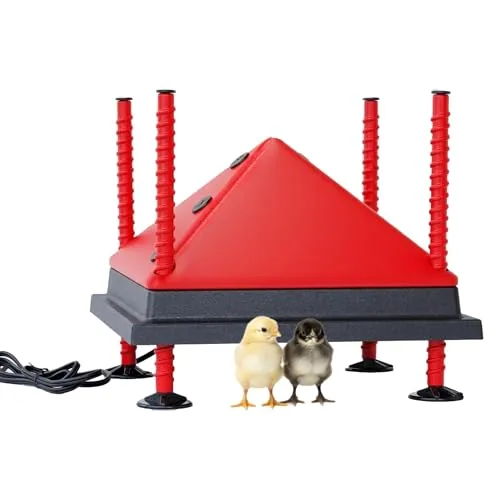
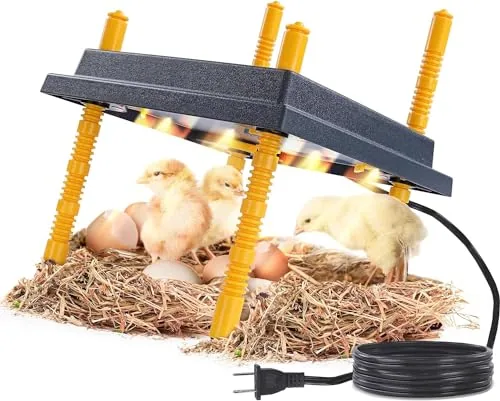
- Have the brooder warm
Move dry chicks to a brooder at 92–95°F at chick level (Penn State). Set it up the day before hatch.
Beginner mistakes that ruin a hatch
- Fiddling with settings. Small daily tweaks cause bigger swings than a steady setting that is half a degree off. Change one thing at a time and wait.
- Adding water through the lid. Every opening dumps heat and humidity. Use the outside ports or channels.
- Ignoring room temperature. A cold garage or sunny window pushes small incubators out of range; Brinsea builds a room-temperature alarm into the Mini for that reason.
- Helping chicks out of the shell. Pulling shell off can tear blood vessels. Keep the lid closed during hatch unless your manual says otherwise.
- No plan for the chicks. Decide before you set eggs who will keep the chicks, especially roosters and classroom chicks.
For classroom projects, read hatching projects at school and home and Salmonella, kids and backyard chickens.
Which beginner incubator should you choose?
- One family hatch a year: Nurture Right 360, or the Deluxe kit if you need a candler.
- Classroom or tiny batch: Brinsea Mini II Advance.
- You are out all day: Brinsea Mini II EX for automatic humidity.
- A 4-H or flock-building project: Farm Innovators 4250 for 41 eggs, with a reminder to stop turning on day 18.
- Lowest spend: Sailnovo 12 or HOWOOLUA 26, checked against your own hygrometer.
Want to compare the two big beginner names directly? See Brinsea vs Nurture Right or the Nurture Right 360 review. The broader best egg incubators list covers larger cabinets. Browse more gear in incubation and hatching and hatching at home or school.
For most beginners, the Nurture Right 360 is the straightforward choice: it turns, stops for lockdown and shows humidity. Choose the Brinsea Mini II Advance for a small or classroom hatch, or the Mini II EX if you need humidity handled for you. Add a separate thermometer-hygrometer and a candler, and have the brooder warm before hatch day.
We ranked incubators by how many beginner tasks the listing says the machine handles: automatic turning, an automatic or reminded stop for lockdown, forced air, outside water filling, automatic humidity and alarms. Incubation settings follow Mississippi State University Extension, Brinsea and 4-H embryology guides. We did not hatch eggs in these incubators and do not promise hatch rates.