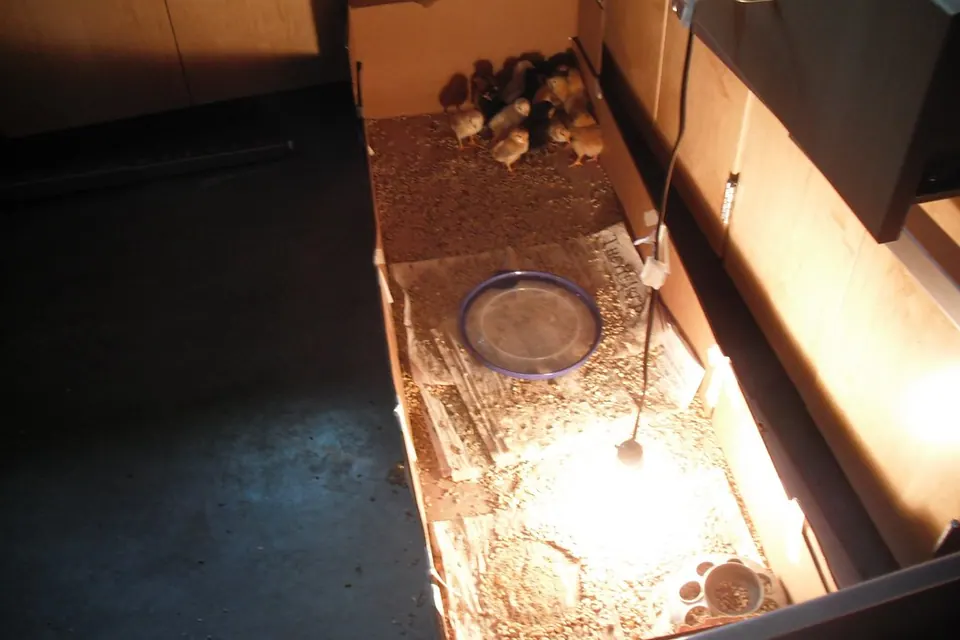
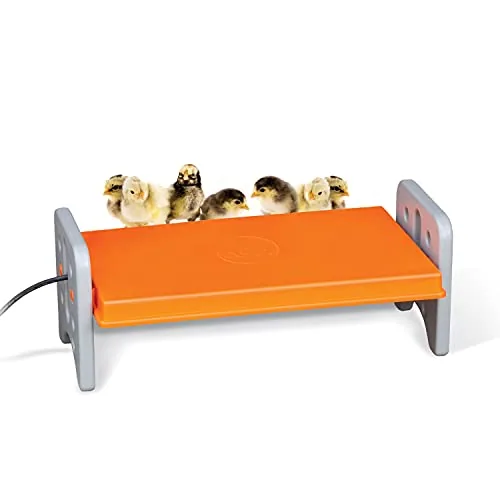
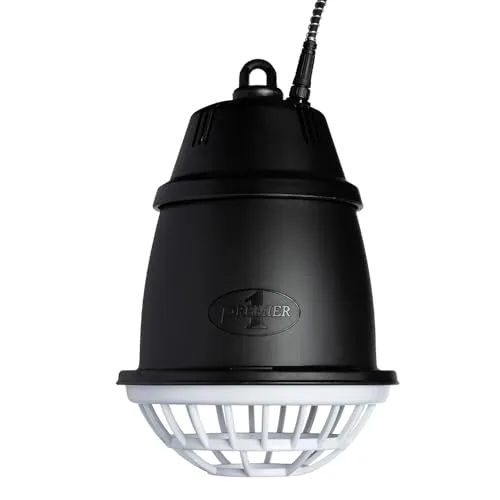
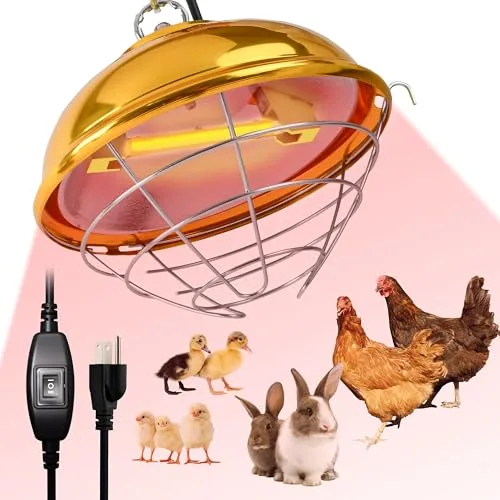
- Heat plate vs heat lamp: fire marshals recommend heat plates, because there is no exposed hot bulb near bedding.
- Listed power tells the story: the plates here draw 15–42 W; the lamps draw 175–300 W.
- Penn State Extension: secure any heat source so it cannot fall, hang lamps by a chain or cable and keep them at least 20 inches from flammable material. UMN: never hang a lamp by its cord.
- A lamp can still make sense in a very cold barn or for a big batch, if it is guarded, chained and on a dedicated outlet.
- Chicks can carry Salmonella: wash hands after every brooder visit, and children under 5 should not handle chicks (CDC).
Heat plate vs heat lamp is the first big decision in setting up a brooder for baby chicks. For decades the red heat lamp was the default, but extension services and fire marshals now point families toward heat plates. Every winter and every spring, coop and garage fires get traced back to heat lamps that fell into bedding or overheated nearby materials.
This page compares the two heat sources with the specs on real listings (wattage, chick capacity, height adjustment, safety features) and with published guidance from Penn State Extension, University of Minnesota Extension and fire marshals. We did not brood chicks under these products. Follow each maker’s manual for heights and capacity.
Heat plate
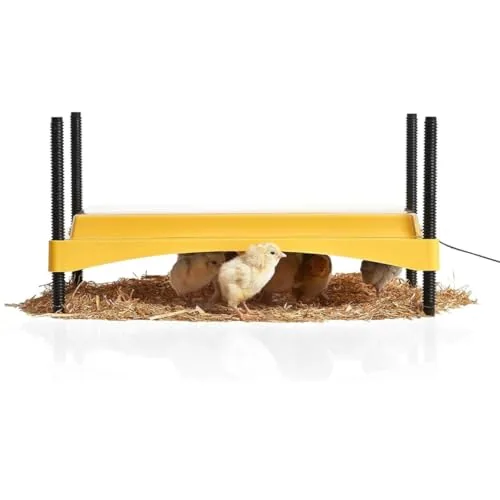
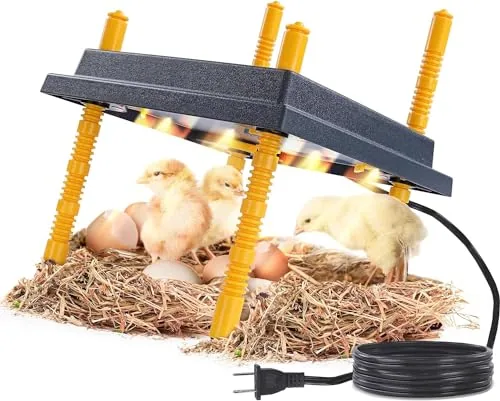
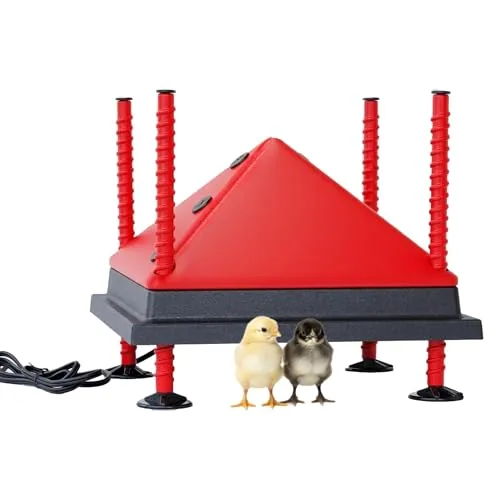
Chicks warm themselves against a low-watt plate; no exposed bulb and no light at night
Browse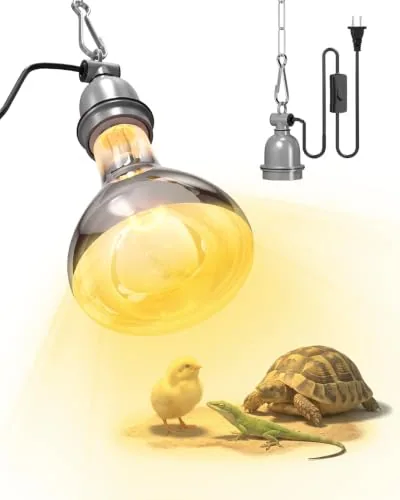
Heat lamp
A 175–300 W infrared source that heats the air and floor below it; needs strict fire precautions
BrowsePicks from each side
Heat plate
Brinsea EcoGlow Safety 1200 Brooder, Up to 35 Chicks
- Chicks
- Up to 35 newly hatched or 20 older chicks
- Wattage
- 18 W, low voltage
- Height adjustment
- Screw-on legs, height and angle
Best for Larger chick or duckling batches
Premier 1 Chick Heating Plate 12x12, 20 Chicks
- Chicks
- Up to 20 chicks
- Heated area
- 12 x 12 in
- Wattage
- 22 W
Best for Home batches up to 20
RentACoop 12x12 Heating Plate, Anti-Roost Cone
- Chicks
- Up to 20 chicks
- Heated area
- 12 x 12 in
- Wattage
- 22 W
Best for Home batches up to 20
K&H Thermo-Poultry Brooder Plate, Large 40W
- Chicks
- Up to 30 newborn chicks (fewer as they grow)
- Heated area
- 20 x 11.5 x 8 in
- Wattage
- 40 W
Best for Medium chick batches
Heat lamp
Premier 1 Prima Heat Lamp, Up to 250W Bulbs
- Wattage
- Bulbs up to 250 W (not included)
- Safety
- Tilt shut-off switch, heavy-duty guard
- Cord
- 16 ft with anti-chew spring
Best for Keepers who must use a lamp
Nirvix 250W Chicken Heat Lamp, 2 Heat Settings
- Wattage
- 175 W / 250 W
- Height adjustment
- Hanging chain
- Build
- Stainless heating element, metal grille, waterproof shell
Best for Lamp brooding with a guard
GlowUp 250W Chicken Heat Lamp Bulb with Cord & Chain
- Wattage
- 250 W infrared bulb
- Height adjustment
- Two 3.3 ft hanging chains
- Socket
- E26 ceramic with on/off switch
Best for Traditional lamp brooding with care
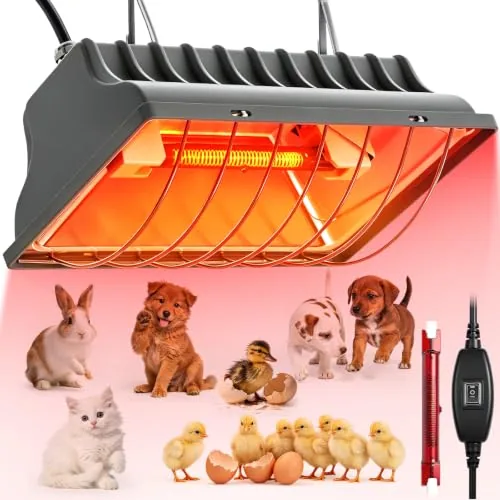
OUTON 300W Carbon Fibre Heat Lamp, 2-Level
- Wattage
- 300 W
- Height adjustment
- Recommended mount 25–30 cm
- Controls
- High/low/off switch
Best for Supplemental heat in damp barns
Heat plate vs heat lamp: how they warm chicks
A heat plate works like a broody hen. Chicks walk underneath and press their backs to the warm underside, then wander out to eat, drink and explore. The air in the rest of the brooder stays cooler, so chicks choose their own comfort. You raise the legs as they grow, following the maker’s height guide.
A heat lamp radiates heat down onto the chicks and the floor. It warms a circle of the brooder and the air around it, and most lamps also give off light all night. You set the temperature by changing the hanging height and check it with a thermometer at chick level.
Side by side
| Heat plate | Heat lamp | |
|---|---|---|
| Fire risk near bedding | ✓ Lower: no exposed bulb | ✗ Higher: hot bulb and housing |
| Listed power in our catalogue | ✓ 15–42 W | ✗ 175–300 W |
| Light at night | ✓ None (EcoGlow lists no light) | ✗ Yes, on most bulbs |
| Warms the whole brooder air | ✗ Mostly under the plate | ✓ A wide circle |
| Works in a very cold room | ~ Some makers list a minimum room temperature | ✓ More output |
| Rated chick count | ✓ Listed per size (15–35) | ~ Not listed |
| Height adjustment | ✓ Legs, pegs or tilt | ~ Chain length |
| Mounting risk | ✓ Sits on the floor | ✗ Can fall if clamped or hung by the cord |
Source: Product listings; Penn State Extension; University of Minnesota Extension; Clark County (WA) Fire Marshal
Which is safer, a heat plate or a heat lamp?
Fire safety is the main reason to choose a heat plate. Penn State Extension tells keepers to secure the heat source so it cannot move or slip, hang lamps with a chain or cable, and keep lamps at least 20 inches from flammable materials. University of Minnesota Extension says never hang a heat lamp by its cord. Clark County’s fire marshal recommends heat plates or radiant panels over lamps and warns against spring clamps and long-term extension cords. In 2025, Idaho’s state fire marshal issued a warning after a heat-lamp fire killed pets.
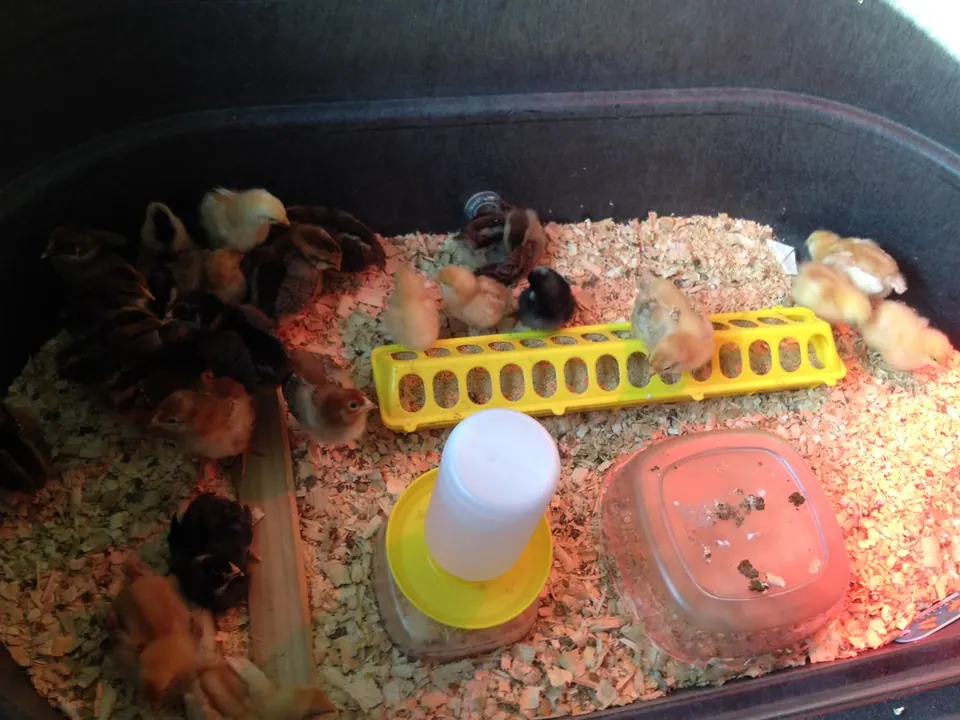
Heat plates are not risk-free. Any electrical appliance needs an undamaged cord and a dry spot. Keep bedding from piling against a plate, raise the legs as chicks grow, and use the anti-roost cover or cone if one is included so chicks don’t perch and foul the top. K&H lists its whole plate as MET Labs certified; RentACoop includes a foldable anti-roost cone; Premier 1 includes an anti-perch cover with its 16 × 16 kit.
Watts and chick capacity, from the listings
The power gap is large. The chart below plots listed wattage for the plates and lamps in our catalogue. More watts means more heat and more running cost, and in a lamp it also means a hotter surface near bedding.
Listed wattage
Heat plates (yellow) vs heat lamps (orange)
Heat plates: size, power and rated chicks
| Product | Heated area | Wattage | Chicks | Height adjustment |
|---|---|---|---|---|
| RentACoop 10x10 Heating Plate, Anti-Roost Cone | 10 x 10 in | 15 W | Up to 15 chicks | 25 settings, 1–9 in, tiltable |
| RentACoop 12x12 Heating Plate, Anti-Roost Cone | 12 x 12 in | 22 W | Up to 20 chicks | 25 settings, 1–9 in, tiltable |
| RentACoop 16x16 Heating Plate, Up to 30 Chicks | 16 x 16 in | 42 W | Up to 30 chicks | 25 settings, 1–7 in, tiltable |
| Premier 1 Chick Heating Plate 12x12, 20 Chicks | 12 x 12 in | 22 W | Up to 20 chicks | 1.5–6 in legs |
| Brinsea EcoGlow Safety 1200 Brooder, Up to 35 Chicks | — | 18 W, low voltage | Up to 35 newly hatched or 20 older chicks | Screw-on legs, height and angle |
| K&H Thermo-Poultry Brooder Plate, Large 40W | 20 x 11.5 x 8 in | 40 W | Up to 30 newborn chicks (fewer as they grow) | Pegged shelf, adjustable |
| Hatching Time Warmzy 10x10 Brooder Plate, 15W | 10 x 10 in | 15 W | 15–20 chicks (by breed and setup) | Four adjustable legs |
Specs as listed by the maker or seller; check the listing before you buy.
Plate ratings are for newly hatched chicks and drop as birds grow; Brinsea, for example, rates the EcoGlow Safety 1200 for up to 35 newly hatched or 20 older chicks. Check your brood size against the rating with the brooder temperature chart tool.
Brooder temperatures by week
Whichever heat source you pick, Penn State’s schedule is the same: 92–95°F at chick level in week one, then about 5°F lower each week until the chicks are feathered. With a plate, the temperature that counts is under the plate, where chicks touch it; with a lamp, measure on the floor directly below.
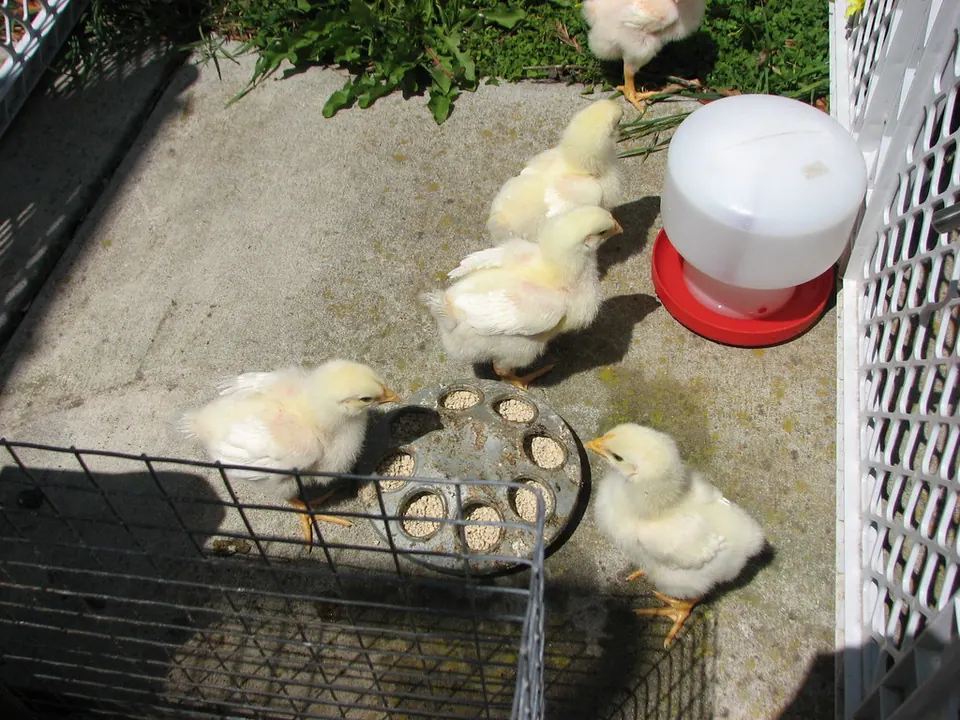
Brooder temperature at chick level, under the heat source
| Chick age | °F | °C | Floor space per chick |
|---|---|---|---|
| Week 1 | 92–95°F | 33–35°C | ¼ sq ft |
| Weeks 2–3 | 85–90°F | 29–32°C | ½ sq ft |
| Weeks 3–5 | 80–85°F | 27–29°C | ¾ sq ft |
| Weeks 5–8 | 70–80°F | 21–27°C | 1 sq ft |
| Week 8 on | Room temperature | — | 1½ sq ft, more for large breeds |
Source: Penn State Extension, Brooding of Domestic Fowl. Watch the chicks too: huddled under the heat means cold, crowded at the edges means too hot.
Watch the chicks as well as the thermometer. Evenly spread and busy means comfortable; huddled under the heat means too cold; crowded at the edges and panting means too hot. Penn State’s schedule is for chicks; ducklings, poults and quail may differ, so follow your hatchery’s guidance too.
When does a heat lamp still make sense?
A plate warms chicks only while they are under it. In a cold barn or unheated garage, some makers list a minimum room temperature for their plates, and chicks may struggle to leave the plate to eat. A guarded lamp can add the extra output in those conditions, and some keepers use a lamp only as a backup on the coldest nights.
If you go that route, choose a fixture built for livestock. The Premier 1 Prima lists a tilt shut-off switch, a heavy-duty guard and a 16 ft chew-resistant cord; the Nirvix lists a metal guard grille and two heat settings; the GlowUp comes with a ceramic socket and hanging chains. Then follow every fire precaution above. Another option is moving the brooder to a warmer room so a plate can do the job.
Who should choose which?
- Choose a heat plate for a brooder in the house, garage or classroom, for 6–35 chicks, and whenever children are around the brooder. Size it by the maker’s chick rating.
- Choose a guarded lamp only if the room is too cold for a plate, and only with a chain or cable, a guard, 20 in clearance and a dedicated outlet.
- Consider a radiant panel for older birds in winter: the Farm Innovators 2-in-1 lists a 50 W brooder mode and a 200 W coop mode.
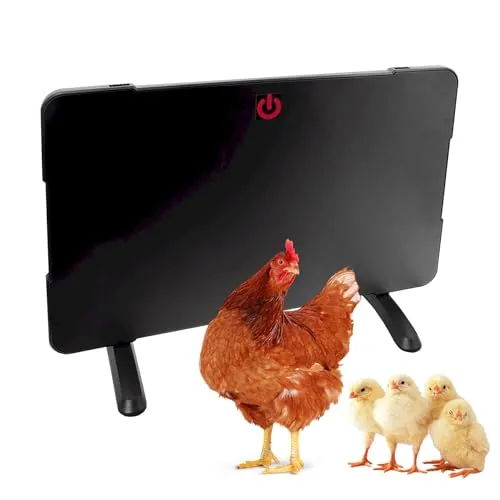
Farm Innovators 2-in-1 Radiant Coop/Brooder Heater
- Wattage
- 200 W coop mode; 50 W brooder mode
- Height adjustment
- 3.5, 5 or 6 in (brooder mode)
- Mounting
- Freestanding, wall, hanging or horizontal
Best for Brooding, then winter coop backup heat
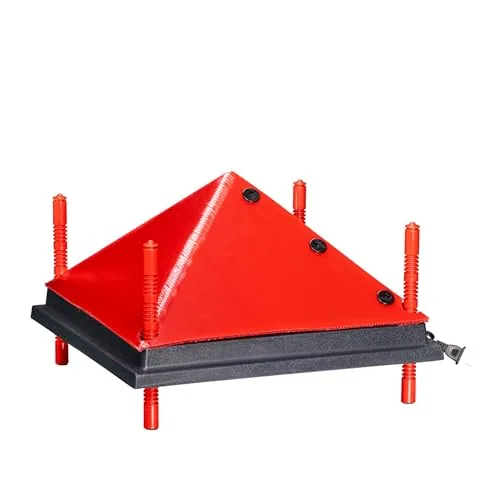
RentACoop 16x16 Heating Plate, Up to 30 Chicks
- Chicks
- Up to 30 chicks
- Heated area
- 16 x 16 in
- Wattage
- 42 W
Best for Larger brooder batches
Mistakes to avoid
- Clamping a lamp to the brooder wall. Spring clamps slip. Use a chain or cable.
- Running the brooder off an extension cord for weeks. Fire marshals advise against long-term extension cords.
- Setting a plate too high or too low. Chicks should be able to touch the underside; raise it as they grow.
- Ignoring the chick count. Too many chicks for a plate means some get pushed out to the cold.
- Brooding in a cardboard box under a lamp. Cardboard and shavings near a hot bulb are fuel.
- Skipping handwashing. Chicks look clean but can spread Salmonella.
Ready to build the rest of the brooder? Our brooder setup guide covers bedding, feeders and space per chick, and the chicks and brooding category lists every plate in our catalogue.
For most backyard brooders, a heat plate is the better choice: it draws a fraction of the power, has no exposed bulb near bedding and lets chicks regulate their own warmth, which is why fire marshals recommend it. Keep a heat lamp for genuinely cold rooms, and only if it is guarded, hung from a chain or cable at least 20 in from anything flammable and plugged into a dedicated outlet.
Questions
Is a heat plate better than a heat lamp for chicks?
How far should a heat lamp be from bedding?
How many chicks can go under one heat plate?
Do heat plates work in a cold garage?
How long do chicks need a heat source?
Can I hang a heat lamp by its cord?
Do chicks need light at night?
Sources
- Penn State Extension, Brooding of Domestic Fowl
- University of Minnesota Extension, Caring for chickens in cold weather
- Clark County (WA) Fire Marshal, Safety tips to prevent a chicken coop fire
- Idaho State Fire Marshal warning after heat-lamp fire (Daily Fly, 2025)
- CDC, Healthy Pets: backyard poultry safety