- The best chicken run for a typical backyard flock of 6–12 hens is a covered walk-in kit of about 10 x 13 ft, such as the Garvee 9.8 x 13.1 ft (about 128 sq ft, room for about 12 standard hens by the 4 + 10 rule).
- Big flock? The PawHut 17.1 x 15.7 ft run gives about 268 sq ft and a 9 ft height.
- Tiny yard? The PawHut wooden 13 sq ft add-on suits 1 hen by Penn State's 8 sq ft run minimum, even though it is listed for 1–3.
- Most kit runs use hex wire or nylon netting. Both keep hens in but are weak against raccoons and diggers: add hardware cloth at the base and lock birds in the coop at night.
- Run space adds to coop space. Check both with the coop size calculator.
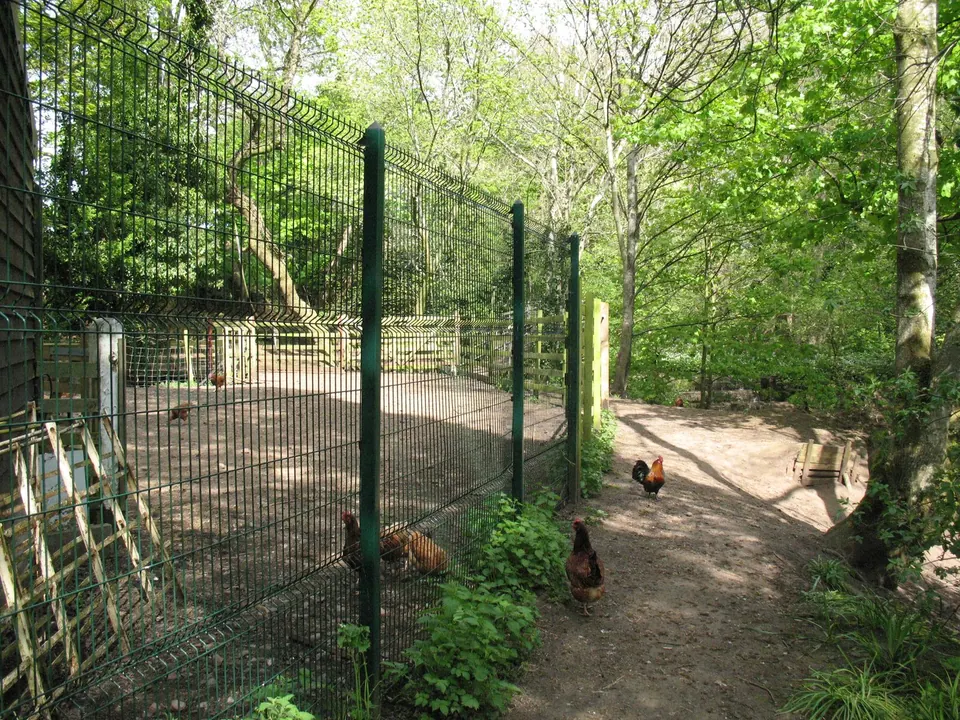
The best chicken run gives every hen enough room to scratch, dust-bathe and get away from bossier flockmates, with a roof against hawks and rain. Walk-in metal kits are the most common way to add that space beside a coop, and they range from 13 sq ft wooden add-ons to runs bigger than a one-car garage.
We compare eight runs from six brands by listed floor size, height, mesh and cover, and we recount each one against published run-space norms instead of repeating the title's hen count. Browse more in runs and fencing, and see the full space math in how big should a chicken coop be.
Our picks
Garvee 9.8x13.1 ft Walk-in Metal Chicken Run
- Size
- 9.8 x 13.1 ft
- Height
- 6.6 ft
- Electric
- No
- Mesh
- Hexagonal wire mesh, galvanized frame
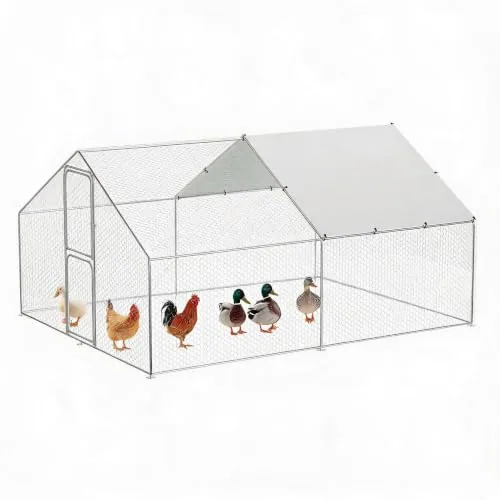
Garvee's 9.8 x 13.1 ft run (about 128 sq ft) has a 6.6 ft walk-in height, a galvanized frame with hexagonal wire mesh, a waterproof anti-UV roof cover and two lockable doors. By Penn State's 8 sq ft per hen run minimum that is about 16 standard hens; by the 4 + 10 rule, about 12.
Best for: Adding run space beside an existing coop
Skip if: Raccoons or foxes are frequent: plan a hardware cloth skirt
- About 128 sq ft
- Two lockable doors
- Waterproof roof cover
- Hex mesh is weaker than hardware cloth
- No floor: diggers can tunnel in
PawHut 17x15.7 ft Walk-in Metal Chicken Run
- Size
- 17.1 x 15.7 ft
- Height
- 9 ft
- Electric
- No
- Mesh
- Galvanized hexagonal mesh, 1 in tube frame
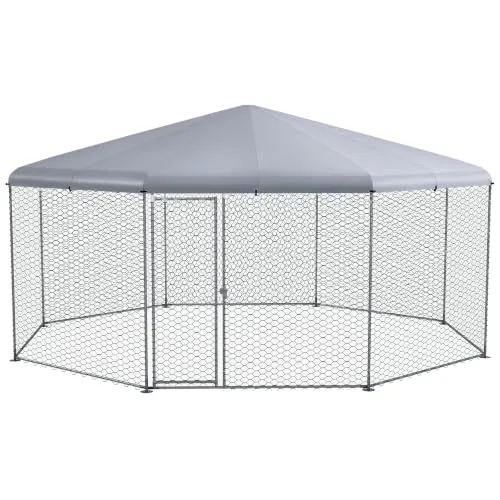
PawHut's polygon run measures 17.1 x 15.7 ft (about 268 sq ft) with a 9 ft walk-in height, galvanized hex mesh on a 1 inch tube frame, a lockable door and a 210D Oxford shade cover. It is listed for 19–25 chickens; Penn State's run minimum allows about 33 standard hens, the 4 + 10 rule about 26.
Best for: Big flocks, or mixed flocks with ducks
Skip if: Your yard is small or sloped
- About 268 sq ft
- 9 ft height
- Shade and rain cover
- Hex mesh
- Large footprint to level and anchor
Garvee Dome-Roof Walk-in Metal Chicken Run
- Size
- 9.8 x 19.7 ft
- Height
- 78.7 in
- Electric
- No
- Mesh
- PVC-coated hexagonal mesh, galvanized steel frame
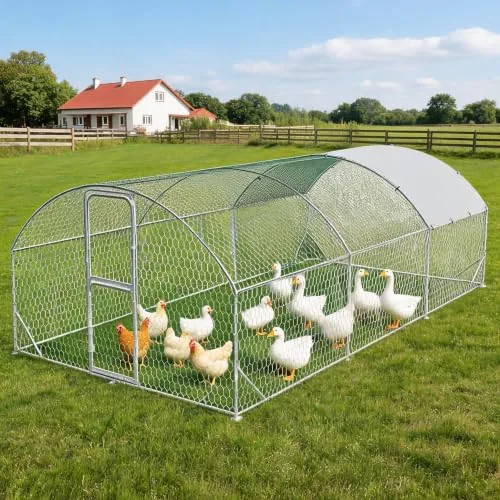
Garvee's dome-roof run is 9.8 x 19.7 ft (about 193 sq ft) and 78.7 in tall, with PVC-coated hex mesh on a galvanized frame, a split door and an Oxford fabric dome canopy that sheds water. That works out to about 24 standard hens by Penn State's run minimum and about 19 by the 4 + 10 rule.
Best for: Rainy or snowy areas
Skip if: You want the tallest walk-in clearance
- Dome canopy sheds water
- PVC-coated mesh
- Split double door
- 78.7 in height
- Hex mesh needs a predator skirt
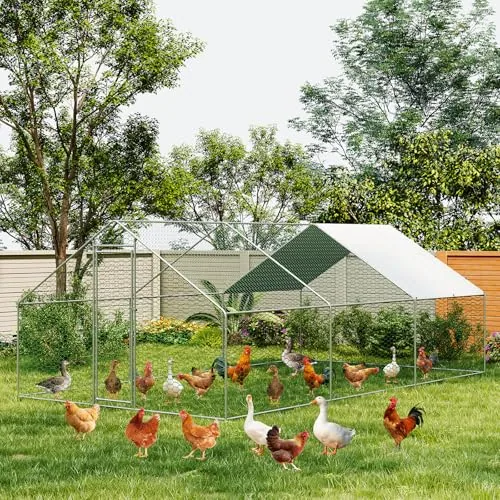
IDEALHOUSE Walk-in Chicken Run 10x20 ft, Spire Roof
- Size
- 9.8 x 19.7 ft
- Height
- 6.5 ft
- Electric
- No
- Mesh
- Galvanized steel frame (mesh not specified)
IDEALHOUSE's 9.8 x 19.7 ft walk-in run is 6.5 ft tall with a galvanized steel frame, a spire roof and a waterproof, UV-resistant cover. The listing does not state the mesh type, so check it before you rely on it against predators. By floor area it matches the Garvee dome: about 24 hens by Penn State, 19 by the 4 + 10 rule.
Best for: Large run space with snow-shedding roof
Skip if: You want the mesh spelled out before buying
- About 193 sq ft
- Spire roof
- Locking door
- Mesh not specified
- Large footprint
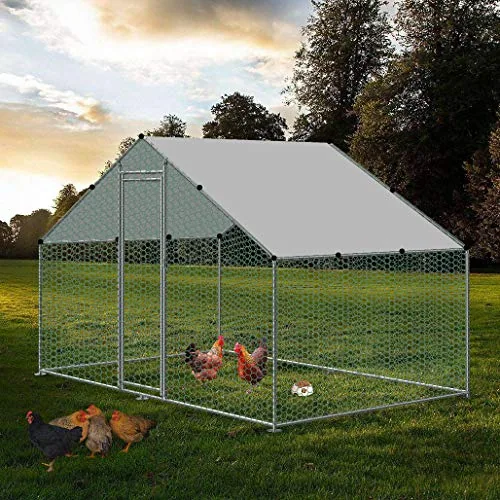
SDADI Walk-in Metal Chicken Run 9.8x6.6 ft
- Size
- 9.8 x 6.6 ft
- Height
- 6.6 ft
- Electric
- No
- Mesh
- Steel frame (mesh not specified)
SDADI's 9.8 x 6.6 ft run (about 65 sq ft) is 6.6 ft tall with a steel frame, a lockable steel door and a waterproof UV cover. That gives about 8 standard hens by Penn State's run minimum and about 6 by the 4 + 10 rule. The listing does not describe the mesh.
Best for: 3–6 hens beside a small coop
Skip if: You plan to grow the flock past six
- Walk-in height in a small footprint
- Lockable steel door
- Waterproof cover
- Mesh not specified
- Small for a growing flock
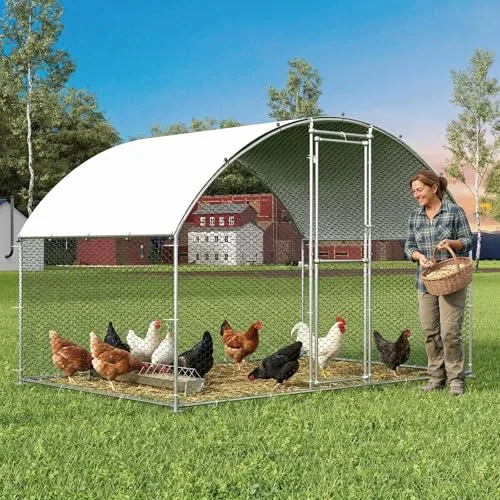
TrailBlaze Walk-in Metal Chicken Run 300x200 cm
- Size
- 300 x 200 cm (about 9.8 x 6.6 ft)
- Height
- 200 cm
- Electric
- No
- Mesh
- Galvanized steel frame, nylon netting
TrailBlaze's run is 300 x 200 cm (about 9.8 x 6.6 ft, roughly 65 sq ft) and 200 cm tall, with a galvanized steel frame, nylon netting, a lockable door and an anti-UV cover. The title says 6–10 chickens while the description says up to 30; by Penn State's minimum it holds about 8 standard hens, by the 4 + 10 rule about 6.
Best for: A first flock of about six
Skip if: Raccoons or dogs are around: nylon netting will not stop them
- About 65 sq ft
- Lockable door
- Anti-UV cover
- Nylon netting
- Conflicting capacity claims in the listing
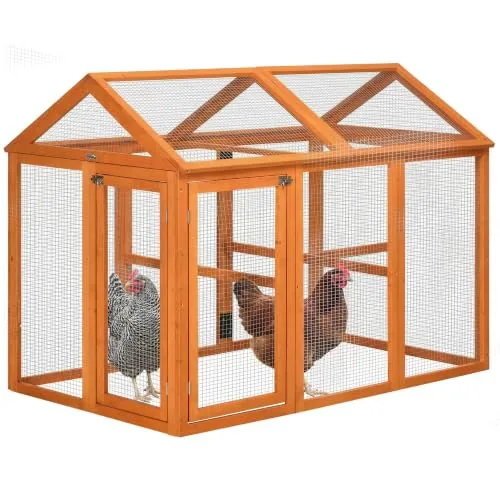
PawHut Wooden Chicken Run 4.6' x 2.8', Combinable
- Size
- 55 x 34.8 in (13 sq ft as listed)
- Height
- 41.7 in
- Electric
- No
- Mesh
- Metal wire, fir frame
PawHut's wooden run is 55 x 34.8 in (13 sq ft as listed) and 41.7 in tall, in fir with metal wire, front and side doors, and it joins a PawHut coop or a second run. It is listed for 1–3 chickens; by Penn State's 8 sq ft run minimum it fits 1 standard hen, so plan to combine two or more.
Best for: Extending a small wooden coop
Skip if: This would be your hens' only outdoor space
- Joins a coop or another run
- Front and side doors
- Weatherproof paint
- 13 sq ft
- Not walk-in
Anleolife Galvanized Modular Chicken Tunnel, 63"
- Size
- 63 in long, 20.8 x 20.8 in cross-section
- Height
- 20.8 in
- Electric
- No
- Mesh
- Expanded-metal mesh, powder-coated galvanized steel
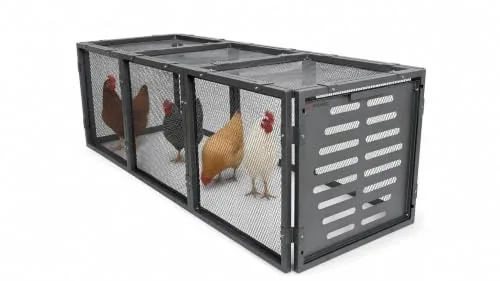
Anleolife's modular tunnel is 63 in long with a 20.8 x 20.8 in cross-section in powder-coated galvanized expanded-metal mesh, set straight or in an L. The floor is open, so hens can work a garden bed or fence line between coop and run.
Best for: Linking a coop to a garden or a second run
Skip if: You need a standalone run
- Expanded-metal mesh
- Straight or L layout
- Open floor for foraging
- About 9 sq ft of floor
- Not a replacement for run space
How much run space do chickens need?
Published norms disagree, so we show them side by side. Penn State Extension gives minimums of 8 sq ft per laying hen outside; the widely repeated 4 + 10 rule gives 10 sq ft. Bantams need less, large breeds and ducks more.
Space per bird, square feet: inside the coop / in the run
| Birds | Penn State | UMN | 4 + 10 rule |
|---|---|---|---|
| Standard laying hens | 1.5 / 8 | 3–5 / — | 4 / 10 |
| Large breeds | 2 / 10 | 3–5 / — | 4 / 10 |
| Bantams | 1 / 4 | 3–5 / — | — |
| Ducks | 3 / 15 | — | — |
| Geese | 6 / 18 | — | — |
| Quail | 1 / 4 | — | — |
Sources: Penn State Extension, Small-Scale Poultry Housing, Table 1 (Minimum Space Requirements for Poultry); University of Minnesota Extension, Raising chickens for eggs (“a minimum of 3 to 5 square feet of indoor space per bird”); Widely repeated hobby guideline (4 sq ft inside, 10 sq ft in the run per standard chicken), e.g. GRIT, Chicken Coop Space Requirements. — = not given by that source.
Standard hens each run fits by the 4 + 10 rule (10 sq ft each)
Listed floor area ÷ 10, rounded down. Penn State's 8 sq ft minimum allows about 25% more.
Chicken runs compared: size, height and mesh
Listed specs and recounted capacity
| Run | Floor (listed) | ≈ sq ft | Height | Mesh | Listed for | Penn State / 4 + 10 |
|---|---|---|---|---|---|---|
| PawHut walk-in | 17.1 x 15.7 ft | 268 | 9 ft | Galvanized hex | 19–25 | 33 / 26 |
| Garvee dome | 9.8 x 19.7 ft | 193 | 78.7 in | PVC-coated hex | Not listed | 24 / 19 |
| IDEALHOUSE | 9.8 x 19.7 ft | 193 | 6.5 ft | Not specified | Not listed | 24 / 19 |
| Garvee walk-in | 9.8 x 13.1 ft | 128 | 6.6 ft | Hex wire | Not listed | 16 / 12 |
| SDADI | 9.8 x 6.6 ft | 65 | 6.6 ft | Not specified | Not listed | 8 / 6 |
| TrailBlaze | 300 x 200 cm | 65 | 200 cm | Nylon netting | 6–10 (title); 30 (text) | 8 / 6 |
| PawHut wooden | 55 x 34.8 in | 13 | 41.7 in | Metal wire | 1–3 | 1 / 1 |
| Anleolife tunnel | 63 x 20.8 in | 9 | 20.8 in | Expanded metal | Not listed | Tunnel |
How we chose these chicken runs
We read each listing for floor dimensions, height, frame, mesh, door locks and cover, then recounted capacity from the listed floor using Penn State Extension's run minimum and the 4 + 10 rule. Where a listing gives a hen count we show it as listed, next to the recount; we do not call a listing wrong. We did not assemble these runs or test them against predators. Eight picks come from six brands (Garvee and PawHut have two each).
How to make a kit run safer from predators
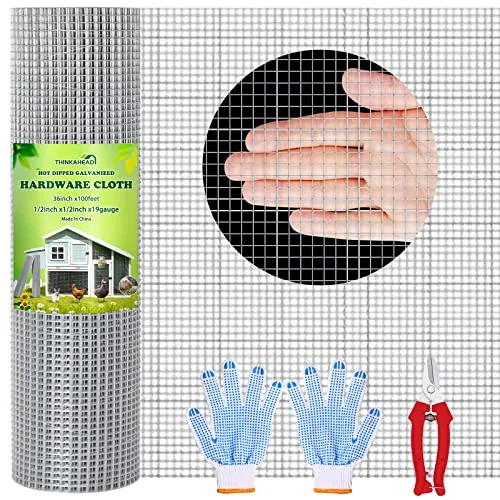
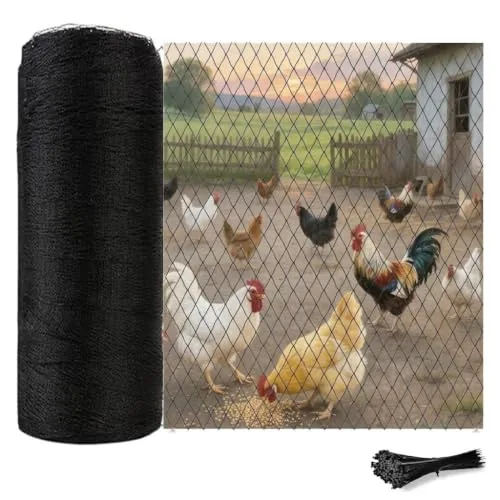
Hex wire and nylon netting keep chickens in. They were not made to keep a raccoon, dog or fox out. A few upgrades close most of the gap:
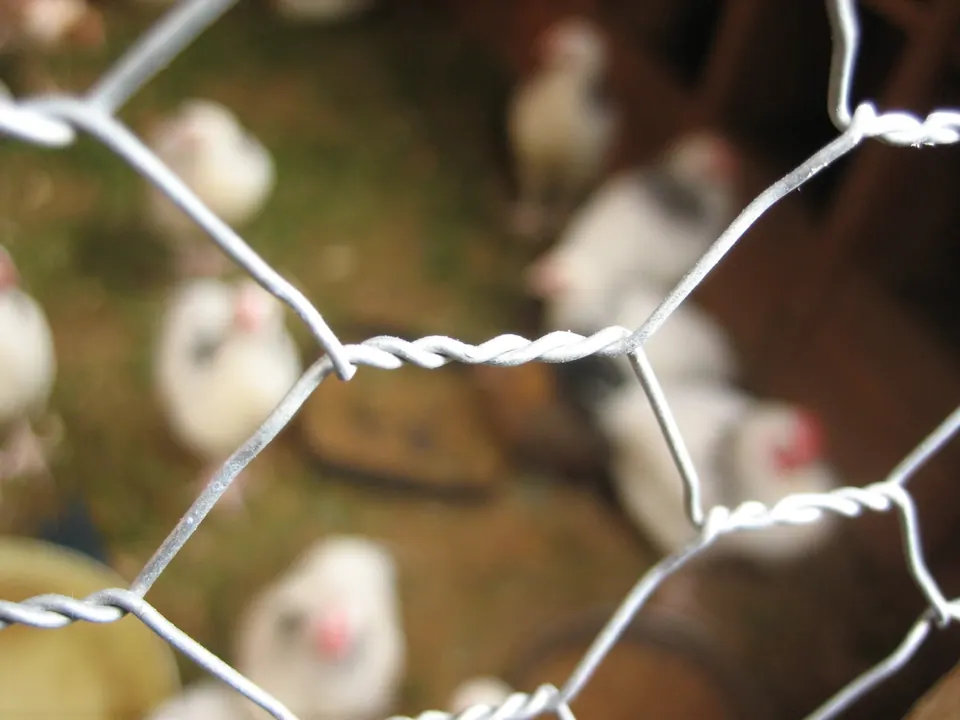
- Skirt the base with hardware cloth
Run ½ inch hardware cloth up the lower 2–3 ft of the walls and out along the ground as an apron, or bury it, so diggers hit wire.
- Roof it
Keep the kit's cover on, or add run netting over open sections against hawks and owls. A covered run also keeps wild birds out, which USDA APHIS recommends for bird-flu prevention.
- Anchor the frame
Stake or bolt the frame down so wind cannot lift the cover and predators cannot push under the base.
- Lock the doors
Use the kit's locks and add a carabiner or two-step latch; raccoons can open simple hooks.
- Close the coop at night
No kit run is a night shelter. Shut hens in a sound coop at dusk; see predator protection for chickens.
Chicken run mistakes to avoid
- Trusting the title's hen count. Divide the floor by 8–10 sq ft per standard hen instead.
- Skipping the predator skirt. Diggers go under the base, not through the roof.
- Leaving it on soft, low ground. Runs on wet ground turn to mud; pick a spot that drains.
- Counting the run as coop space. The coop needs its own inside floor for roosting and nests.
- Ignoring snow load. Fabric covers sag under snow. Brush heavy snow off, or pick a dome or spire roof that sheds it.
- Free-ranging past the run without a plan. If you want more ground, look at electric poultry netting.
Who should choose which run?
- Typical backyard flock of 6–12: Garvee 9.8 x 13.1 ft.
- Big or mixed flock: PawHut 17.1 x 15.7 ft. Duck keepers can find more in ducks, quail and turkeys.
- Wet or snowy region: Garvee dome or IDEALHOUSE spire roof.
- Three to six hens: SDADI or TrailBlaze.
- Small yards: PawHut wooden add-on runs, combined, or the Anleolife tunnel; more ideas in small backyards.
For most backyard flocks, the Garvee 9.8 x 13.1 ft walk-in run is the practical sweet spot: about 128 sq ft, two lockable doors and a roof cover, enough for about 12 standard hens by the 4 + 10 rule. Size up to the PawHut 17.1 x 15.7 ft for big flocks, and whichever kit you choose, add a hardware cloth skirt and lock the coop at night.
We compare manufacturer specs and listing data (egg capacity by egg size, forced or still air, humidity control, turner type and auto-stop, alarms; coop floor area against the claimed number of hens, wood or plastic, nest boxes, latches; door lift capacity, power and sensor; feeder and waterer capacity and heater wattage; feed protein and form) and what the maker says each product is for, alongside extension, CDC, USDA and FDA guidance. Coop capacity is recounted from the listed floor area with published space norms. We did not hatch eggs in, house birds in, install or lab-test these products, and we never show invented scores, ratings or prices.