- The best predator protection for chickens is a coop closed every night behind ½ inch hardware cloth (Thinkahead 36 in x 100 ft, 19 gauge) and a door that locks.
- Automate the door with a locking design: the ChickenGuard Premium ships with a self-locking pop-hole door; the JVR light-sensor door uses a screw-rod actuator.
- Roof the run against hawks and owls with Junflying 1 in run netting; add Premier 1 PoultryNet electric netting for daytime ranging.
- Deterrents help at the margins: Nite Guard solar flashing lights and a WYZE Cam v4 to see what visits. Results vary by predator and placement.
- Honest limits: chicken wire keeps hens in, not predators out, and nothing here guarantees protection. Our catalogue has no stand-alone latch, so we tell you what to buy at a hardware store.
The best predator protection for chickens is not one gadget. Raccoons reach through wire and open simple hooks, foxes and dogs dig, hawks strike from above in daylight, owls at dusk, and rats and weasels slip through gaps you can barely see. Each one beats a different weak spot, so the answer is layers: a sound, locked coop at night first, then wire, roof, fence and deterrents.
We picked nine products from nine brands, one or two for each layer, and give their specs as listed. None of them makes a flock untouchable, and we say where each one falls short. For predator-by-predator signs and fixes, read how to protect chickens from predators, and browse more in health, safety and cleaning.
Our picks
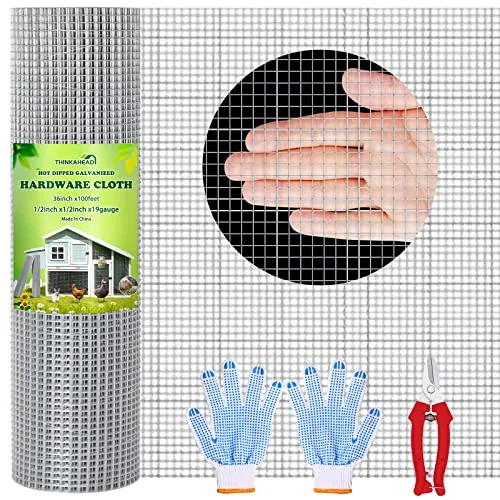
Thinkahead 1/2" Hardware Cloth 36" x 100', 19 Ga
- Size
- 36 in x 100 ft
- Electric
- No
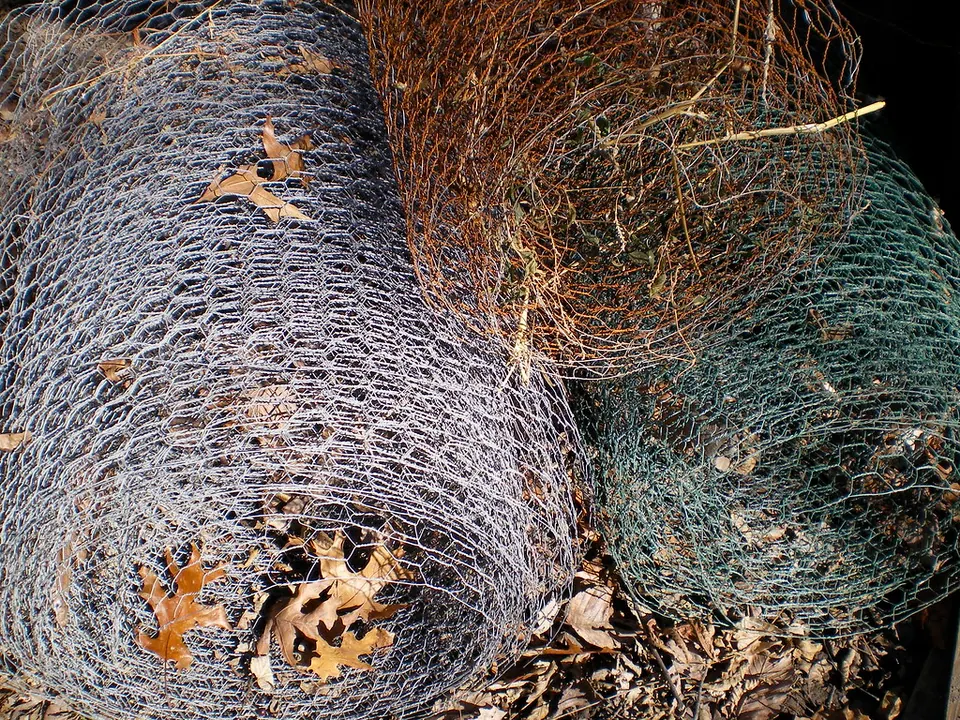
Thinkahead's ½ inch hardware cloth is 36 in wide and 100 ft long, 19 gauge (0.92 mm) and hot-dipped galvanized after welding. A 3 ft width covers the lower run wall plus an apron in one strip, and 100 ft wraps a typical run.
Best for: Building or upgrading a run against diggers and reachers
Skip if: You only need to patch a vent
- ½ in mesh, 19 gauge
- Galvanized after welding
- 36 in x 100 ft roll
- Heavy roll
- Sharp cut edges: wear gloves
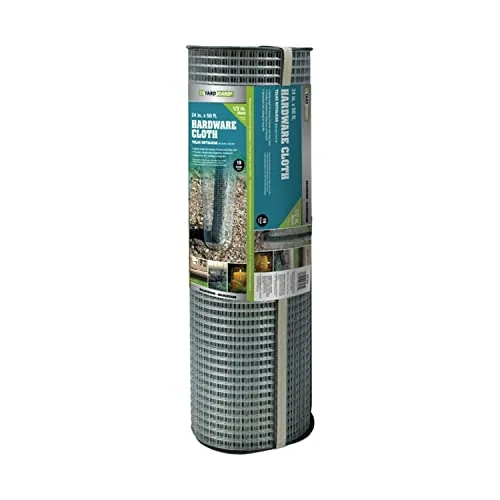
YARDGARD 1/2" Hardware Cloth 24" x 50', 19 Gauge
- Size
- 24 in x 50 ft
- Electric
- No
- Mesh
- 1/2 in, 19 gauge, double zinc-coated
YARDGARD's ½ inch, 19-gauge hardware cloth is double zinc-coated and comes in a 24 in x 50 ft roll that cuts with hand tools, a manageable size for patching gaps, doors and small runs.
Best for: Repairs and small coops
Skip if: You are wrapping a large run
- ½ in mesh, 19 gauge
- Double zinc coating
- Easy to handle
- 24 in width
- 50 ft length
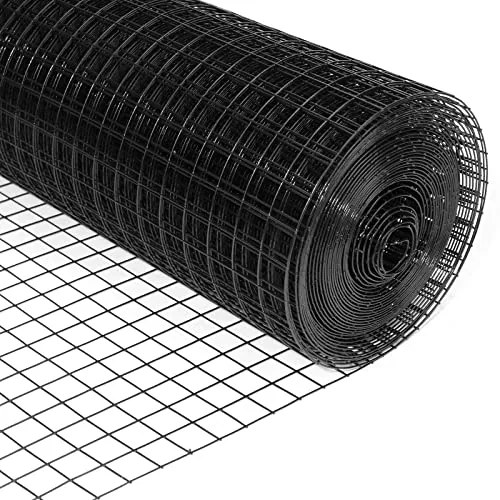
FORIMO 1/4" Hardware Cloth 24" x 50', 19 Gauge
- Size
- 24 in x 50 ft
- Electric
- No
- Mesh
- 1/4 in, 19 gauge, galvanized with black vinyl coating
FORIMO's ¼ inch hardware cloth is 19 gauge, galvanized with a black vinyl coating, 24 in x 50 ft. The smaller openings suit coop windows and vents where rats, weasels and snakes are a worry.
Best for: Coop windows, vents and gaps
Skip if: You need a wide roll for run walls
- ¼ in mesh
- 19 gauge with vinyl coating
- Cuts with snips
- Blocks a little more airflow than ½ in
- 24 in width
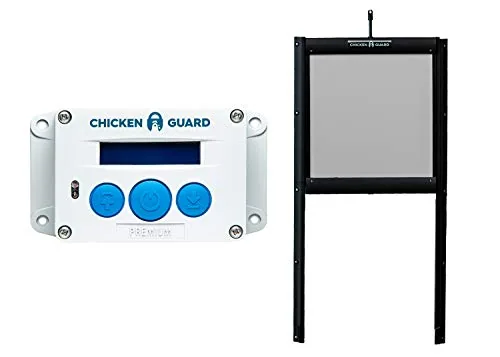
ChickenGuard Premium Opener with Self-Locking Door Kit
- Power
- Battery
- Trigger
- Timer or light sensor
- Predator lock
- Self-locking pop-hole door
- Lift capacity
- 1 kg (2.2 lb)
ChickenGuard Premium pairs a timer and adjustable light-sensor opener with a self-locking pop-hole door kit. The motor lifts doors up to 1 kg (2.2 lb), and ChickenGuard backs it with a three-year warranty.
Best for: Closing the pop hole on time, every night
Skip if: Your door is heavier than 1 kg
- Self-locking door kit
- Timer or light sensor
- 3-year manufacturer warranty
- Battery powered: check batteries
- Count your hens in before it closes
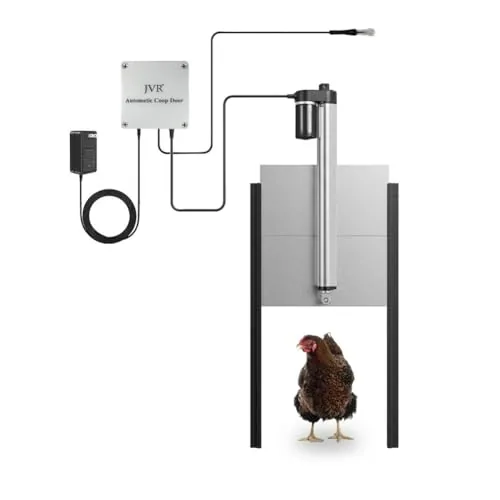
JVR Light-Sensor Automatic Coop Door, Aluminum
- Power
- Battery
- Trigger
- Light sensor
- Door size
- 11 x 12 in opening
- Predator lock
- Screw-rod actuator
JVR's aluminum light-sensor door opens at sunrise and closes at sunset with an 11 x 12 in opening, a 39 in sensor cable, an IP53 control box, pressure-sensing anti-pinch reverse and a screw-rod actuator that resists being pushed up.
Best for: Keepers who want a complete door and frame
Skip if: You want app control
- Screw-rod actuator
- Light sensor follows the seasons
- Anti-pinch reverse
- Battery powered
- Light sensor needs a clear view of the sky
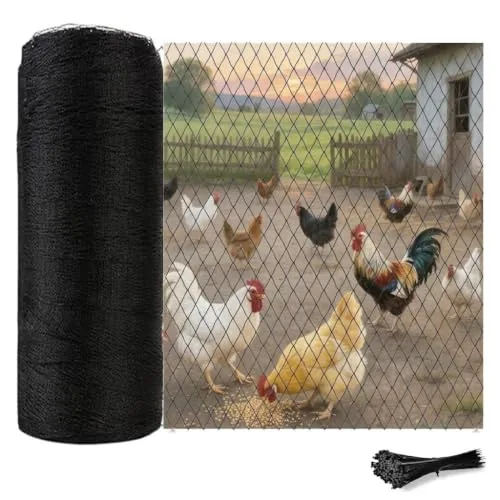
Junflying 50x50 ft Chicken Run Netting, 1" Mesh
- Size
- 50 x 50 ft
- Electric
- No
- Mesh
- 1 in woven HDPE, UV-resistant
- Use
- Run roof cover against hawks and owls
Junflying's 50 x 50 ft net of 1 inch woven UV-resistant HDPE is cut to size to roof a run against hawks and owls. The listing is clear that it does not stop climbing or digging predators.
Best for: Roofing a run against birds of prey
Skip if: You need protection from raccoons: use wire
- 1 in mesh
- UV-resistant HDPE
- 50 x 50 ft to cut
- Does not stop climbers or diggers
- Sags under snow without support
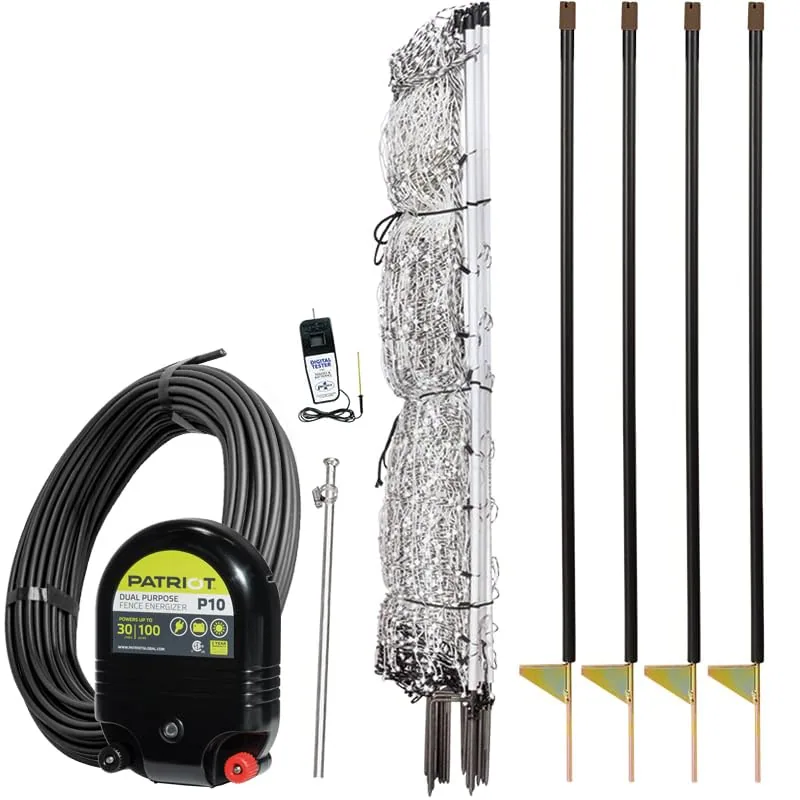
Premier 1 PoultryNet Plus Plug-in Kit, 48" x 100'
- Size
- 100 ft
- Height
- 48 in
- Electric
- Yes, Patriot P10 plug-in energizer included
- Includes
- 4 posts, ground rod, 100 ft cable, digital tester
Premier 1's PoultryNet Plus Plug-in Kit gives 100 ft of 48 in electric netting with a Patriot P10 energizer, ground rod, 100 ft of insulated cable and a digital tester. A shock teaches foxes, dogs and raccoons to keep away from a grazing area.
Best for: Free-ranging hens in daylight
Skip if: You have no outlet nearby (see the solar kits)
- Complete kit with tester
- 48 in height
- Moveable
- No roof against hawks
- Needs grounding and trimmed grass, per the maker
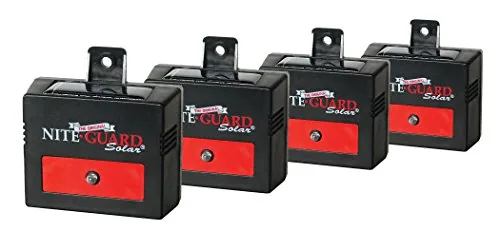
Nite Guard Solar Predator Control Light, 4-Pack
- Power
- Solar
- Trigger
- Light sensitive, dusk to daylight
- Count
- 4 lights
Nite Guard's four-pack of solar flashing lights (model NG-004) switch on at dusk and off at daylight with no switches. The maker says the flash makes night hunters feel watched and lists poultry among its uses; results vary by predator and placement.
Best for: An extra night-time layer around the coop
Skip if: You are counting on lights instead of wire and a locked door
- Solar, no switches
- Dusk-to-dawn flashing
- Four lights
- Deterrence is the maker's claim
- Solar panel needs daylight to charge
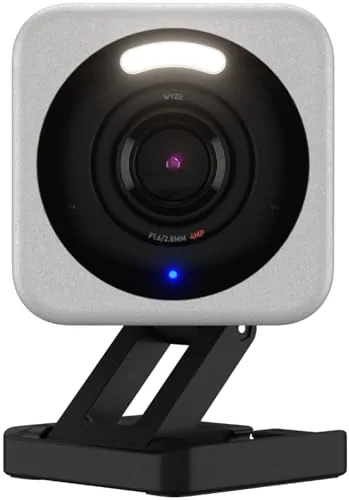
WYZE Cam v4 2.5K Indoor/Outdoor Camera
- Power
- Wired
- Connectivity
- 2.4 GHz Wi-Fi
- Resolution
- 2.5K (2560x1440)
- Night vision
- Color with 72-lumen spotlight
The WYZE Cam v4 records 2.5K video with color night vision and a 72-lumen spotlight on 2.4 GHz Wi-Fi. A camera does not stop a predator, but footage tells you whether you are dealing with a raccoon, a fox or the neighbor's dog, so you fix the right weak spot.
Best for: Coops within Wi-Fi range with power
Skip if: There is no Wi-Fi at the coop
- 2.5K video
- Spotlight for color night video
- Two-way audio
- Wired power
- A record, not a barrier
Which predator gets in where?
Match the defense to the predator. Most losses happen at night, so a locked coop is the first and biggest layer.
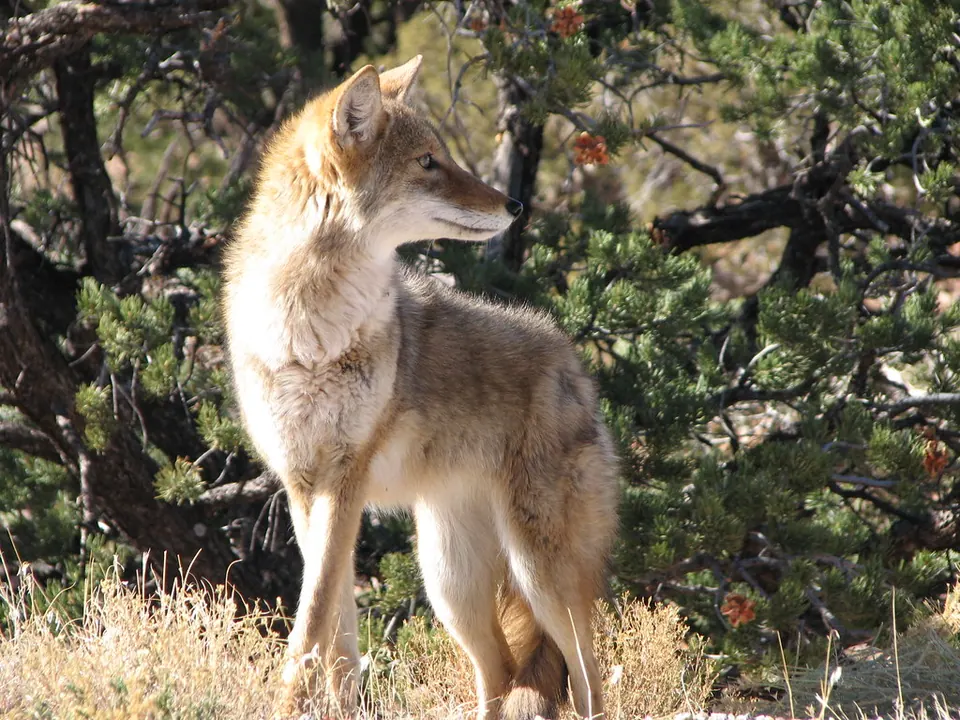
Common backyard predators and the layer that stops them
| Predator | Usual way in | Main defense | Extra layer |
|---|---|---|---|
| Raccoon | Reaches through wire, opens simple latches | ✓ ½ in hardware cloth, two-step latches | Locking auto door, camera |
| Fox, coyote, dog | Digs under or jumps over | ✓ Hardware cloth apron or buried skirt | Electric netting |
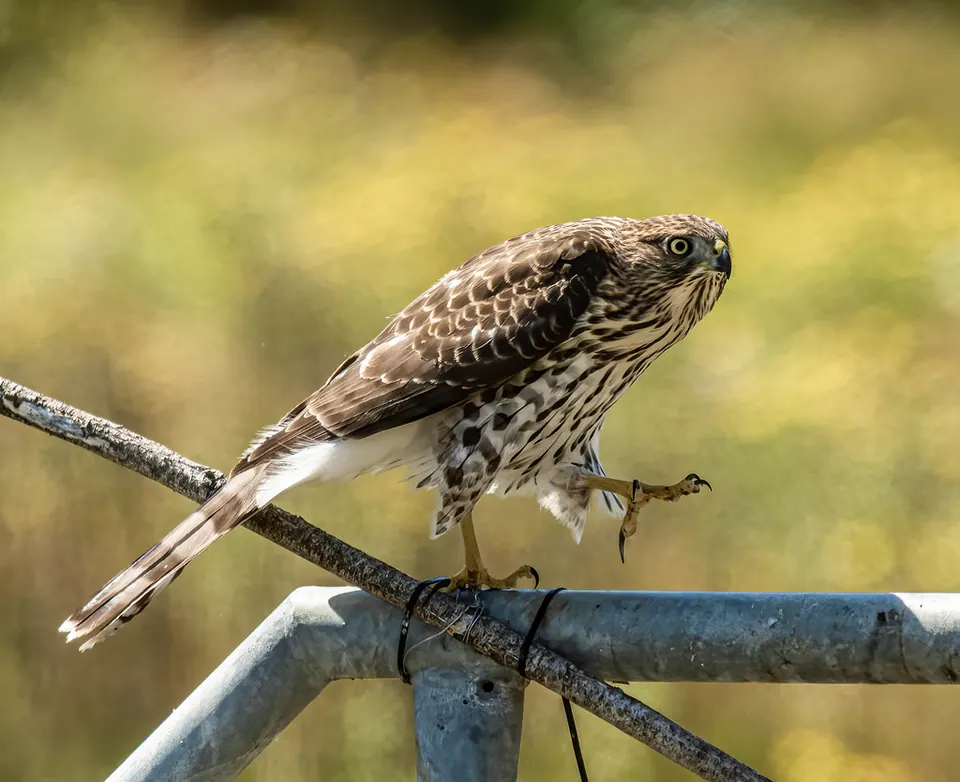
| Hawk | Strikes from above in daylight | ✓ Covered run | Run netting, cover near the run |
| Owl | Night attacks on birds left out | ✓ Birds locked in the coop at dusk | Roofed run |
| Rats, weasels, snakes | Small gaps, vents | ✓ ¼ in hardware cloth on openings | Treadle feeder, sealed feed |
| Any night hunter | Open pop hole | ✓ Door closed every night | Deterrent lights |
Source: General extension guidance; see Penn State Extension, Small-Scale Poultry Housing
Predator protection products compared
| Product | Size | Mesh | Electric |
|---|---|---|---|
| Thinkahead 1/2" Hardware Cloth 36" x 100', 19 Ga | 36 in x 100 ft | 1/2 in, 19 gauge (0.92 mm), hot-dipped galvanized after welding | No |
| YARDGARD 1/2" Hardware Cloth 24" x 50', 19 Gauge | 24 in x 50 ft | 1/2 in, 19 gauge, double zinc-coated | No |
| FORIMO 1/4" Hardware Cloth 24" x 50', 19 Gauge | 24 in x 50 ft | 1/4 in, 19 gauge, galvanized with black vinyl coating | No |
| Junflying 50x50 ft Chicken Run Netting, 1" Mesh | 50 x 50 ft | 1 in woven HDPE, UV-resistant | No |
| Premier 1 PoultryNet Plus Plug-in Kit, 48" x 100' | 100 ft | — | Yes, Patriot P10 plug-in energizer included |
Specs as listed by the maker or seller; check the listing before you buy.
| Product | Power | Trigger | Predator lock | Resolution |
|---|---|---|---|---|
| ChickenGuard Premium Opener with Self-Locking Door Kit | Battery | Timer or light sensor | Self-locking pop-hole door | — |
| JVR Light-Sensor Automatic Coop Door, Aluminum | Battery | Light sensor | Screw-rod actuator | — |
| Nite Guard Solar Predator Control Light, 4-Pack | Solar | Light sensitive, dusk to daylight | — | — |
| WYZE Cam v4 2.5K Indoor/Outdoor Camera | Wired | — | — | 2.5K (2560x1440) |
Specs as listed by the maker or seller; check the listing before you buy.
Hardware cloth coverage per roll, in square feet
Width × length as listed. Lower gauge numbers mean thicker wire: 19 gauge is heavier than 23.
How we chose this predator protection
We sorted products by the layer of defense they provide, then compared listed mesh size, wire gauge, coating and roll size for hardware cloth; lift capacity, trigger and locking mechanism for doors; height, length and included energizer for netting; and power and video specs for lights and cameras. We did not install these products or test them against predators, and deterrence claims for lights are the maker's. Nine picks come from nine brands.
Latches: our catalogue has no stand-alone coop latch, so none is ranked. Buy a two-step latch, a spring-loaded barrel bolt plus a carabiner, or a padlock hasp at a hardware store for every coop and nest-box door; raccoons can open simple hook-and-eye catches.
How to predator-harden a coop and run, step by step
- Close the coop every night
Shut hens in at dusk, every night, or automate it with a locking door. Check the head count first: a hen left outside is the one at risk.
- Swap chicken wire for hardware cloth
Cover windows, vents and run walls with ½ inch hardware cloth, ¼ inch on small openings. Fasten it with screws and washers, not staples alone.
- Stop the diggers
Lay a hardware cloth apron flat on the ground around the run, or bury a skirt, so a digging animal hits wire.
- Latch every door twice
Use two-step latches or add a carabiner to each coop door, nest-box lid and run gate.
- Roof the run
Cover the run with wire or netting against hawks and owls. A covered run also keeps wild birds out, which USDA APHIS recommends to lower bird-flu risk.
- Add deterrents and eyes
Electric netting for ranging areas, flashing lights at night, and a camera to see what keeps coming back.
- Remove the attractions
Store feed in metal bins, collect eggs daily and clean up spilled feed. Add a nightly door check to the flock care checklist.
Predator protection mistakes to avoid
- Trusting chicken wire. It keeps hens in; it does not keep a raccoon out.
- Leaving the pop hole open "just tonight". One open night is all a predator needs.
- Relying on deterrents alone. Lights and sirens may help; wire and locks do the real work.
- Staples on hardware cloth. Use screws with fender washers so it cannot be pried off.
- Forgetting the roof. Hawks and owls come from above. Kit runs often need a cover; see our run picks.
- Electric netting with no ground or tall grass. Follow the energizer maker's grounding instructions; see electric poultry netting.
- Ignoring losses you cannot explain. Sudden deaths with no wounds may be disease, not predators. Report them to your state veterinarian or USDA at 1-866-536-7593.
Who should choose which predator protection?
- Every coop: ½ inch hardware cloth on openings and two-step latches on doors.
- Busy schedules or late evenings: ChickenGuard Premium or JVR light-sensor door; compare more in automatic coop doors and coop automation.
- Raccoon country: hardware cloth everywhere, locking door, camera.
- Fox, coyote or dog pressure: hardware cloth apron plus electric netting for ranging.
- Hawks overhead: Junflying run netting or a solid run roof. More run gear is in runs and fencing.
- Rats and snakes: ¼ inch hardware cloth on vents and windows, sealed feed bins.
- Unknown visitor: start with a camera to find out what you are dealing with; see our coop camera picks.
The most effective predator protection for chickens is the plainest: a coop locked every night and ½ inch hardware cloth on every opening, with an apron against diggers. Thinkahead hardware cloth and a locking door such as the ChickenGuard Premium cover those two layers. Add run netting against hawks, electric netting for ranging, and lights or a camera on top, knowing that no product guarantees a predator-free night.
We compare manufacturer specs and listing data (egg capacity by egg size, forced or still air, humidity control, turner type and auto-stop, alarms; coop floor area against the claimed number of hens, wood or plastic, nest boxes, latches; door lift capacity, power and sensor; feeder and waterer capacity and heater wattage; feed protein and form) and what the maker says each product is for, alongside extension, CDC, USDA and FDA guidance. Coop capacity is recounted from the listed floor area with published space norms. We did not hatch eggs in, house birds in, install or lab-test these products, and we never show invented scores, ratings or prices.