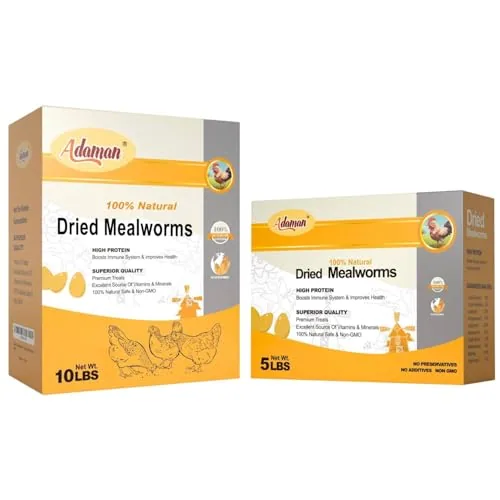
- Mealworms vs black soldier fly larvae: Manna Pro lists its dried mealworms at 50% protein; BSF listings give 30–45% protein and more fat (FLYGRUBS: 25–30%).
- BSF sellers claim far more calcium than mealworms: 85× (Adaman, FLYGRUBS, GRUBSFARM) or 50× (Eaton). These are maker claims, not independent tests.
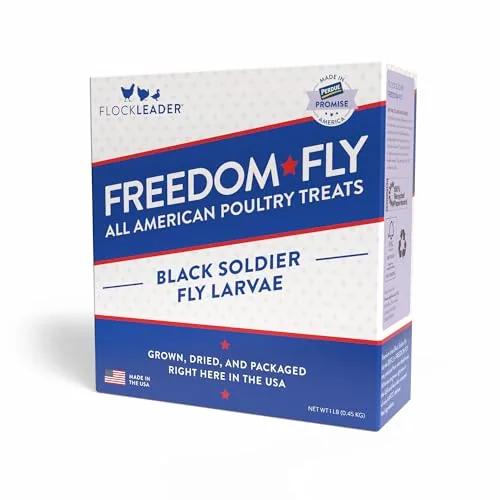
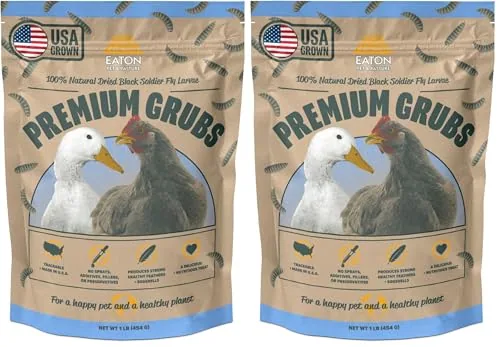
- Several BSF brands state US or North American sourcing: FLOCKLEADER (grown in Kentucky), Eaton, Scratch and Peck, Happy Hen.
- Both are treats, not feed. Purina’s guidance is to keep treats at 10% or less of a hen’s diet, with complete layer feed making up the rest.
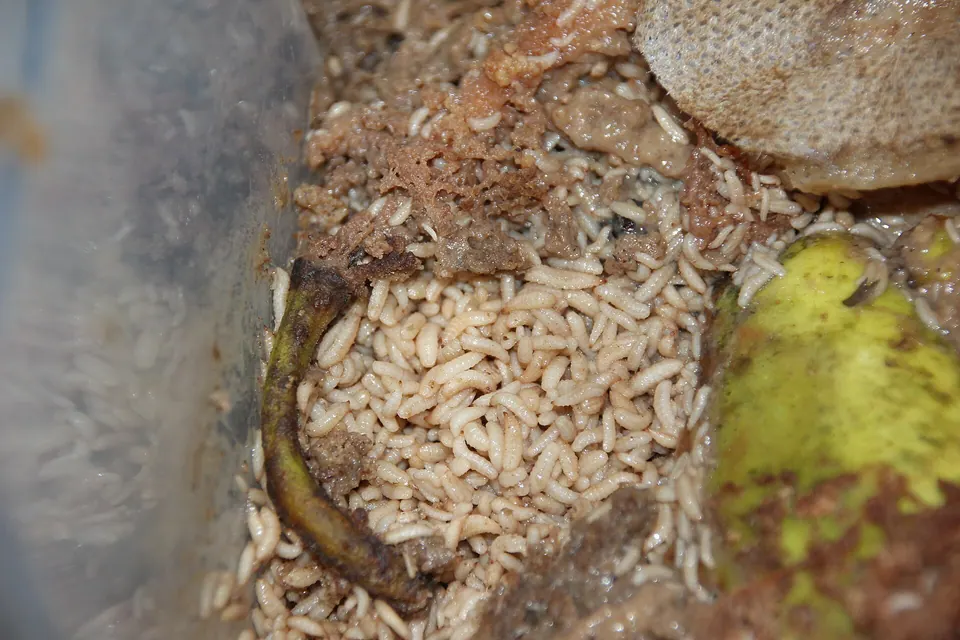
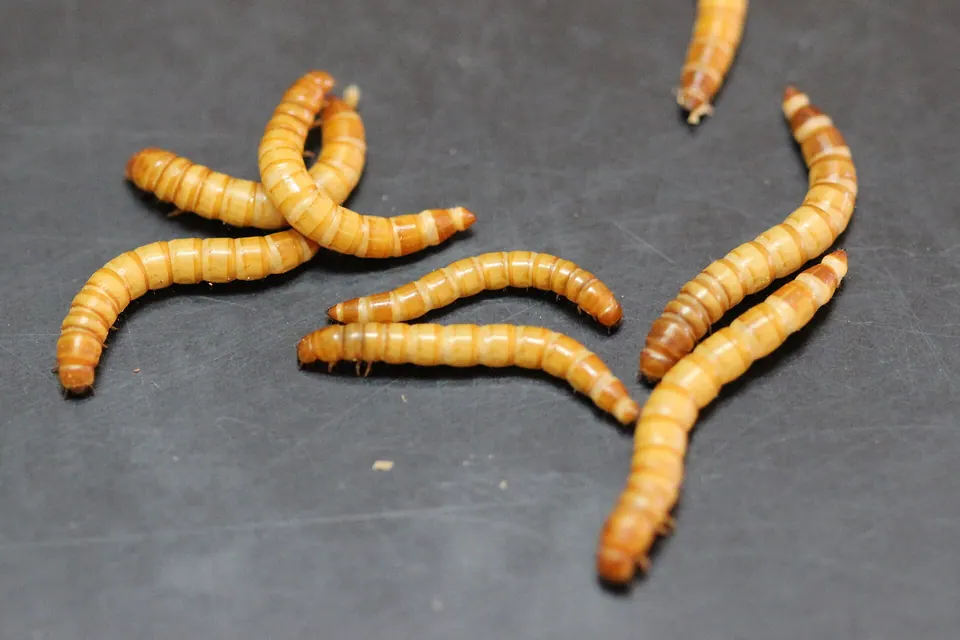
Mealworms vs black soldier fly larvae is a common question once you see how fast hens run for a handful of dried insects. Both are larvae, both are sold dried in resealable bags, and both work for taming, training and calling hens back into the run. Their labels differ, though: mealworms are sold on protein, BSF larvae on calcium and sustainability.
We compared the dried treats in our catalogue using only what each listing states (protein, fat, sourcing, bag size and the makers’ calcium claims), and added published guidance on keeping treats in proportion. We did not feed these products to a flock. Nutrition figures are copied as listed; where a listing gives none, we say so.
Dried mealworms
Dried beetle larvae, listed at about 50% protein; the classic training and taming treat
Browse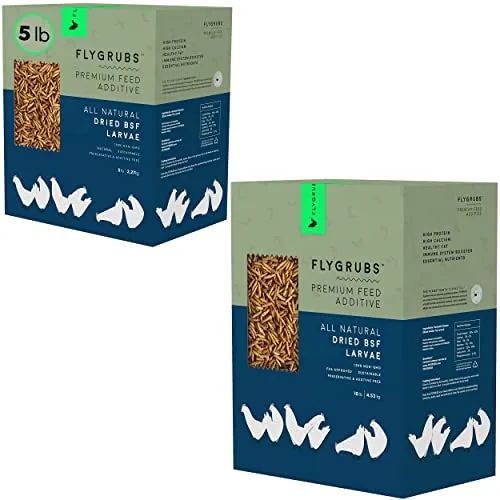
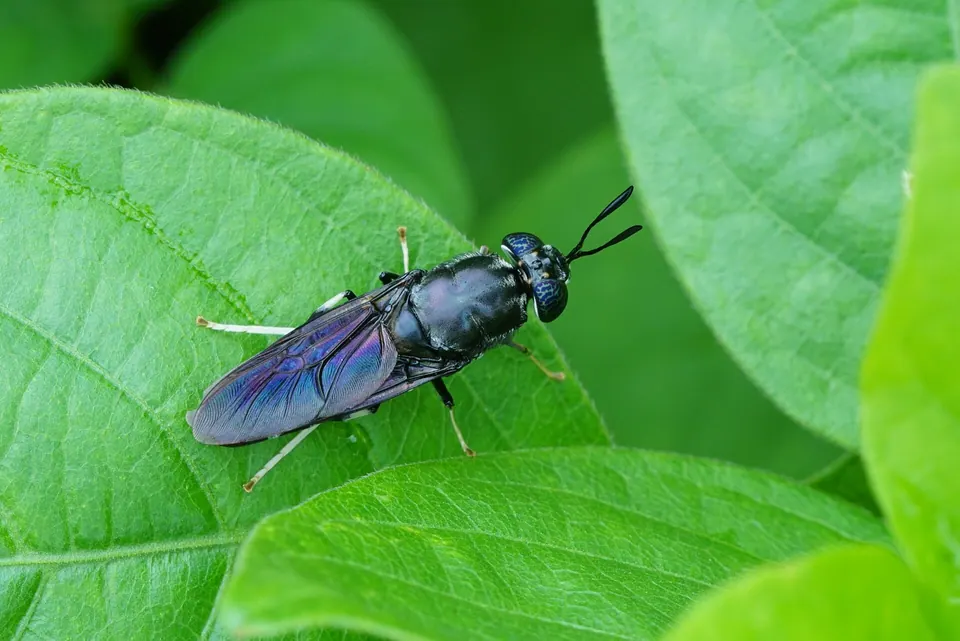
Black soldier fly larvae
Dried BSF grubs, listed at 30–45% protein, sold with large calcium claims; several are US-grown
BrowsePicks from each side
Dried mealworms
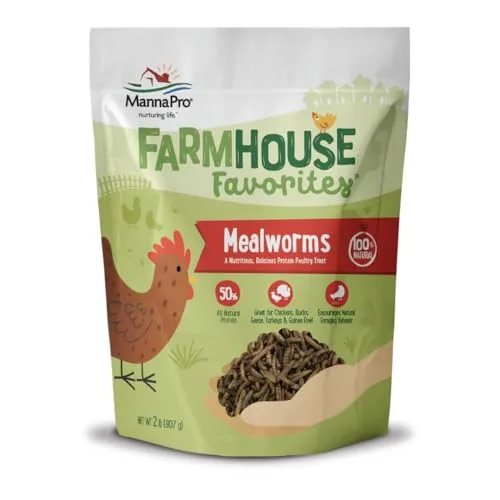
Manna Pro Farmhouse Favorites Dried Mealworms, 2 lb
- Type
- Dried mealworms
- Size
- 2 lb
- Protein %
- 50%
Best for Regular treat feeding
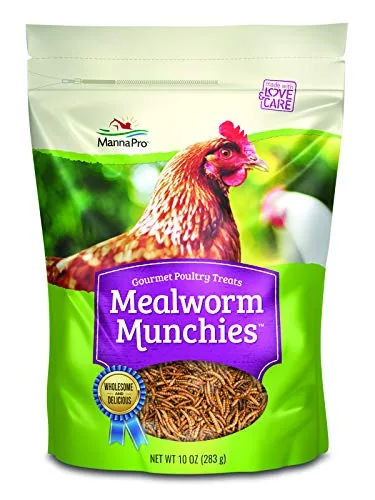
Manna Pro Mealworm Munchies, 10 oz
- Type
- Dried mealworms
- Size
- 10 oz
Best for Trying mealworm treats
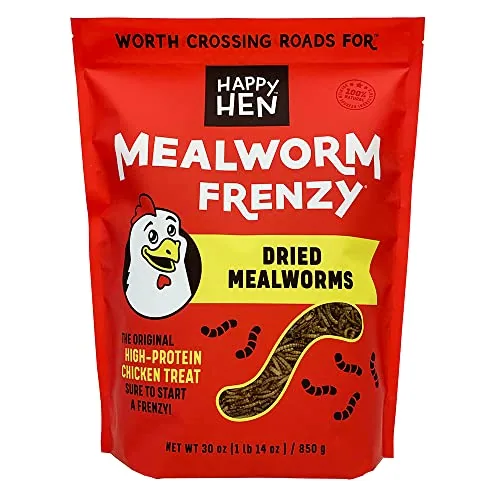
Happy Hen Treats Mealworm Frenzy, 30 oz
- Type
- Dried mealworms
- Size
- 30 oz tub
Best for Training and taming hens
Black soldier fly larvae
FLOCKLEADER Freedom Fly BSF Larvae Treat, 1 lb
- Type
- Dried BSF larvae
- Size
- 1 lb
Best for Coop-kept hens needing foraging
Eaton Pet & Pasture USA-Grown BSF Grubs, 1 lb x2
- Type
- Dried BSF larvae
- Size
- 1 lb, pack of 2
Best for US-sourced treats
FLYGRUBS Dried BSF Larvae Chicken Treat
- Type
- Dried BSF larvae
- Size
- Multiple sizes (5 lb, 1 lb, 10 lb)
- Protein %
- 36-42%
Best for Scatter treats and molting season
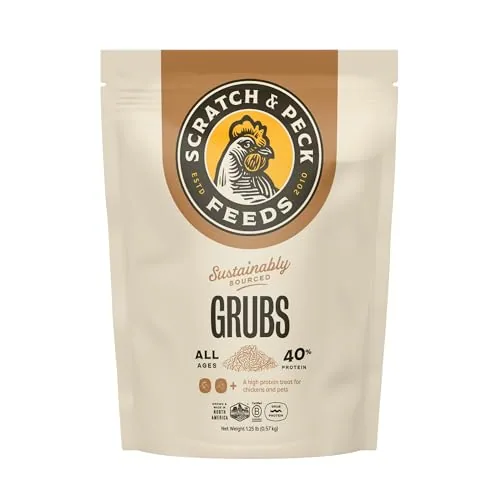
Scratch and Peck Grubs BSF Larvae, 20 oz
- Type
- Dried BSF larvae
- Size
- 20 oz
- Protein %
- 30% (title)
Best for Sustainably sourced treats
Mealworms vs black soldier fly larvae: listed nutrition
What the listings state
| Product | Type | Protein (as listed) | Fat (as listed) | Calcium claim | Sourcing (as listed) |
|---|---|---|---|---|---|
| Manna Pro Mealworm Munchies | Mealworms | 50% crude | 20% crude | Not listed | Not listed |
| Manna Pro Farmhouse Favorites | Mealworms | 50% | Not listed | Not listed | Not listed |
| Happy Hen Mealworm Frenzy | Mealworms | Not listed | Not listed | Not listed | Not listed |
| Adaman Dried BSF Larvae | BSF | Up to 45% crude | 35% lipids | 85× mealworms (maker) | Not listed |
| FLYGRUBS | BSF | 36–42% | 25–30% | 85× mealworms (maker) | Not listed |
| Scratch and Peck Grubs | BSF | 30% (title); up to 40% (text) | Not listed | Calcium mentioned, no figure | North America, pre-consumer food waste |
| Eaton Pet & Pasture Premium Grubs | BSF | Not listed | Not listed | 50× mealworms (maker) | USA grown |
| FLOCKLEADER Freedom Fly | BSF | Not listed | Not listed | Calcium mentioned, no figure | Grown and dried in Kentucky |
Source: Product listings
Listed protein
Percent; upper figure where a range is given
Protein numbers are not directly comparable unless they are measured the same way. Manna Pro lists “crude protein” for Mealworm Munchies alongside 20% crude fat, 10% crude fiber and 12% moisture; some BSF listings give a range or an “up to” figure. Scratch and Peck’s own listing gives 30% in the title and up to 40% in the description.
Do BSF larvae really have more calcium?
Every BSF brand in our catalogue sells on calcium. Adaman, FLYGRUBS and GRUBSFARM claim 85 times more calcium than mealworms; Eaton Pet & Pasture claims 50 times. None of these listings prints the calcium percentage behind the multiple, so treat the numbers as marketing claims.
Even if a treat is high in calcium, it does not replace the calcium in a complete layer feed or free-choice oyster shell. University of Minnesota Extension says a laying hen’s diet should include crushed oyster shell for egg production. Keep layer feed and oyster shell as the base; see Manna Pro vs Kalmbach layer feed.
How many treats should chickens get?
Treats are easy to overdo because hens love them. Purina’s advice is a 90/10 rule: treats, including scraps, scratch grains and mealworms, should be 10% or less of a hen’s diet. University of Minnesota Extension says scratch is fine in moderation but doesn’t meet all nutritional needs.
To put 10% in numbers: extension services estimate a laying hen eats about ¼ lb of feed a day. Ten percent of that is roughly 0.4 oz a day per hen, or under 3 oz a day for six hens, counting every treat and scrap together. A 2 lb bag split that way lasts six hens more than ten days, even at the 10% ceiling.
Bag sizes, as listed
Pounds per purchase
Big bags only make sense for big flocks. Dried insects keep better sealed, cool and dry, and a 15 lb bag at the 10% rule would last six hens for months. The feed and egg cost calculator helps you count treats into your monthly feed budget.
Sourcing and sustainability
BSF larvae are often marketed on sustainability. Scratch and Peck says its larvae are raised in North America on traceable pre-consumer food waste and that each pound upcycles 18 pounds of that waste. Eaton says its grubs are always USA grown on pre-consumer waste fed to AAFCO guidelines. FLOCKLEADER says Freedom Fly is grown and dried in Kentucky and packaged in Arkansas in facilities compliant with FSMA standards, and Happy Hen’s Grub Frenzy is labeled North American.
Mealworm listings in our catalogue say less about origin. Manna Pro and Happy Hen describe their products as 100% dried mealworms; Adaman lists non-GMO and no preservatives; TradeKing says its mealworms are veterinary certified. If origin matters to you, BSF brands give more detail.
Who should choose which?
- Choose mealworms if you want the highest listed protein figure (50% on Manna Pro) for an occasional treat or for taming and training birds.
- Choose BSF larvae if you want US or North American sourcing on the label, or prefer the calcium-focused treat the makers describe; FLOCKLEADER and Eaton list US-grown larvae.
- Choose a small bag for three to six hens: 1–2 lb lasts a long time at 10% of the diet.
- Keep both rare during molt and lay. Treats never replace a complete feed; if laying stops, check daylight, age and molt first in our not-laying guide.
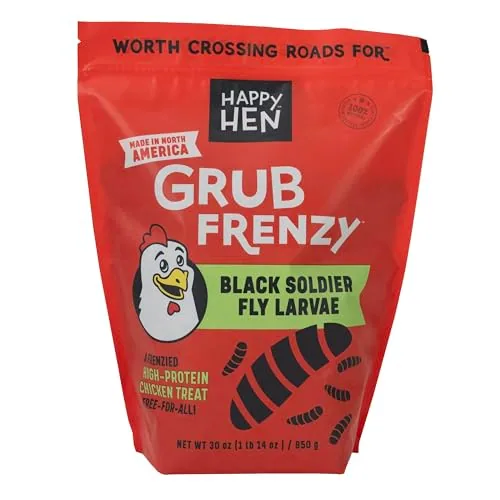
Happy Hen Treats Grub Frenzy, 30 oz
- Type
- Dried BSF larvae
- Size
- 30 oz
Best for Taming and training chickens
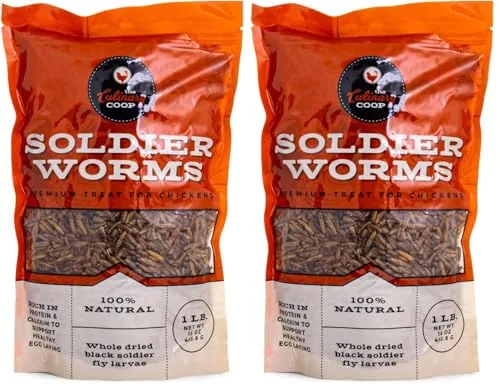
Fluker's Culinary Coop Dried Soldier Worms, 16 oz x2
- Type
- Dried BSF larvae
- Size
- 16 oz, pack of 2
Best for Laying-hen treats
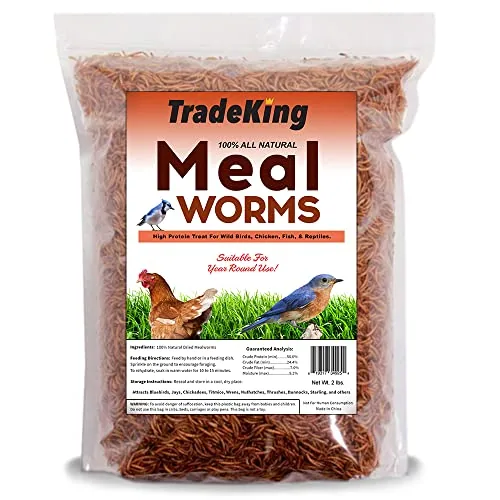
TradeKing Dried Mealworms, 2 lb
- Type
- Dried mealworms
- Size
- 2 lb
Best for Taming and treat feeding
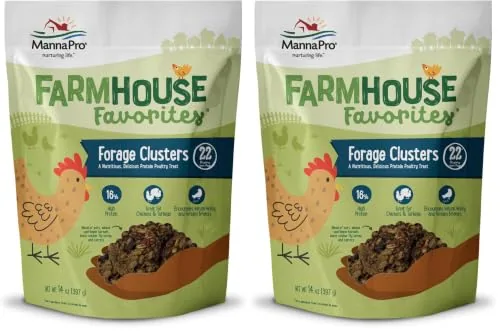
Manna Pro Forage Clusters BSF Treats, 14 oz x2
- Type
- BSF larvae and grain clusters
- Size
- 14 oz, pack of 2
Best for Boredom busters for confined hens
Mistakes to avoid
- Feeding treats instead of feed. Keep treats at or under 10% of the diet (Purina) so the complete layer feed does its job.
- Trusting “85×” as a calcium plan. Keep oyster shell available to laying hens (UMN).
- Scattering treats where wild birds feed. USDA APHIS advises keeping wild birds away from your flock’s feed; scatter treats inside the covered run.
- Buying a bulk bag for a small flock. Big bags can sit open for months; buy what you’ll use.
- Expecting a cure. Insect treats are not medicine. For a sick bird, contact a veterinarian or your state poultry lab.
More treat and grub options are in best mealworms and grubs, the feed and supplements category and the first flock hub.
Mealworms carry the higher listed protein (50% on Manna Pro’s labels) and remain the classic taming treat. Black soldier fly larvae list somewhat less protein and more fat, come with large maker calcium claims and, from several brands, US or North American sourcing. Either is fine as a small treat. What matters more is keeping treats at 10% or less of the diet and leaving complete layer feed and oyster shell as the base.