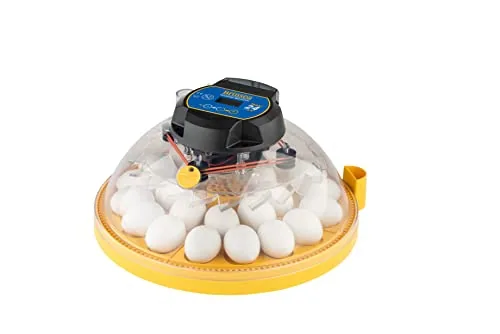
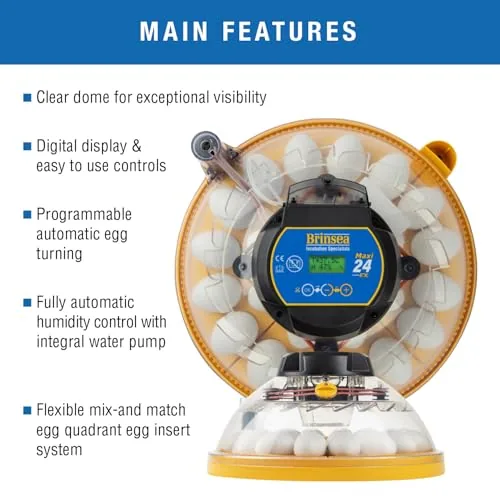
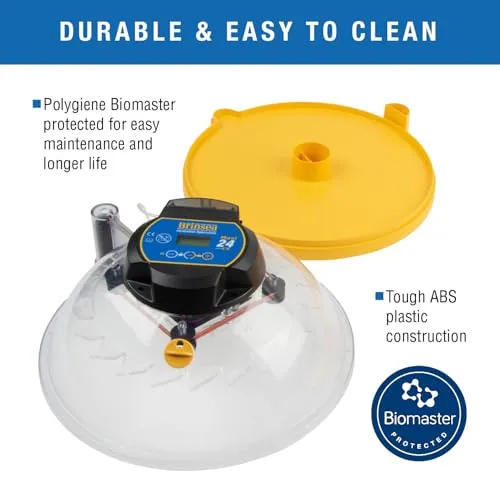
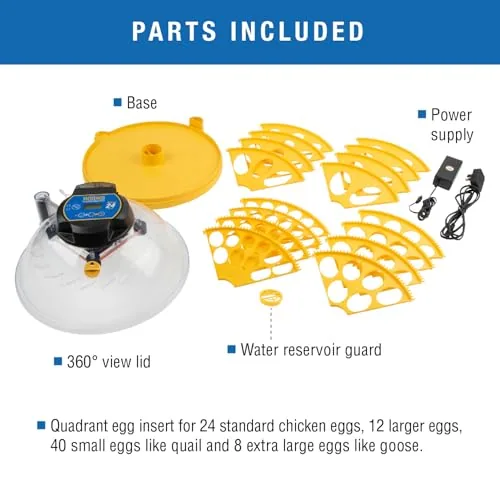
- Holds 24 hen, 40 quail, 12 duck or 8 goose eggs with the four included quadrant sets, per Brinsea.
- Automatic humidity: set 20–80% RH and a pump feeds water to an evaporating card.
- Automatic turning, but no countdown auto-stop: switch it off 2 days before hatch.
- High and low temperature alarms plus room-temperature alarms; needs a room of 68–77°F, never below 63°F.
- Listing states a 4-year limited warranty subject to registration.
This Brinsea Maxi 24 EX review covers model USAC271C, the auto-humidity version of Brinsea’s 24-egg dome incubator. The Advance version of the same body uses manual water pots. The EX adds a pump and a humidity sensor, so you dial in a %RH number rather than guessing how much water surface to expose.
We read Brinsea’s US manual, the listing and extension incubation tables. We did not incubate eggs in it. All capacities, settings and limits below are Brinsea’s own, and your incubator’s manual always comes first.
Who it’s for, and who should skip it
- Hatch more than one species and want quadrants for quail, hen, duck and goose eggs in one machine
- Want humidity held automatically at a number you set, including a quick change at lockdown
- Are hatching valuable or rare-breed eggs and want alarms for both incubator and room temperature
- Set about two dozen hen eggs at a time, or up to 40 quail
- Want an incubator that stops turning by itself on a countdown
- Would rather not maintain pump tubing every few months
- Plan to run it in a cold garage or porch below 63°F
- Need more than 24 hen eggs per batch (Brinsea’s Maxi 48 EX is the larger sibling)
Pros and cons
- Automatic humidity control from 20% to 80% RH, set in the menu
- Four quadrant sets included: 24 hen, 40 quail, 12 duck or 8 goose eggs
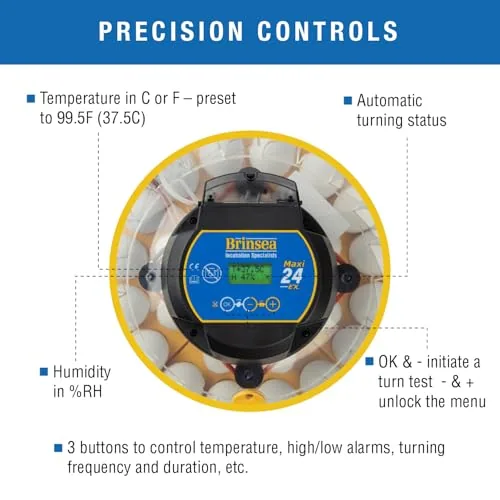
- Digital display of temperature in °F or °C, %RH and turning status
- High and low temperature alarms plus room-temperature alarms
- Adjustable turn interval and turn angle; adjustable air vent
- Listing states a 4-year limited warranty subject to registration
- No countdown auto-stop: you switch turning off for lockdown
- Pump tubing needs replacing about every three months of use
- The pump can only add humidity; in humid rooms it cannot pull it down
- Water container must sit beside it, not above it, to prevent siphoning
- Needs a heated room, never below 63°F per Brinsea
Specs
| Egg capacity | 24 chicken, 12 large, 8 jumbo or 40 small eggs |
|---|---|
| Turning | Automatic |
| Humidity control | Automatic |
| Fan | Forced-air (fan-assisted) |
| Display/alarms | Temp °F/°C, %RH, turning status; high/low alarms |
As stated by the maker or seller; confirm on the listing before you buy.
How does the Brinsea Maxi 24 EX humidity system work?
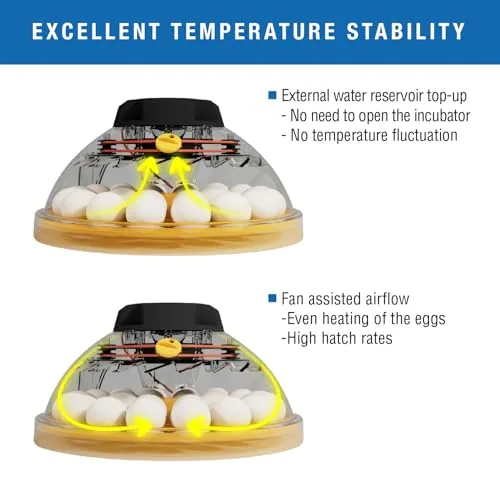
The EX uses a peristaltic pump on the lid. A silicone tube runs from a 1–2 pint water container you place beside the incubator, around the pump capstan and down a rigid tube that drips onto an evaporating card in the central water pot. Warm air drawn over the card picks up the moisture, mixes in the heating chamber and passes over the eggs. Under normal conditions, Brinsea says, all the water evaporates and none should collect.
You set the target in the RH% menu (range 20–80%, default 20%). The pump runs whenever measured humidity is below the setting and the incubator is up to temperature. It does not run during periodic cooling or when the lid has been off long enough to drop the temperature, so it will not flood the chamber after an inspection. The vent is a second control: close it to raise humidity, open it to lower it. Brinsea suggests the minimum vent setting with automatic humidity.
Capacity: what fits in each quadrant?
The Maxi 24 EX ships with four sets of quadrant inserts, so you can fill the whole incubator with one egg size or mix sizes for different species at once. The turning angle is set by how long the motor runs, so mixed sizes mean a compromise. Brinsea says to set the angle so the larger or inner-circle eggs turn about 90 degrees.
Maxi 24 EX capacity by egg size
| Egg type | Typical capacity | Quadrant part no. |
|---|---|---|
| Hen | 24 | AC06 |
| Quail | 40 | AC10 |
| Pheasant | 24 | — |
| Duck | 12 | AC03 |
| Goose | 8 | AC02 |
Source: Brinsea Maxi 24 EX manual, specifications
Mixing species is possible, but incubation lengths differ. Coturnix quail hatch around day 17 and ducks around day 28 (MSU), and turning and humidity change at lockdown. In practice, set eggs that will hatch on the same day, or stagger the set dates. Our incubation calculator works out set dates backward from a shared hatch day.
Setting up and running the Maxi 24 EX
- Room and placement
A heated room at 68–77°F, never below 63°F, out of direct sunlight, on a level, water-resistant table, not the floor.
- Fit the evaporating card
Cut a strip about 1¾ × 5 in, fold it lengthwise over the central rib of the water pot, then fit the water pot guard so chicks cannot drown. Do not add water to the pot.
- Thread the pump tube
Wrap the pump tube around the capstan, fit the cover and run the supply tube to your water container on the same surface.
- Warm up
Run it until stable at the default 99.5°F (37.5°C). Brinsea’s example poultry settings: 45% RH with the vent at minimum, a 45-minute turn interval and a 7-second turn angle.
- Set the eggs
Lay eggs flat, pointed ends toward the middle of each quadrant. Do not change the temperature for 24 hours. Check the water container every 3 days or so.
- Lockdown
Two days before hatch, switch turning OFF, remove the quadrants, lay eggs on the hatching mat and raise the RH setting for hatching (Brinsea: 65% or more for all species).
Incubation by species: forced-air settings, with the still-air offset
| Species | Days to hatch | Forced-air temp | Still-air temp | Wet-bulb, days 1 to lockdown → last 3 days | Relative humidity | Stop turning (day) |
|---|---|---|---|---|---|---|
| Chicken | 21 | 100°F (37.8°C) | 102–103°F | 85–87°F → 90°F | 45–50% → 65% or more | 18 |
| Duck (most breeds) | 28 | 100°F (37.8°C) | 102–103°F | 85–86°F → 90°F | 55–60% → 70% or more | 25 |
| Muscovy duck | 35–37 | 100°F (37.8°C) | 102–103°F | 85–86°F → 90°F | 58–60% → 65% or more | 31 |
| Coturnix quail | 17 | 100°F (37.8°C) | 102–103°F | 85–86°F → 90°F | 40–50% → 65% or more | 15 |
| Bobwhite quail | 23–24 | 100°F (37.8°C) | 102–103°F | 84–87°F → 90°F | 40–50% → 65% or more | 20 |
| Turkey | 28 | 99°F (37.2°C) | 101–102°F | 84–86°F → 90°F | 58–60% → 65% or more | 25 |
| Goose | 28–34 | 99°F (37.2°C) | 101–102°F | 86–88°F → 90°F | 58–60% → 65% or more | 25 |
| Guinea fowl | 28 | 100°F (37.8°C) | 102–103°F | 85–87°F → 90°F | 58–60% → 65% or more | 25 |
| Pheasant | 23–28 | 100°F (37.8°C) | 102–103°F | 86–88°F → 92°F | 58–60% → 65% or more | 21 |
| Peafowl | 28–30 | 99°F (37.2°C) | 101–102°F | 84–86°F → 90°F | 58–60% → 65% or more | 25 |
| Chukar partridge | 23–24 | 100°F (37.8°C) | 102–103°F | 81–83°F → 90°F | 58–60% → 65% or more | 20 |
Days, temperatures, wet-bulb and stop-turning days: Mississippi State University Extension, Important Incubation Factors. Still-air: add 2–3°F, measured at the top of the eggs (MSU). Relative humidity: Brinsea, Humidity during incubation for chickens, ducks and quail; other species show MSU's general 58–60%. Follow your incubator's manual first.
Brinsea’s manual gives 40–50% RH for poultry and 45–55% for waterfowl during incubation, 65% or more at hatch, and target weight losses of about 13% (poultry) and 14% (waterfowl). Weighing eggs is the most reliable check. For a full walkthrough, see how to incubate chicken eggs and the incubation chart by species.
Cleaning, hygiene and storage
After each hatch, unplug the incubator and wash the quadrants and base in Brinsea’s incubation disinfectant, then rinse. Wipe internal surfaces with a damp cloth and brush dust from the fan guard. Do not immerse the top, use a dishwasher or use liquids over 120°F. Before storing, run it empty with no water for 24 hours so it is fully dry. Check the condition of the tubing after every use.
Is the Maxi 24 EX worth the step up from the Advance?
If you mainly hatch chickens in a stable indoor room, the manual-humidity Maxi 24 Advance or a Mini II Advance may be all you need. The EX earns its place when you hatch ducks (which want more humidity), quail (where shallow water pots can drown chicks), or valuable eggs where a steady %RH matters. Duck keepers should read best incubators for duck eggs, and quail keepers best quail incubators. Browse the incubation hub or the ducks, quail and turkeys hub for brooders and feeders sized for small hatchlings.
Alternatives worth a look
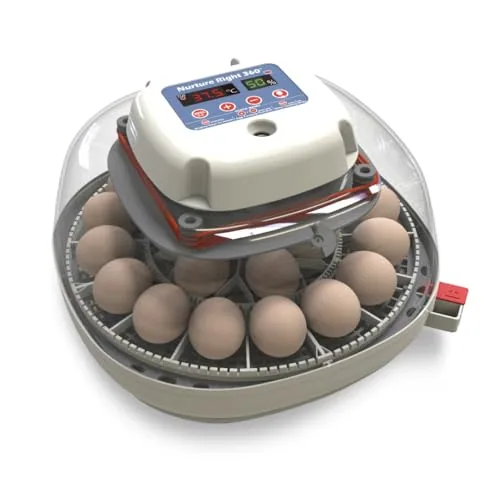
Nurture Right 360 Incubator, 22 Eggs, Auto Turner
- Egg capacity
- 22 chicken, 12–18 duck or 22–24 pheasant eggs
- Turning
- Automatic with auto-stop
- Humidity
- Display and control knob
Best for Family first hatches
Why consider it: A similar batch size (22 chicken eggs) with auto-stop turning and a 360° view, if you are happy managing humidity yourself.
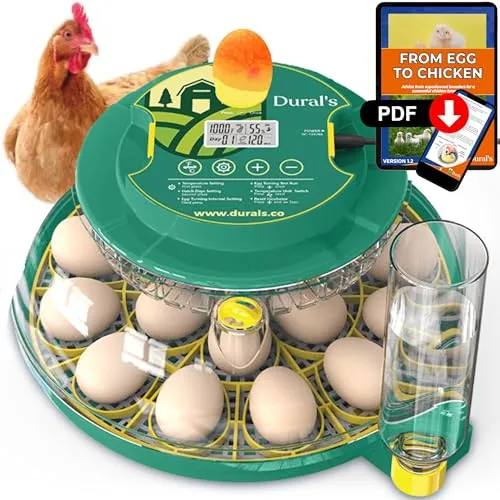
Dural's DX5 18-Egg Incubator, Auto Humidity
- Egg capacity
- Up to 18 eggs
- Turning
- Automatic
- Humidity
- Automatic (as listed)
Best for Small mixed hatches
Why consider it: Dural’s DX5 lists up to 18 eggs, automatic turning and automatic humidity with a built-in candler; check its manual for room limits.
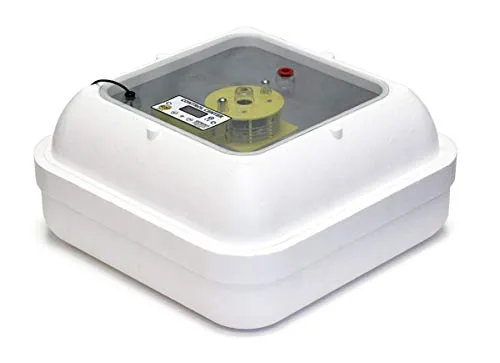
GQF 1588 Hova-Bator with 1611 Auto Turner
- Turning
- Automatic (1611 turner, 6 universal racks)
- Fan
- Forced-air (circulated air)
- Display
- Digital temperature and humidity
Best for A complete HovaBator setup
More eggs, manual water: The foam Hova-Bator 1588 with the 1611 turner fits more chicken eggs per batch and shows humidity digitally, but you add the water.
We read the maker’s specs, manual and the current listing, and checked them against extension, CDC, USDA and FDA guidance where it applies. We did not hatch eggs in, house birds in, install or lab-test this product. We never show scores, star ratings or prices.