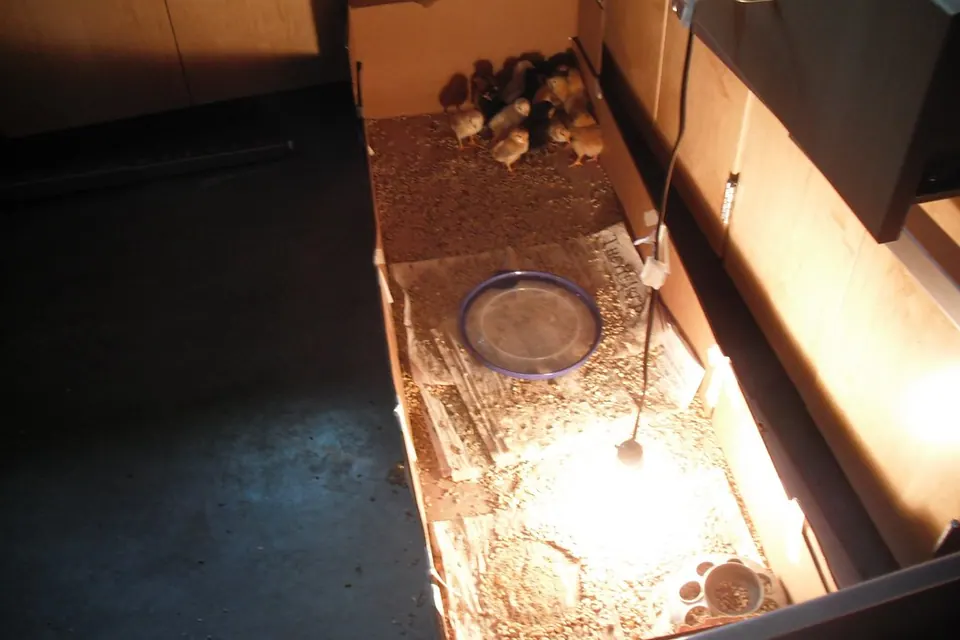
- Heat lamp fire safety starts with not needing one: low-wattage heat plates warm chicks by contact and have no exposed bulb.
- If you use a lamp, secure it with a chain or cable so it cannot move or fall; a spring clamp alone is not adequate (Clark County Fire Marshal, NFPA tips). Never hang a lamp by its cord (University of Minnesota Extension).
- Keep heat lamps at least 20 inches from any flammable material (Penn State Extension), use a guarded fixture, and keep straw and shavings away from the bulb.
- Use agricultural or commercial-grade electrical equipment and avoid extension cords in coops (Clark County Fire Marshal).
- Adult hens rarely need heat: UMN suggests supplemental heat only when the coop falls below 35°F. Dry, draft-free housing matters more.
Heat lamp fire safety is one of the most important things a new chicken keeper can learn. A 250-watt infrared bulb sitting over dry shavings in a wooden brooder or coop is a classic fire setup, and fire departments report coop and garage fires every winter and hatching season. Maine's fire marshal's office has called heat lamps the most dangerous of the common coop fire risks, because chickens can knock them into the bedding.
This guide covers the rules from fire marshals and extension services, how to mount and wire a lamp if you must use one, safer alternatives like heat plates and radiant panels, when adult birds actually need heat, and a printable checklist. Sources include the Clark County (WA) Fire Marshal, the Office of the Maine State Fire Marshal (via Bangor Daily News), Penn State, University of Minnesota and Mississippi State Extension.
Why do heat lamps cause coop fires?
The bulb surface gets very hot, the fixture is often held by a cheap spring clamp, and the area around it is full of dry, combustible bedding, dust, feathers and cobwebs. In a 2023 Bangor Daily News report, the Office of the Maine Fire Marshal's inspection supervisor listed heat lamps, extension cords, straw bedding and water heaters as the top coop fire risks, and said the problem with heat lamps is that chickens can knock them over into the bedding. He also called straw highly combustible.
- Falls: clamps slip, birds fly into the lamp, or a cord gets pulled.
- Too close: bulbs hung low to "warm up" a cold brooder scorch bedding or walls.
- Wiring: indoor extension cords, kinked or chewed cords and overloaded outlets.
- Dust and cobwebs on fixtures and outlets catch fire.
- Water splashing on a hot bulb can shatter it.
Fire marshal and extension rules for heat lamps
What each source says
| Rule | Source | Wording or figure |
|---|---|---|
| Secure the lamp | Clark County Fire Marshal (NFPA tips) | Make sure heat lamps are properly secured; relying on the spring clamp alone is not adequate |
| Hang from chain or cable | Penn State Extension | Use a chain or cable to suspend heating equipment in the brooding area |
| Distance | Penn State Extension | Heat lamps should be at least 20 inches from any flammable material |
| Never by the cord | University of Minnesota Extension | Never hang a heat lamp by the cord |
| Guard the bulb | University of Minnesota Extension | Lamps with a cage around the bulb can help prevent the bulb from contacting the bedding |
| Keep heat from anything that burns | Clark County Fire Marshal | Keep heat lamps and space heaters away from anything that can burn |
| Clean fixtures | Clark County Fire Marshal | Brush cobwebs and dust from light fixtures and outlets regularly |
| Covered bulbs | Clark County Fire Marshal | Use lightbulbs with covers that protect them from dirt |
| Wiring | Clark County Fire Marshal | Use agricultural or commercial-grade equipment; don't use extension cords in coops |
| Stable heaters | Clark County Fire Marshal | Place space heaters on a sturdy surface so they cannot be knocked over |
Source: Clark County (WA) Fire Marshal; Penn State Extension; University of Minnesota Extension
Safer heat: heat plates and radiant brooders
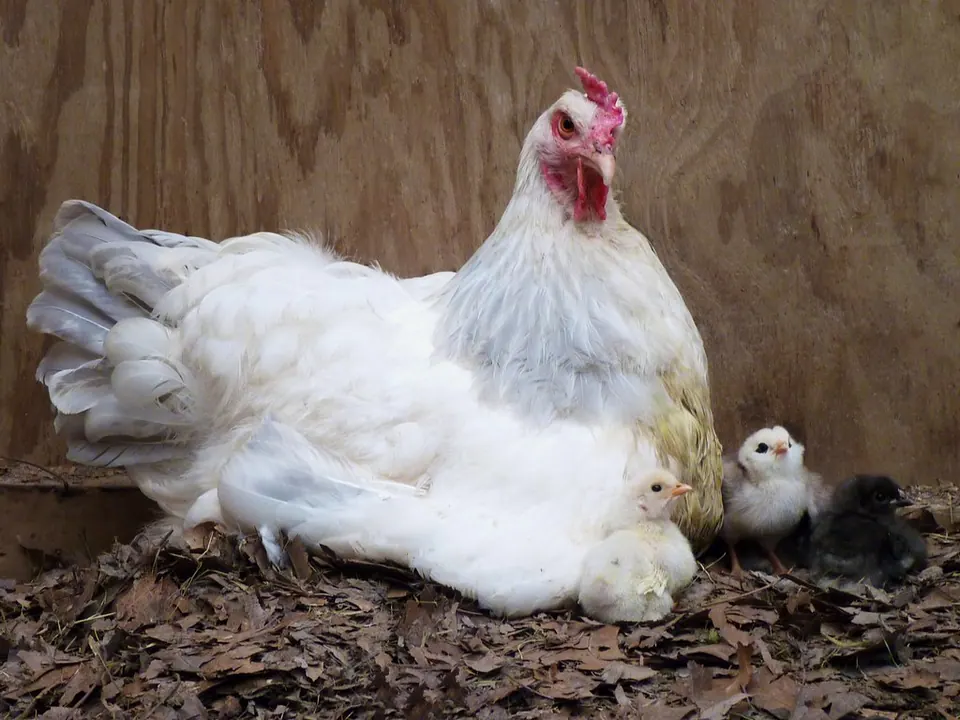
A heat plate (also called a brooder plate or radiant brooder) is a low, flat heater on adjustable legs. Chicks crowd underneath and warm themselves by touching or sitting close to the underside, much as they would under a hen, and walk out to eat and drink. There is no exposed bulb, the wattage is a fraction of a lamp's, and the plate sits low and stable rather than hanging over the bedding. A University of Maine Extension professor quoted by Bangor Daily News warned that heat lamps are risky and suggested heaters designed with safety in mind.
Power draw of brooder and coop heat sources
Watts as listed by the makers in our catalogue
Lower wattage means less surface heat, but any electrical heater still needs a sound cord and dry conditions. Some makers say their plates need a minimum room temperature, so read the manual before brooding in a cold garage, and check the temperature under the plate.
| Product | Wattage | Chicks | Height adjustment |
|---|---|---|---|
| RentACoop 10x10 Heating Plate, Anti-Roost Cone | 15 W | Up to 15 chicks | 25 settings, 1–9 in, tiltable |
| Premier 1 Chick Heating Plate 12x12, 20 Chicks | 22 W | Up to 20 chicks | 1.5–6 in legs |
| Brinsea EcoGlow Safety 1200 Brooder, Up to 35 Chicks | 18 W, low voltage | Up to 35 newly hatched or 20 older chicks | Screw-on legs, height and angle |
| K&H Thermo-Poultry Brooder Plate, Large 40W | 40 W | Up to 30 newborn chicks (fewer as they grow) | Pegged shelf, adjustable |
| Hatching Time Warmzy 10x10 Brooder Plate, 15W | 15 W | 15–20 chicks (by breed and setup) | Four adjustable legs |
| RentACoop 16x16 Heating Plate, Up to 30 Chicks | 42 W | Up to 30 chicks | 25 settings, 1–7 in, tiltable |
Specs as listed by the maker or seller; check the listing before you buy.
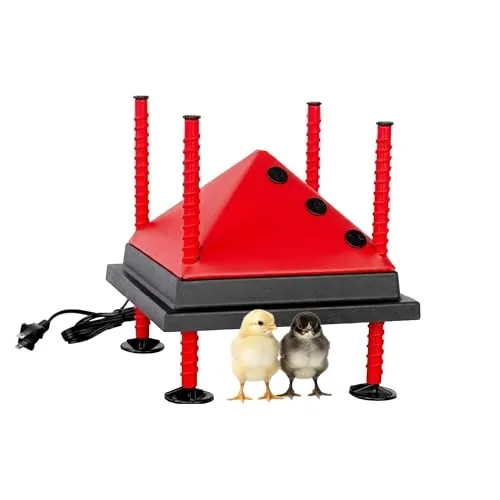
RentACoop 10x10 Heating Plate, Anti-Roost Cone
- Chicks
- Up to 15 chicks
- Heated area
- 10 x 10 in
- Wattage
- 15 W
Best for Small batches of up to 15
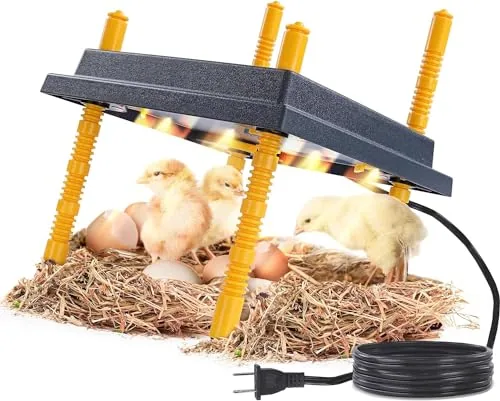
Premier 1 Chick Heating Plate 12x12, 20 Chicks
- Chicks
- Up to 20 chicks
- Heated area
- 12 x 12 in
- Wattage
- 22 W
Best for Home batches up to 20
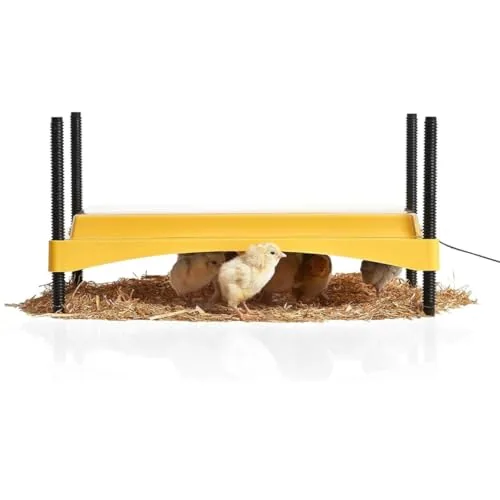
Brinsea EcoGlow Safety 1200 Brooder, Up to 35 Chicks
- Chicks
- Up to 35 newly hatched or 20 older chicks
- Wattage
- 18 W, low voltage
- Height adjustment
- Screw-on legs, height and angle
Best for Larger chick or duckling batches
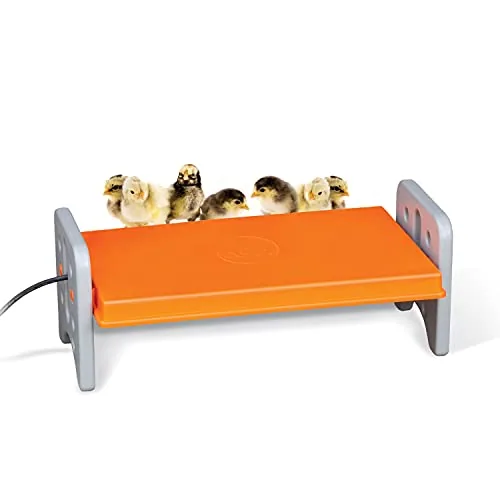
K&H Thermo-Poultry Brooder Plate, Large 40W
- Chicks
- Up to 30 newborn chicks (fewer as they grow)
- Heated area
- 20 x 11.5 x 8 in
- Wattage
- 40 W
Best for Medium chick batches
Size the plate to your brood: makers rate plates by chick count, and that number falls as chicks grow. Compare in best brooder heat plates and heat plate vs heat lamp; Brinsea's plate has its own EcoGlow review.
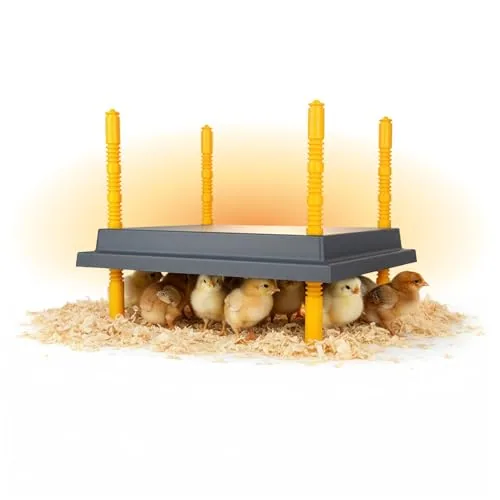
Hatching Time Warmzy 10x10 Brooder Plate, 15W
- Chicks
- 15–20 chicks (by breed and setup)
- Heated area
- 10 x 10 in
- Wattage
- 15 W
Best for Small backyard chick batches
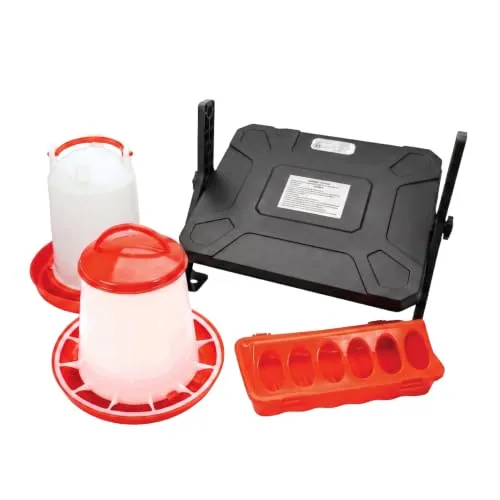
Farm Innovators PSK-1 Starter Kit with Heat Plate
- Wattage
- 20 W heat plate
- Height adjustment
- Adjustable slope, anti-roost
- Includes
- 1.5 lb chick feeder, 1.5 qt waterer, 8 in ground feeder
Best for First-time chick keepers
If you must use a heat lamp: setup step by step
Sometimes a lamp is the only heat you have, for example for a large brood in a cold barn. If so, set it up as carefully as you would any space heater.
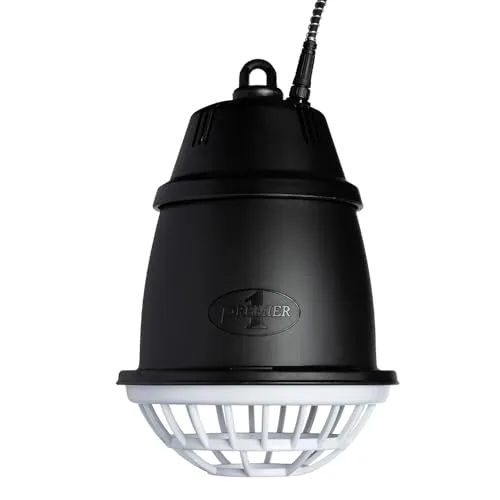
- Use a heavy-duty, guarded livestock fixture
Choose a lamp with a sturdy guard over the bulb and an agricultural-grade cord. Some fixtures add a tilt shut-off, such as Premier 1's Prima, per its listing.
- Hang it from a chain or cable
Fix a chain or steel cable to a beam or eye bolt so the lamp cannot drop or swing into bedding (Penn State). Add the clamp only as a backup, never as the only support (Clark County).
- Check the distance
At least 20 inches from flammable material (Penn State), including bedding, walls, cardboard brooder sides and feed bags. Measure; don't guess.
- Plug straight into a suitable outlet
No long-term extension cords (Clark County). Use a GFCI-protected outlet, route the cord where birds can't peck or perch on it and keep it away from water.
- Give chicks a way out
Heat one end of the brooder only, so chicks can move away. Measure temperature at chick level and follow Penn State's schedule.
- Inspect daily
Check the chain, clamp, guard and cord, brush off dust and feathers, and look for scorching. Keep a smoke alarm and a fire extinguisher near the brooder area.
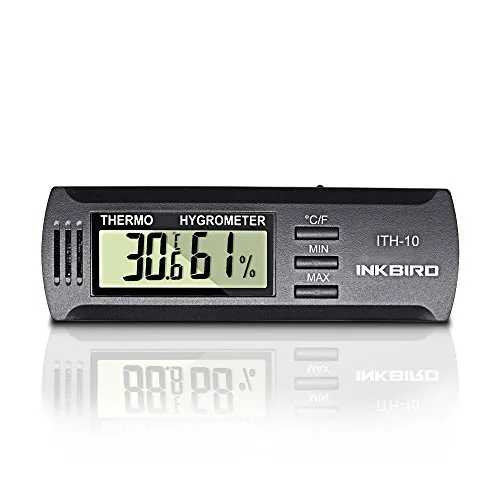
Brooder temperature at chick level, under the heat source
| Chick age | °F | °C | Floor space per chick |
|---|---|---|---|
| Week 1 | 92–95°F | 33–35°C | ¼ sq ft |
| Weeks 2–3 | 85–90°F | 29–32°C | ½ sq ft |
| Weeks 3–5 | 80–85°F | 27–29°C | ¾ sq ft |
| Weeks 5–8 | 70–80°F | 21–27°C | 1 sq ft |
| Week 8 on | Room temperature | — | 1½ sq ft, more for large breeds |
Source: Penn State Extension, Brooding of Domestic Fowl. Watch the chicks too: huddled under the heat means cold, crowded at the edges means too hot.
Do adult chickens need heat in winter?
Usually not. Healthy, fully feathered chickens handle cold well when they are dry and out of drafts. University of Minnesota Extension suggests supplemental heat only when coop temperatures fall below 35°F, placed at nest-box height or the lower roost rung, and stresses ventilation to prevent moisture, ammonia and frostbite. A University of Maine Extension professor quoted by Bangor Daily News made the same point: acclimated birds in a draft-free shelter with dry bedding do fine.
If you do add heat for adult birds, pick devices designed for coops (flat radiant panels mounted per the manual, or heated perches) rather than an open bulb, and follow the same wiring rules. Heated waterer bases also draw power; the Maine fire marshal's office listed water heaters among the top coop fire risks, so use them per the manual on a sound outdoor-rated circuit.
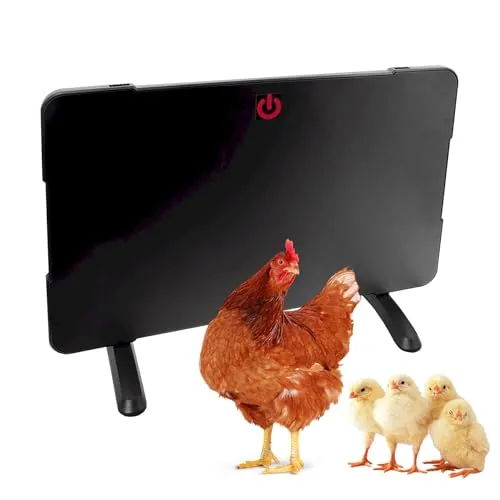
Farm Innovators 2-in-1 Radiant Coop/Brooder Heater
- Wattage
- 200 W coop mode; 50 W brooder mode
- Height adjustment
- 3.5, 5 or 6 in (brooder mode)
- Mounting
- Freestanding, wall, hanging or horizontal
Best for Brooding, then winter coop backup heat
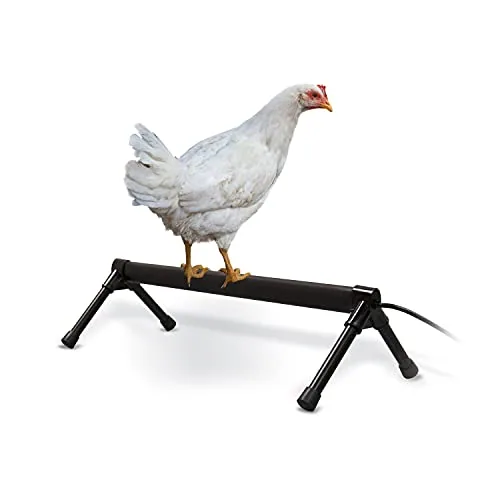
K&H Thermo-Chicken Heated Perch, 26", 40W
- Length
- 26 in
- Wattage
- 40 W
- Thermostat
- Dual internal
Best for Cold-climate coops
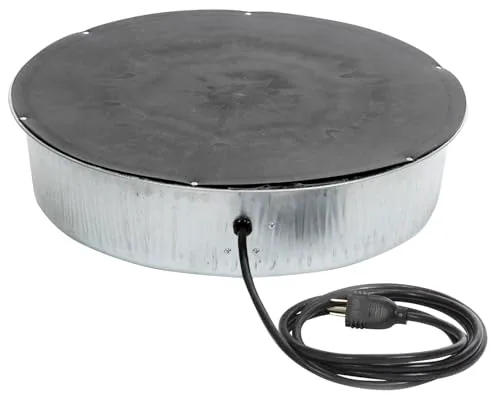
Little Giant Heater Base for Metal Waterers, 110 W
- Heated
- 110 W
- Material
- Galvanized steel
- Fits
- Metal poultry waterers
Best for Metal founts in cold climates
More in how to keep chickens warm in winter and chicken coop ventilation.
Heat lamp safety mistakes to avoid
- Spring clamp only. Fire marshals say it is not adequate.
- Hanging the lamp by its cord (UMN: never).
- Lowering the lamp to fix a cold brooder instead of blocking drafts or adding a second heat source.
- Indoor extension cords or power strips in the coop.
- Cardboard or wooden brooder walls close to the bulb; one brooder box in the catalogue ships with heat lamps, and its listing note reminds you to keep bulbs guarded and clear of bedding and walls.
- Dust and cobwebs left on fixtures.
- Heating adult birds who don't need it, while vents stay shut and the coop stays damp.
Browse safer brooder heat in Chicks & brooding and winter gear in Winter care. Setting up a brooder for the first time? Read how to set up a brooder.
Brooder temperature chart by weekBrooder temperature for chicks week by week, in °F or °C, with floor space per chick, a heat-plate capacity…Flock care checklistDaily, weekly, monthly and seasonal backyard chicken chores in one printable checklist. Ticks reset each…Questions
Are heat lamps safe for chicks?
How far should a heat lamp be from bedding?
Is a heat plate safer than a heat lamp?
Do chickens need a heat lamp in winter?
Can I use an extension cord for a chicken coop heater?
What should I do if my brooder catches fire?
Sources
- Clark County (WA) Fire Marshal, Safety tips to prevent a chicken coop fire
- Penn State Extension, Brooding of Domestic Fowl (secure heat sources, 20 in from flammables, chain or cable)
- University of Minnesota Extension, Caring for chickens in cold weather (never hang a heat lamp by the cord; heat below 35°F)
- Bangor Daily News, Heat lamps and chicken coop fire risk (Office of the Maine Fire Marshal, UMaine Extension)
- Mississippi State University Extension, Brooding chickens and quail