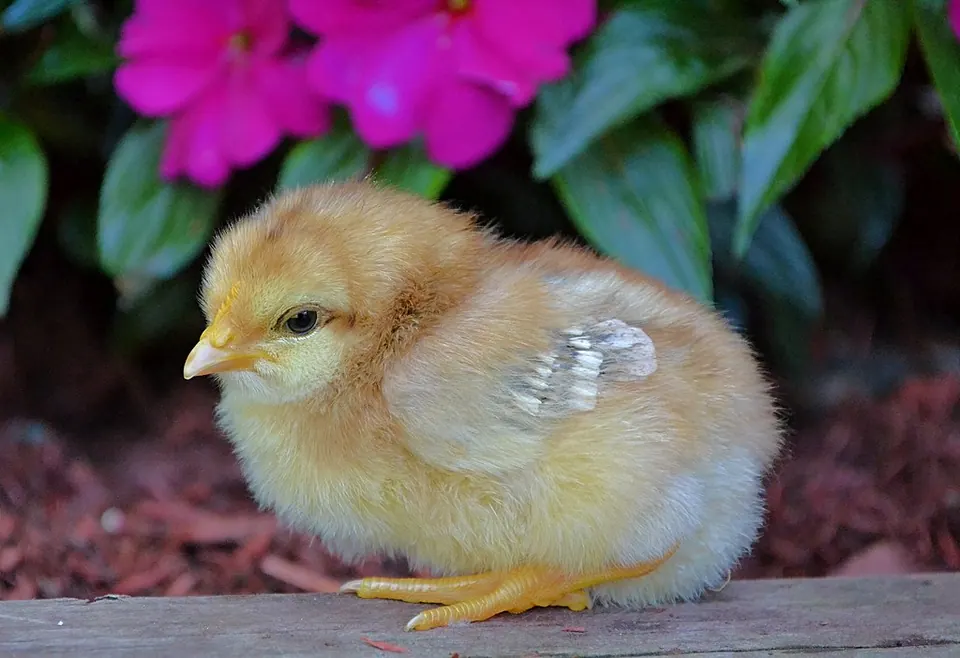
- Start the brooder at 92–95°F at chick level in week 1 and drop about 5°F a week until room temperature by week 8 (Penn State).
- Give ¼ sq ft per chick in week 1, rising to 1 sq ft by weeks 5–8 and 1½ sq ft after that (Penn State).
- Feed chick starter (18–20% protein) for the first 6–8 weeks, then grower, then layer feed around 20 weeks or the first egg.
- Watch the chicks, not just the thermometer: huddled under the heat means cold, crowded at the edges means hot.
- Wash hands after every visit and keep children under 5 from handling chicks (CDC); use a heat plate or a lamp secured with a chain.
Learning how to raise baby chicks is mostly about doing the mother hen's job for eight weeks: keeping them warm, dry, fed and safe. Chicks cannot hold their body heat at first, so the brooder temperature and how you read the chicks' behavior matter more than any gadget.
This week-by-week plan uses Penn State Extension's brooding schedule, University of Minnesota guidance on feeding pullets and CDC handling rules. Chicks come from hatcheries, feed stores or your own incubator; the links here are only for the gear around them.
What do you need before baby chicks arrive?
UMN recommends starting the brooder the day before chicks arrive so the heat and bedding are settled. Have these ready:
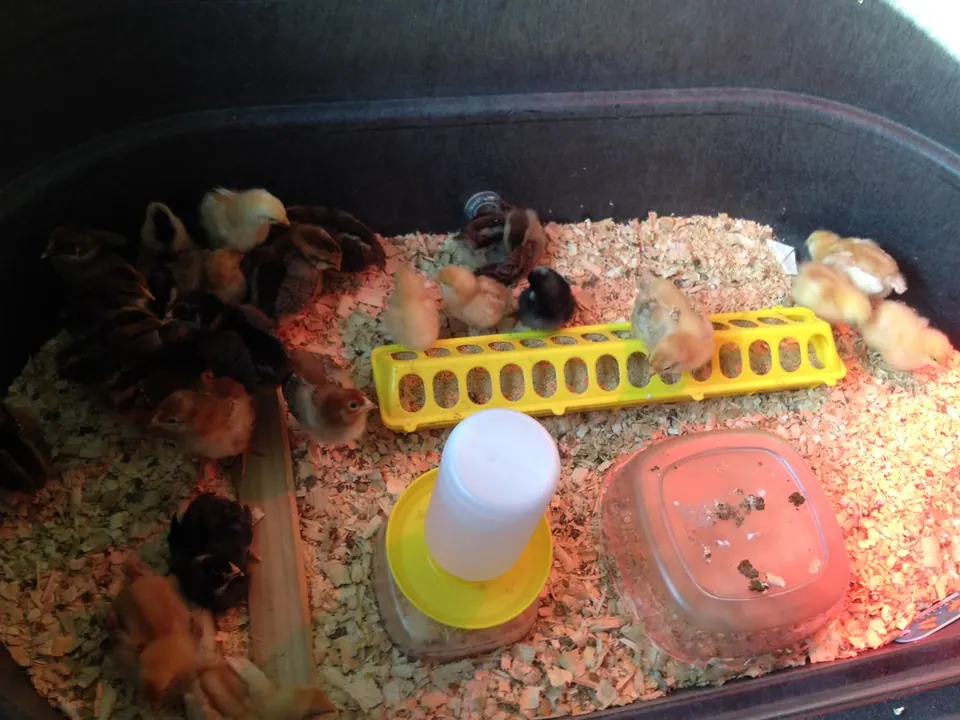
- A brooder: a draft-free box, tub, pen or kit with sides chicks cannot hop over. Setup details are in how to set up a brooder.
- A heat source: a heat plate sized for your chick count, or a heat lamp secured with a chain or cable.
- A thermometer at chick level under and away from the heat.
- A chick feeder and waterer chicks can reach but not fall into or roost on.
- Chick starter feed and, if you will feed anything besides starter, chick-size grit.
- Bedding: 2–3 in of clean, dry litter such as pine shavings, with paper towels on top for the first days (Penn State). Never slippery newspaper alone.
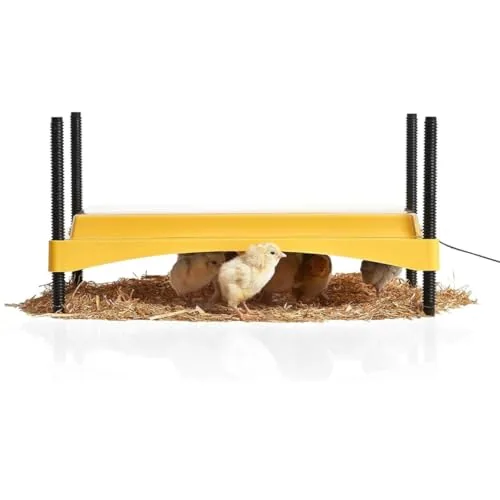
Brinsea EcoGlow Safety 1200 Brooder, Up to 35 Chicks
- Chicks
- Up to 35 newly hatched or 20 older chicks
- Wattage
- 18 W, low voltage
- Height adjustment
- Screw-on legs, height and angle
Best for Larger chick or duckling batches
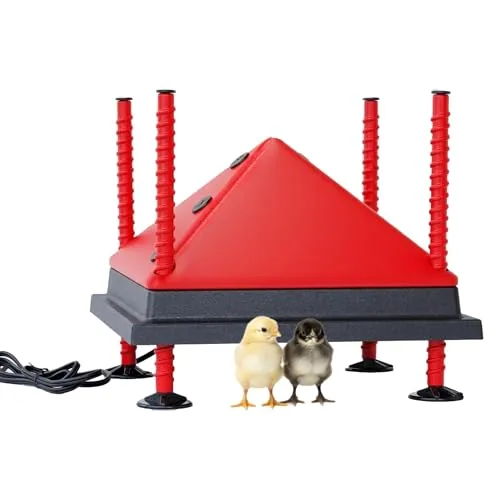
RentACoop 12x12 Heating Plate, Anti-Roost Cone
- Chicks
- Up to 20 chicks
- Heated area
- 12 x 12 in
- Wattage
- 22 W
Best for Home batches up to 20
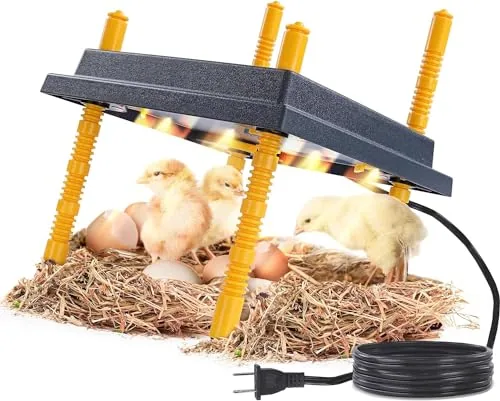
Premier 1 Chick Heating Plate 12x12, 20 Chicks
- Chicks
- Up to 20 chicks
- Heated area
- 12 x 12 in
- Wattage
- 22 W
Best for Home batches up to 20
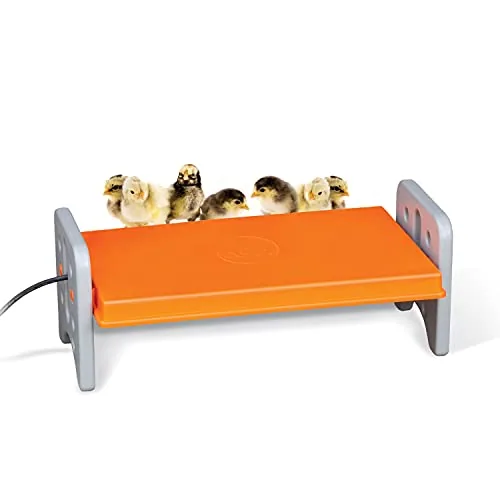
K&H Thermo-Poultry Brooder Plate, Large 40W
- Chicks
- Up to 30 newborn chicks (fewer as they grow)
- Heated area
- 20 x 11.5 x 8 in
- Wattage
- 40 W
Best for Medium chick batches
How warm should a brooder be each week?
Penn State's schedule, measured at chick level under the heat source:
Brooder temperature at chick level, under the heat source
| Chick age | °F | °C | Floor space per chick |
|---|---|---|---|
| Week 1 | 92–95°F | 33–35°C | ¼ sq ft |
| Weeks 2–3 | 85–90°F | 29–32°C | ½ sq ft |
| Weeks 3–5 | 80–85°F | 27–29°C | ¾ sq ft |
| Weeks 5–8 | 70–80°F | 21–27°C | 1 sq ft |
| Week 8 on | Room temperature | — | 1½ sq ft, more for large breeds |
Source: Penn State Extension, Brooding of Domestic Fowl. Watch the chicks too: huddled under the heat means cold, crowded at the edges means too hot.
These are starting points. Penn State says chicks that spread out evenly and stay active are comfortable; chicks huddled under the heat are cold; chicks pressed to the far edges, panting with wings held out, are too hot; and chicks bunched away from one side are probably in a draft. With a heat plate, chicks warm themselves by touching its underside, so you raise the legs as they grow rather than measure air temperature.
Brooder temperature chart by weekEnter the hatch date to see this week's target in °F or °C.Raising chicks week by week
Chick care calendar
| Age | Heat (Penn State) | Space per chick | Feed and water | Jobs this week |
|---|---|---|---|---|
| Day 1 | 92–95°F | ¼ sq ft | Starter; dip a few beaks in water | Check every chick drinks and eats; crops full by day 2 (Penn State) |
| Week 1 | 92–95°F | ¼ sq ft | Starter; 1 in feeder space per chick | Check vents for pasted droppings; keep paper towels over litter |
| Weeks 2–3 | 85–90°F | ½ sq ft | Starter; 1½ in feeder space | Raise waterer and feeder to back height; add a low perch |
| Weeks 3–5 | 80–85°F | ¾ sq ft | Starter; 2 in feeder space | Wing and tail feathers growing; expand the brooder |
| Weeks 5–8 | 70–80°F | 1 sq ft | Starter until 6–8 weeks (UMN) | Short supervised outings on warm days; finish the coop |
| Week 8 + | Room temperature | 1½ sq ft | Grower feed (UMN); 3 in feeder space | Move to the coop once fully feathered and nights are mild |
| Weeks 16–20 | None | Coop norms | Switch to layer feed around 20 weeks or first egg (UMN) | Open nest boxes; offer oyster shell once laying |
Source: Penn State Extension, Brooding of Domestic Fowl; UMN Extension, Raising layer chicks and pullets
What should baby chicks eat and drink?
Penn State says chicks can live on their yolk for about 72 hours but should ideally reach feed and water within 24 hours of hatching. With a small group, dip each chick's beak in the water so it learns where to drink. Allow about one quart of water per 25 chicks (Penn State).
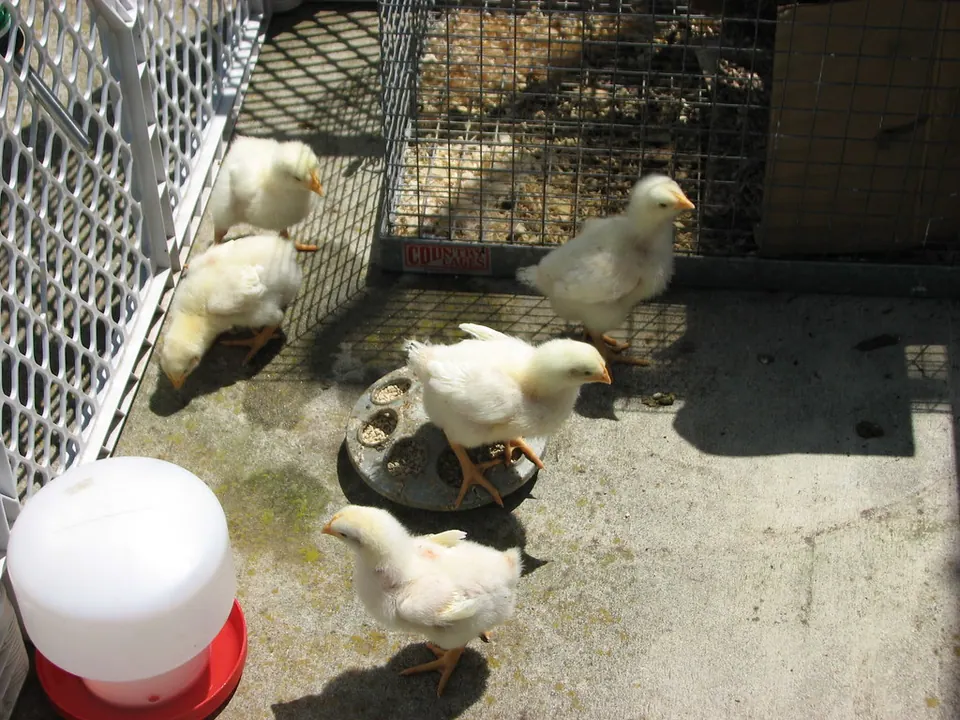
Medicated or not? Medicated chick starter contains a coccidiostat; use it per the label. If your chicks were vaccinated for coccidiosis, ask the hatchery whether medicated feed is appropriate. Penn State says waterfowl should not get medicated feed, so do not share it with ducklings. Do not feed layer feed to chicks: its extra calcium is meant for laying hens.
If you offer anything besides starter (treats, greens), add chick-size grit so they can grind it. Keep treats tiny in the first weeks.
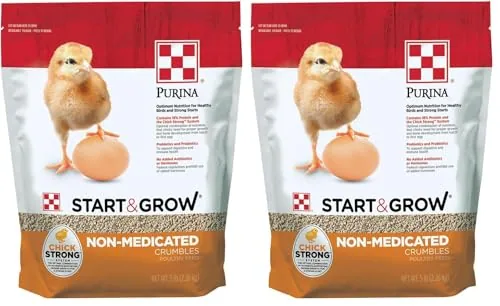
Purina Start and Grow Non-Medicated Crumbles, 5 lb x2
- Type
- Starter/grower crumbles
- Bag size
- 5 lb, pack of 2
- Medicated?
- Non-medicated
Best for First chicks
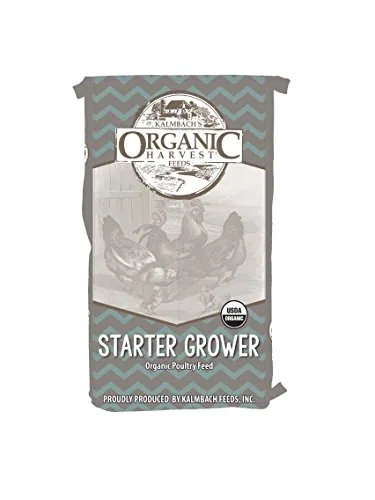
Kalmbach Organic Starter Grower Crumble, 25 lb
- Type
- Starter/grower crumbles (organic)
- Bag size
- 25 lb
Best for Meat birds from day one
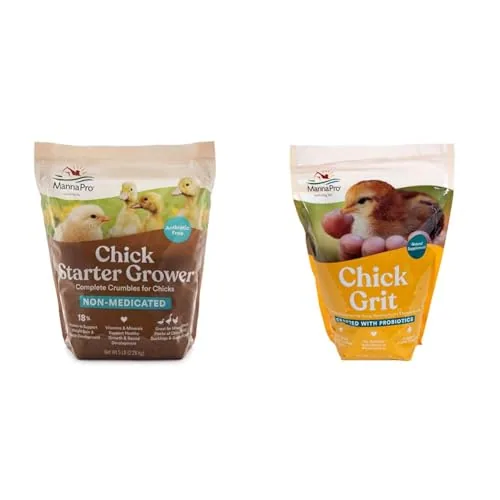
Manna Pro Chick Starter 5 lb + Chick Grit 5 lb Bundle
- Type
- Chick starter plus chick grit
- Bag size
- 5 lb + 5 lb
- Medicated?
- Without antibiotics or medications
Best for New chicks and ducklings

Scratch and Peck Starter Grit, 7 lb
- Type
- Insoluble grit (chick size)
- Size
- 7 lb
Best for Chicks given treats or forage
Feeders and waterers should be easy to clean and hard to fall into. Penn State suggests marbles or pebbles in water trays for bantams and other small birds to prevent drowning.
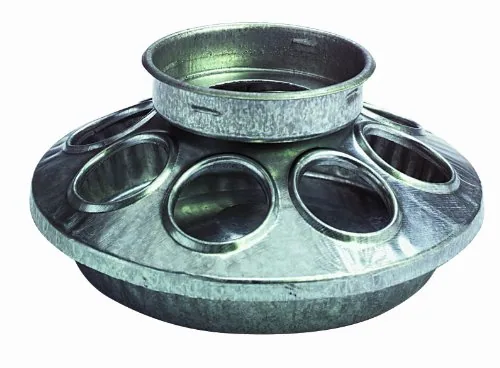
Little Giant 9810 Metal Chick Feeder Base, 1 Qt
- Capacity
- 1 quart jar (sold separately)
- Material
- Galvanized steel
- Ports
- 8 feeding holes
Best for Simple chick feeding
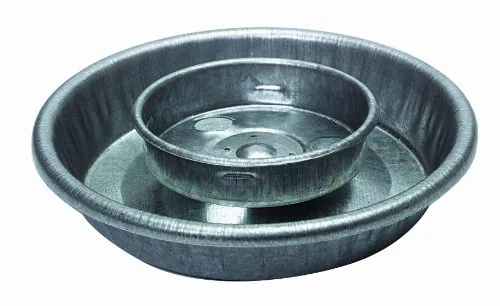
Little Giant 9826 Metal Chick Waterer Base, 1 Qt
- Capacity
- 1 quart jar (sold separately)
- Material
- Galvanized steel
- Fits
- Little Giant 690 jar or Mason jar
Best for Simple chick watering
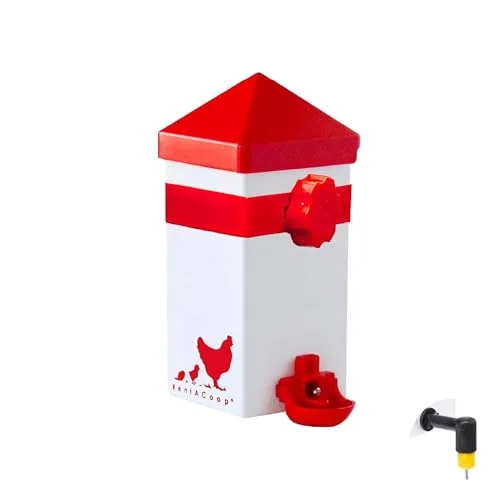
RentACoop 32oz Chick Drinker with 2 Nipples
- Capacity
- 32 oz (1 L)
- Nipples
- Vertical (chicks) and horizontal (older birds)
- Mount
- Coop Clip for wire or wood
Best for Chicks and quail
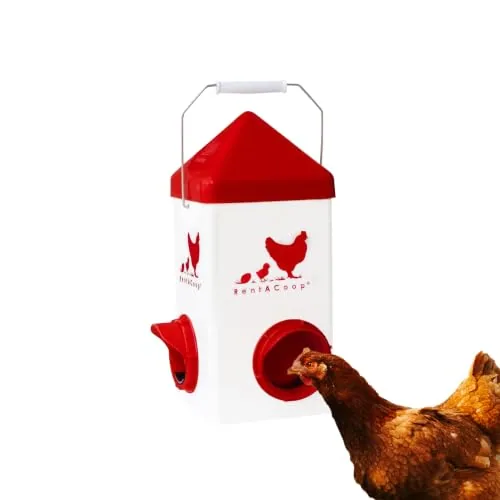
RentACoop Chick2Chicken 2-Port Feeder, 5 lb
- Type
- Port feeder, 2 medium ports
- Capacity
- 5 lb
- Material
- Plastic
Best for Chicks, quail and bantams
How do you keep chicks healthy?
Most chick problems come from chilling, overheating, crowding or wet bedding. Penn State notes that chilled chicks have cold, puffy legs and overheated chicks have dry, thin legs. A few checks each day catch problems early:
- Pasted vents. Look under the tail for droppings stuck over the vent, especially in week 1. Gently soften and remove them with warm water. Persistent pasting can mean the brooder is too hot or too cold.
- Spraddle or splayed legs. Often linked to slippery floors; Penn State warns that poor traction can cause permanent leg damage. Use textured bedding or paper towels, never bare newspaper.
- Wet or caked bedding around the waterer: replace it daily.
- Pecking. Crowding and heat raise pecking. Expand space on schedule.
- Any chick that is weak, not eating or breathing hard: separate it, keep it warm and contact a veterinarian or your state poultry lab.
When can baby chicks go outside?
Penn State's schedule reaches room temperature by about week 8, and that is when most chicks are fully feathered and ready to move to the coop if nights are mild. Before then, short supervised trips outside on warm, calm days are fine from a few weeks old. Bring them back to the brooder before they get chilled.
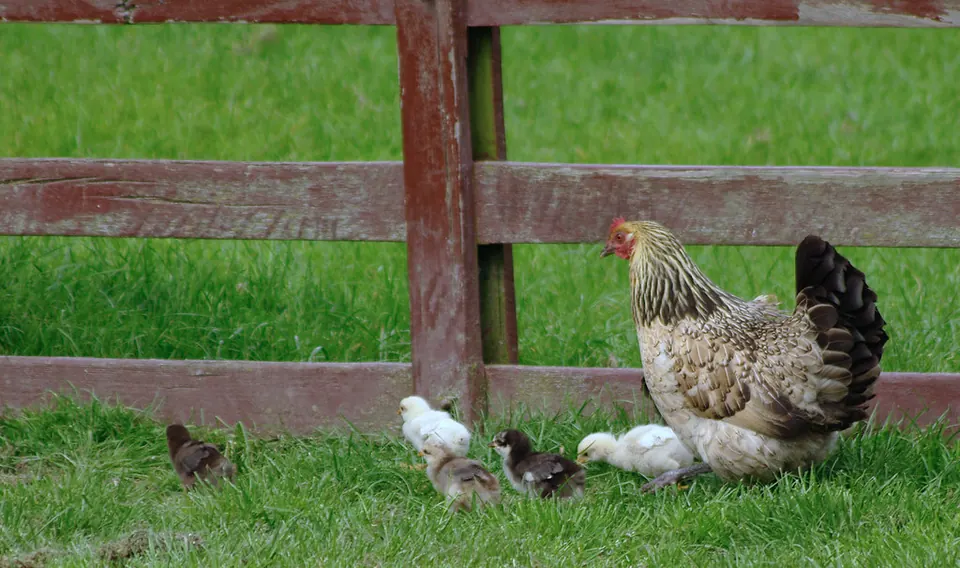
When you move them, keep young birds in a separate, secure section of the coop or run for a while if you already have older hens; big birds can bully small ones. Your coop should be finished, predator-resistant and sized for adult birds by then: check the coop size guide and predator protection.
A low perch from week 2–3 helps chicks practice roosting before the move.
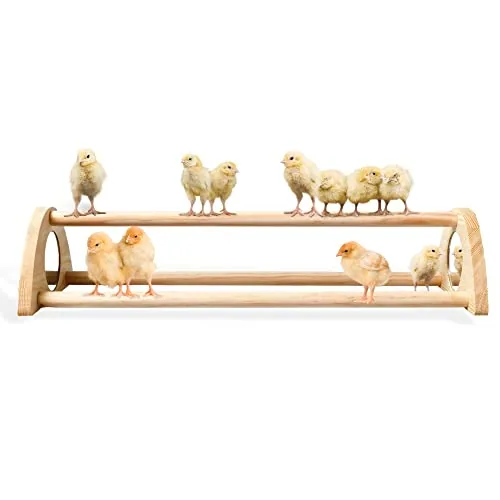
TonGass 16" Bamboo Chick Perch with Mirrors
- Material
- Polished bamboo
- Dimensions
- 15.75 x 6.6 x 3.5 in
- Roost
- 3 round bars
Best for Brooder perches
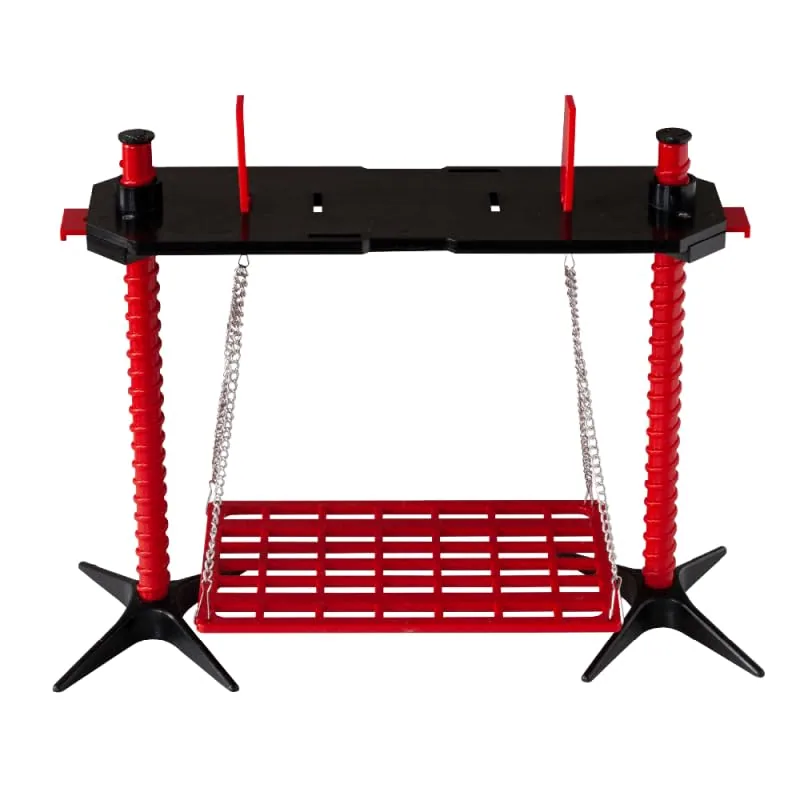
RentACoop Chick Swing & Feeder Stand
- Height adjustment
- Adjustable platform
- Age
- 1–8 weeks
- Use
- Swing or stand for RentACoop feeders and waterers
Best for Brooder enrichment
Mistakes to avoid with baby chicks
- Running the heat too hot "to be safe". Overheated chicks dehydrate. Give them room to move away from the heat.
- A brooder too small by week 3. Space needs double from week 1 to weeks 2–3 (Penn State).
- Slippery floors. Use textured bedding.
- Fine sawdust in week 1. Penn State warns chicks may eat it.
- One heat source with no backup. UMN suggests more than one lamp in larger setups; a bulb failure on a cold night is serious.
- Layer feed for chicks or medicated starter for ducklings.
- Letting kids snuggle chicks or bringing chicks into the kitchen.
More chick gear is in the chicks and brooding hub and the first flock collection; for heat sources, compare heat plate vs heat lamp and the best brooder heat plates.
Keep chicks at 92–95°F in week 1 and drop about 5°F a week, give them more floor space every couple of weeks, feed starter for 6–8 weeks, and move them to the coop when fully feathered around week 8. Read their behavior every day, and make handwashing and a securely mounted, lower-risk heat source non-negotiable.
Questions
What temperature do baby chicks need?
How long do chicks need a heat lamp?
When can baby chicks go outside?
What do baby chicks eat?
What is pasty butt in chicks?
Can kids hold baby chicks?
Sources
- Penn State Extension, Brooding of Domestic Fowl
- University of Minnesota Extension, Raising layer chicks and pullets
- University of Minnesota Extension, Caring for chickens in cold weather (never hang a heat lamp by the cord)
- University of Missouri Extension, Incubation of poultry (G8353)
- CDC Healthy Pets, Backyard Poultry
- Clark County (WA) Fire Marshal, Safety tips to prevent a chicken coop fire