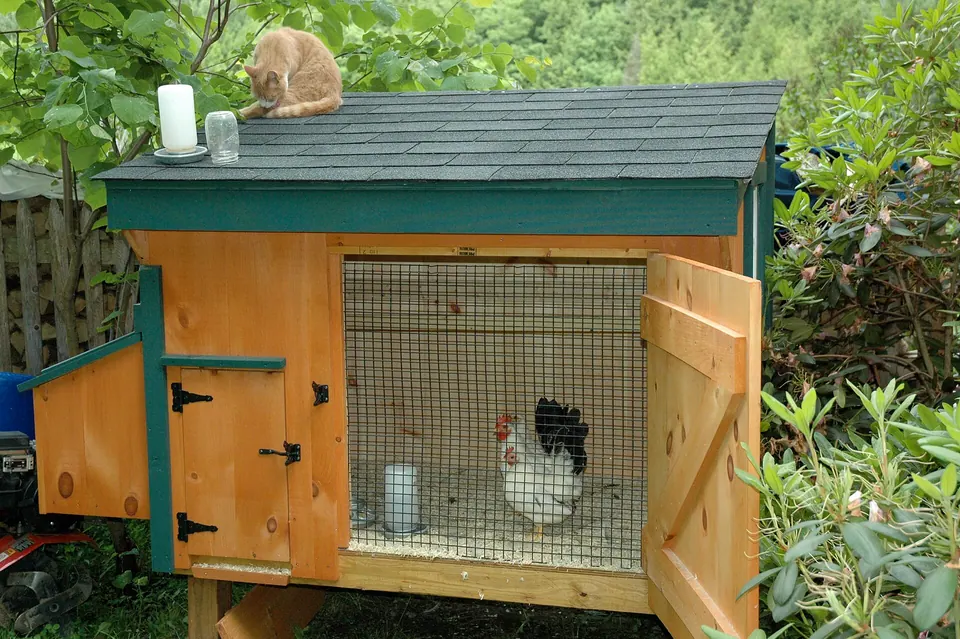
- Hen counts on coop listings are the maker's claim, not a measured fact. Penn State's minimum is 1.5 sq ft inside per laying hen; UMN suggests 3–5 sq ft; a common hobby rule is 4 sq ft plus 10 in the run.
- Overall dimensions include the run, ramps and nest boxes, so they say little about the floor where hens sleep.
- OverEZ Medium is a made-in-USA wooden house with three nest boxes; Omlet Eglu Pro is the low-maintenance plastic choice from the official Omlet listing.
- Only two coops here state an inside floor area, the New Age Pet Fontana Jumbo and the PawHut 39", so they get a capacity check below.
The best chicken coop gives each hen enough floor, roost and nest space for your climate, keeps predators out at night, and is easy for you to clean. Size is where most listings mislead: "for 8–10 chickens" often refers to bantams or to a run included in the footprint. This list compares nine coops from six brands and treats every hen count as a claim to check.
We use three published yardsticks side by side, because they disagree: Penn State Extension's minimum, University of Minnesota Extension's 3–5 sq ft, and the 4 + 10 rule repeated in hobby guides. Use the coop size calculator to run your own numbers.
Our picks
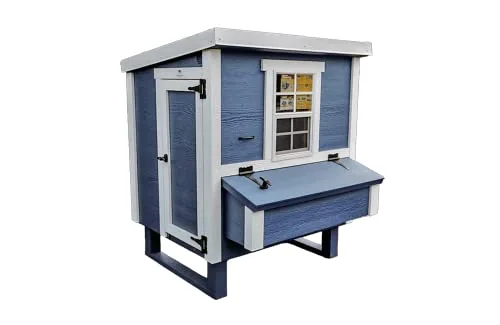
OverEZ Medium Chicken Coop, Up to 10 Chickens
- Maker says
- Up to 10 chickens
- Material
- Wood, non-toxic paint
- Nest boxes
- 3
- Dimensions
- 50.3 x 52.5 x 62.3 in
OverEZ lists the Medium as a made-in-USA wooden coop at 50.3 x 52.5 x 62.3 in, with a screened window that opens, two vents and three nesting boxes. It is listed for up to 10 chickens. No run is included, and the listing does not give the inside floor, so measure it before you decide how many hens it really holds.
Best for: 4–8 standard hens with a separate run
Skip if: You need an attached run in the same box
- Made in the USA
- Three nest boxes
- Screened window and two vents
- Run not included
- Inside floor and roost length not listed
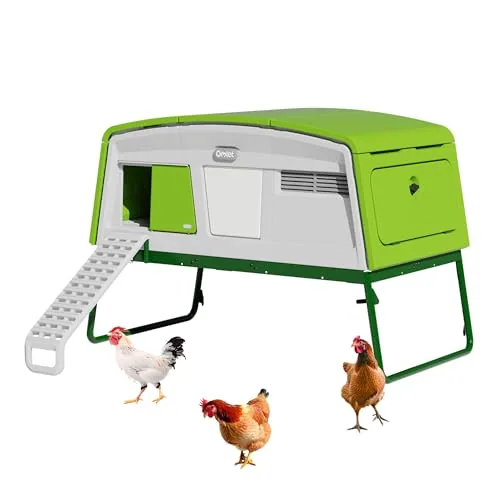
Omlet Eglu Pro Large Chicken Coop (Coop Only)
- Maker says
- Up to 10 large hens or 15 bantams
- Material
- Twin-wall insulated plastic
- Nest boxes
- Slide-out nest box tray
- Dimensions
- 65 x 37 x 46 in (as listed)
Omlet's Eglu Pro is a twin-wall insulated plastic coop with a slide-out nest box tray, adjustable vents, a ladder and a 10-year warranty. Omlet lists it for up to 10 large hens or 15 bantams. Run, wheels and handles are not included. Buy only from the official Omlet listing; Eglu-style imitations exist.
Best for: Keepers who want fast cleaning and no wood to rot
Skip if: You want a run included or a natural-wood look
- Slide-out nest tray
- Adjustable vents
- 10-year warranty
- Run, wheels and handles sold separately
- Listed dimensions match the smaller Eglu Go, so confirm size with Omlet
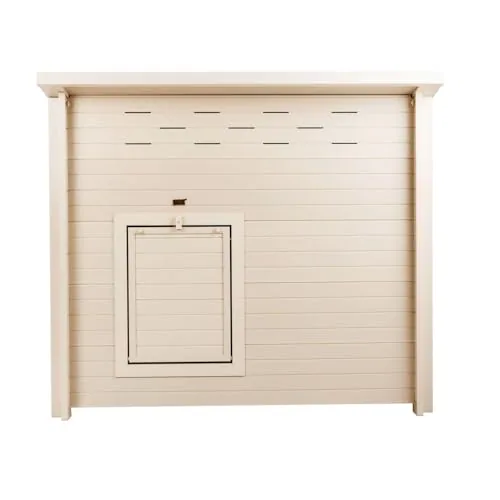
New Age Pet ECOFLEX Fontana Jumbo Chicken Coop
- Maker says
- 4–6 chickens
- Material
- ECOFLEX recycled polymer and wood fiber
- Nest boxes
- Side nesting box with hinged lid
- Dimensions
- 54.2 x 46.4 x 54.1 in overall; interior ~41 x 36.8 x 35 in
Maker says 4–6 chickens · coop floor 10 sq ft · by Penn State ≈ 6, UMN ≈ 2–3, 4 + 10 rule ≈ 2 standard hens How we count
The Fontana Jumbo is built from ECOFLEX recycled polymer and wood fiber, with a side nesting box, dual roosts and built-in vents. It is listed for 4–6 chickens and is one of the few listings to give an interior: about 41 x 36.8 in, roughly 10.5 sq ft. By Penn State's 1.5 sq ft that is about 6 standard hens; by UMN's 3 sq ft, about 3.
Best for: Three or four hens with an added run
Skip if: You want six hens to live comfortably inside
- Interior size stated
- Tool-free assembly
- 10-year limited warranty
- Matching pen sold separately
- Capacity depends heavily on which norm you follow
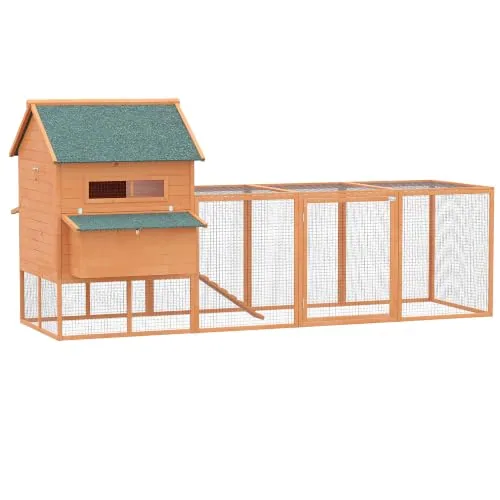
PawHut 137" Chicken Coop with Run, 8–10 Chickens
- Maker says
- 8–10 chickens
- Material
- Solid fir, anti-UV roof
- Nest boxes
- 2 triple boxes
- Dimensions
- 136.5 x 63 x 59 in
PawHut's 137-in coop measures 136.5 x 63 x 59 in overall with an elevated house, two triple nesting boxes, a slide-out tray, sliding windows and a large attached run. PawHut lists it for 8–10 chickens depending on size and breed. The overall footprint includes the run; the house floor is not listed.
Best for: A mid-size flock that needs a run on day one
Skip if: You expect 10 standard hens to sleep inside; check the house floor first
- Large attached run
- Six nest compartments
- Slide-out droppings tray
- House floor not listed
- Fir kits need sealing and upkeep
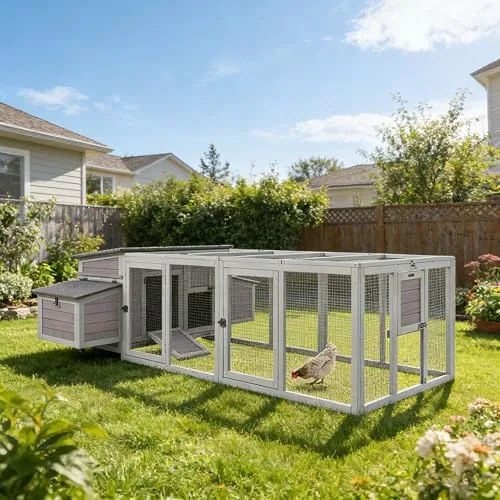
Aivituvin AIR45 Chicken Coop, Two Nest Boxes
- Maker says
- 4–6 chickens
- Material
- Fir wood, steel wire
- Nest boxes
- 2
- Dimensions
- 103 x 67 x 28 in (as listed); run 79 in long
Aivituvin's AIR45 has two PVC-covered, lockable nest boxes, two perches, an asphalt roof over the house, a lockable metal slide-out tray and a 79-in run. It is listed for 4–6 chickens. The listing gives the overall size as 103 x 67 x 28 in, which reads oddly for height, so confirm dimensions before planning.
Best for: A first flock of three or four hens
Skip if: You need stated house dimensions
- Metal slide-out tray
- Locking nest box lids
- 79-in run
- Dimensions as listed look inconsistent
- House floor not listed
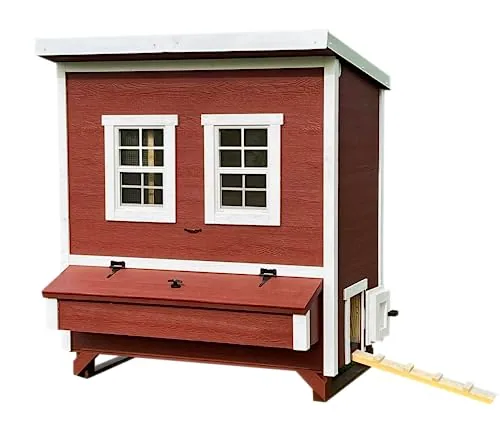
OverEZ Walk-in Chicken Coop, Up to 18 Chickens
- Maker says
- Up to 18 chickens
- Material
- Wood, metal roof
- Nest boxes
- 5
- Dimensions
- 74 x 60 x 90 in; 6 ft interior clearance
OverEZ's walk-in is 74 x 60 x 90 in with 6 ft of interior clearance, five nesting boxes, three roosts, two vents, two screened windows and a Dutch door. OverEZ says panels arrive painted with doors and windows installed. It is listed for up to 18 chickens.
Best for: Keepers who want to stand up to clean and collect eggs
Skip if: Your yard cannot take a 6-by-5-ft shed-size footprint
- Stand-up interior
- Three roosts, five nests
- Pre-assembled panels
- Run not included
- Large footprint and height
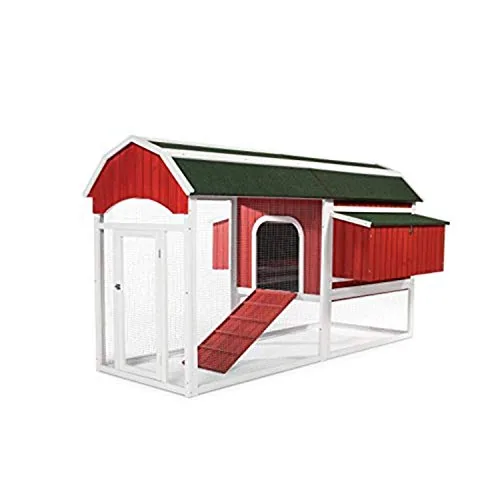
Prevue Pet 467 Large Barn Chicken Coop, Red
- Maker says
- 8–10 hens
- Nest boxes
- 2 boxes, 4 nesting areas each
- Dimensions
- 90.5 x 54 x 51.5 in
- Run
- Protected run
Prevue's 467 Large Barn is 90.5 x 54 x 51.5 in overall, with a ventilated house, two nest boxes with four nesting areas each and a protected run. Prevue lists it for 8–10 hens; the house floor is not stated.
Best for: Small urban flocks that want a run attached
Skip if: You need a floor size before buying
- Eight nesting areas
- Attached run
- Compact for its claim
- House floor not listed
- Material not stated in the listing
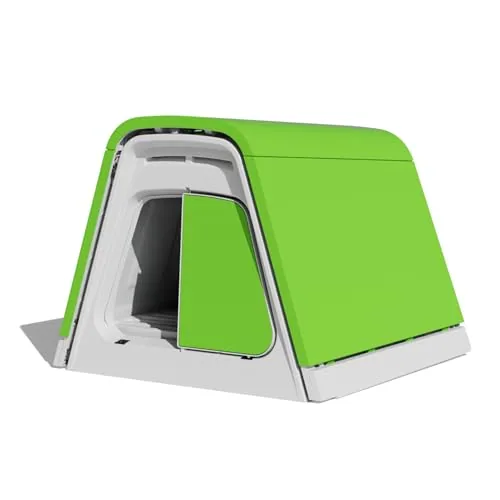
Omlet Eglu Go Chicken Coop (Coop Only)
- Maker says
- Up to 3 large hens or 4 bantams
- Material
- Twin-wall insulated plastic
- Nest boxes
- Nesting area
- Dimensions
- 65 x 37 x 46 in (as listed)
The Eglu Go is Omlet's compact twin-wall plastic coop, listed for up to 3 large hens or 4 bantams, with plastic roosting bars, a nesting area and a rear egg door. Omlet also suggests it as a broody coop. It is coop only, and it can be expanded later.
Best for: Two or three hens in a small yard
Skip if: You plan to grow past three standard hens
- Quick to clean
- Honest small claim
- Expandable
- Run not included
- Buy only from the official Omlet listing
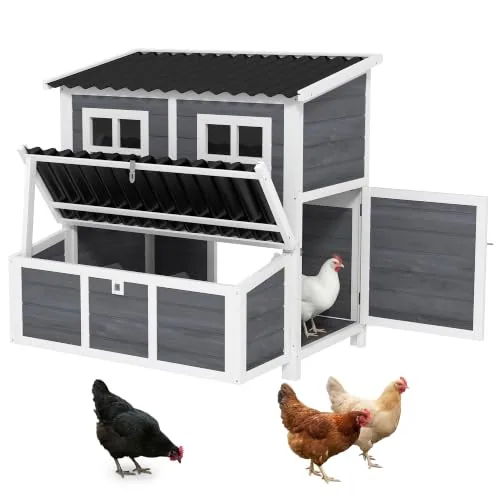
PawHut 39" Wooden Chicken Coop, 2–4 Chickens
- Maker says
- 2–4 chickens
- Floor area
- Main house 4 sq ft; nest box 2 sq ft
- Material
- Fir wood
- Nest boxes
- 3 compartments
Maker says 2–4 chickens · coop floor 4.0 sq ft · by Penn State ≈ 2, UMN ≈ 0–1, 4 + 10 rule ≈ 1 standard hens How we count
PawHut's 39-in coop states a 4 sq ft main house and a 2 sq ft nest box with three compartments, plus a slide-out tray and two windows. It is listed for 2–4 chickens. By Penn State's minimum, 4 sq ft fits about 2 standard hens; by UMN's 3 sq ft, about 1.
Best for: A pair of bantams or two small hens with a run
Skip if: You want three or four standard hens
- House floor stated
- Three nest compartments
- Small footprint
- Tight for more than two hens
- No run included in this size
How much space do chickens need in a coop?
These are the three published yardsticks this site uses. They differ by a factor of two or more, so pick the one that fits how much time your hens spend inside. Snowy winters and small runs point toward the larger figures.
Space per bird, square feet: inside the coop / in the run
| Birds | Penn State | UMN | 4 + 10 rule |
|---|---|---|---|
| Standard laying hens | 1.5 / 8 | 3–5 / — | 4 / 10 |
| Large breeds | 2 / 10 | 3–5 / — | 4 / 10 |
| Bantams | 1 / 4 | 3–5 / — | — |
| Ducks | 3 / 15 | — | — |
| Geese | 6 / 18 | — | — |
| Quail | 1 / 4 | — | — |
Sources: Penn State Extension, Small-Scale Poultry Housing, Table 1 (Minimum Space Requirements for Poultry); University of Minnesota Extension, Raising chickens for eggs (“a minimum of 3 to 5 square feet of indoor space per bird”); Widely repeated hobby guideline (4 sq ft inside, 10 sq ft in the run per standard chicken), e.g. GRIT, Chicken Coop Space Requirements. — = not given by that source.
Inside floor: what is listed vs what norms ask
Listed coop floors compared with the inside space 4 or 6 standard hens need
Read the long version in how big should a chicken coop be?
Chicken coops compared
Every dimension below is as listed. Remember that overall dimensions include the run, ramps and nest boxes.
| Product | Dimensions | Maker says | Material | Nest boxes | Roost |
|---|---|---|---|---|---|
| OverEZ Medium Chicken Coop, Up to 10 Chickens | 50.3 x 52.5 x 62.3 in | Up to 10 chickens | Wood, non-toxic paint | 3 | Not listed |
| Omlet Eglu Pro Large Chicken Coop (Coop Only) | 65 x 37 x 46 in (as listed) | Up to 10 large hens or 15 bantams | Twin-wall insulated plastic | Slide-out nest box tray | Ladder |
| New Age Pet ECOFLEX Fontana Jumbo Chicken Coop | 54.2 x 46.4 x 54.1 in overall; interior ~41 x 36.8 x 35 in | 4–6 chickens | ECOFLEX recycled polymer and wood fiber | Side nesting box with hinged lid | Dual roosting bars |
| PawHut 137" Chicken Coop with Run, 8–10 Chickens | 136.5 x 63 x 59 in | 8–10 chickens | Solid fir, anti-UV roof | 2 triple boxes | Yes |
| Aivituvin AIR45 Chicken Coop, Two Nest Boxes | 103 x 67 x 28 in (as listed); run 79 in long | 4–6 chickens | Fir wood, steel wire | 2 | 2 perches |
| OverEZ Walk-in Chicken Coop, Up to 18 Chickens | 74 x 60 x 90 in; 6 ft interior clearance | Up to 18 chickens | Wood, metal roof | 5 | 3 roosts |
| Prevue Pet 467 Large Barn Chicken Coop, Red | 90.5 x 54 x 51.5 in | 8–10 hens | — | 2 boxes, 4 nesting areas each | — |
| Omlet Eglu Go Chicken Coop (Coop Only) | 65 x 37 x 46 in (as listed) | Up to 3 large hens or 4 bantams | Twin-wall insulated plastic | Nesting area | Plastic roosting bars |
| PawHut 39" Wooden Chicken Coop, 2–4 Chickens | 39.4 x 33.9 x 39.4 in | 2–4 chickens | Fir wood | 3 compartments | — |
Specs as listed by the maker or seller; check the listing before you buy.
Realistic capacity
Maker says 4–6 chickens. By the Penn State Extension minimum norm (1.5 sq ft per laying hen inside) this coop fits ≈ 6 standard hens.
| Norm (source) | Inside, sq ft per hen | Fits in the coop |
|---|---|---|
| Penn State Extension minimum | 1.5 | 6 |
| University of Minnesota Extension | 3–5 | 2–3 |
| Common 4 + 10 rule of thumb | 4 | 2 |
Coop floor 10 sq ft (listing: interior ~41 x 36.8 x 35 in). Counts are rounded down, for standard-size laying hens; bantams need less (Penn State: 1 sq ft inside). Nest boxes and roosts are not counted. These are published planning figures, not a test of this coop: measure the inside floor before you add birds. Check your own flock in the coop size calculator.
Realistic capacity
Maker says 2–4 chickens. By the Penn State Extension minimum norm (1.5 sq ft per laying hen inside) this coop fits ≈ 2 standard hens.
| Norm (source) | Inside, sq ft per hen | Fits in the coop |
|---|---|---|
| Penn State Extension minimum | 1.5 | 2 |
| University of Minnesota Extension | 3–5 | 0–1 |
| Common 4 + 10 rule of thumb | 4 | 1 |
Coop floor 4.0 sq ft (listing: Main house 4 sq ft; nest box 2 sq ft). Counts are rounded down, for standard-size laying hens; bantams need less (Penn State: 1 sq ft inside). Nest boxes and roosts are not counted. These are published planning figures, not a test of this coop: measure the inside floor before you add birds. Check your own flock in the coop size calculator.
How to choose a chicken coop in six steps
- Check local rules first
Hen limits, rooster bans, setbacks and HOA rules decide how many birds and where the coop can go. See backyard chicken laws.
- Count hens by the norm, not the label
Multiply hens by the inside space you want (1.5, 3–5 or 4 sq ft) and compare with the inside floor. If the listing gives no floor, ask the maker or measure on delivery.
- Add roosts and nests
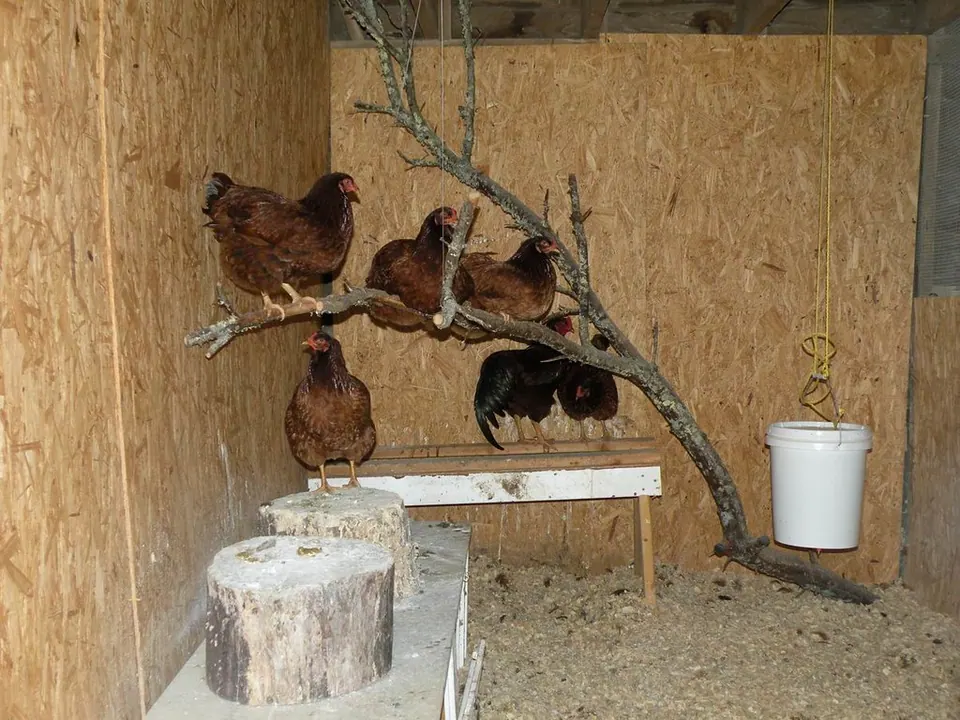
Penn State gives 6 in of roost per standard hen and roosts 18–24 in high; UMN suggests 9 in per bird in cold weather. Nests: two for the first four hens, then one per four more (Penn State).
- Plan the run
Penn State's minimum is 8 sq ft per hen outside; the hobby rule is 10. A covered run also keeps wild birds off the feed.
- Check ventilation and cleaning
Look for vents high on the walls, a droppings tray or wide doors, and nest boxes you can reach from outside. See coop ventilation.
- Harden against predators
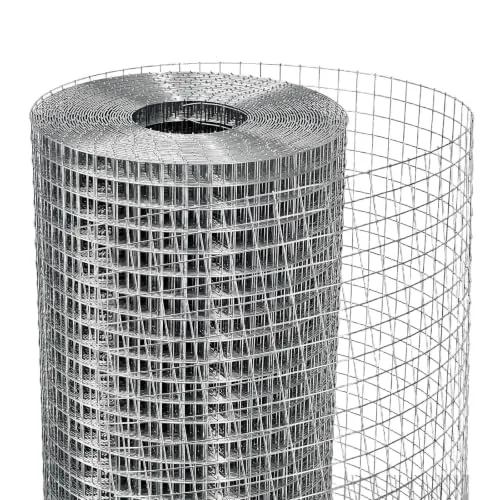
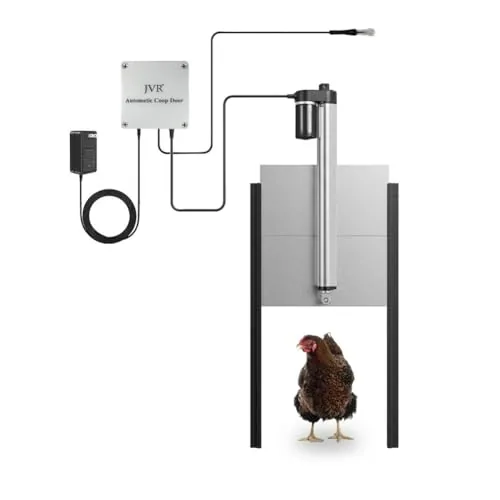
Swap chicken wire for ½-in hardware cloth on openings, add two-step latches, and close the pop door at dusk, or fit an automatic coop door.
Coop-buying mistakes to avoid
- Taking the hen count at face value. Recount with the floor area. A claim may assume bantams or count the run.
- Reading overall dimensions as floor. A 137-in coop may have a house a fraction of that length.
- Forgetting winter. Hens spend more time inside when it snows; size for the bad weeks.
- Chicken wire as predator protection. It keeps chickens in, not raccoons out.
- No shade or drainage. Place the coop where water drains away and afternoon shade exists.
- A knockoff Eglu. Eglu-style coops from other sellers are not Omlet products. Read how to spot a fake Omlet Eglu before buying.
Which coop is right for your flock?
Quick match
| Your flock | Look at | Note |
|---|---|---|
| 2 hens, tiny yard | PawHut 39" or Omlet Eglu Go | 4 sq ft house fits about 2 by Penn State |
| 3–4 hens | New Age Pet Fontana Jumbo or Aivituvin AIR45 | Add run space for the 4 + 10 rule |
| 4–8 hens, wood | OverEZ Medium | Add a separate run |
| 4–8 hens, plastic | Omlet Eglu Pro (official listing) | Run sold separately |
| Run included, mid-size | PawHut 137" or Prevue 467 | Check house floor before counting hens |
| Stand-up access | OverEZ Walk-in | 6 ft interior clearance |
Narrow it down further with coops for 4 chickens, coops for 6 chickens or wood vs plastic coops. Browse every house in coops or start from your first flock.
For a growing flock with its own run, the OverEZ Medium is a sturdy made-in-USA house with three nest boxes. If you prefer plastic, the Omlet Eglu Pro from the official listing cleans fastest. For a small yard, the New Age Pet Fontana Jumbo is one of the few coops that states its interior, about 10.5 sq ft. Whatever you buy, recount hens with a published norm rather than the label.
We compared listed dimensions, materials, nest boxes, roosts, runs and the maker's hen claim. Where a listing states the inside floor, we recount capacity with Penn State Extension's minimum (1.5 sq ft inside, 8 in the run per laying hen), UMN Extension's 3–5 sq ft and the common 4 + 10 rule, rounded down. Overall dimensions are never used as floor area because they include runs and nest boxes. We did not assemble these coops or keep birds in them.