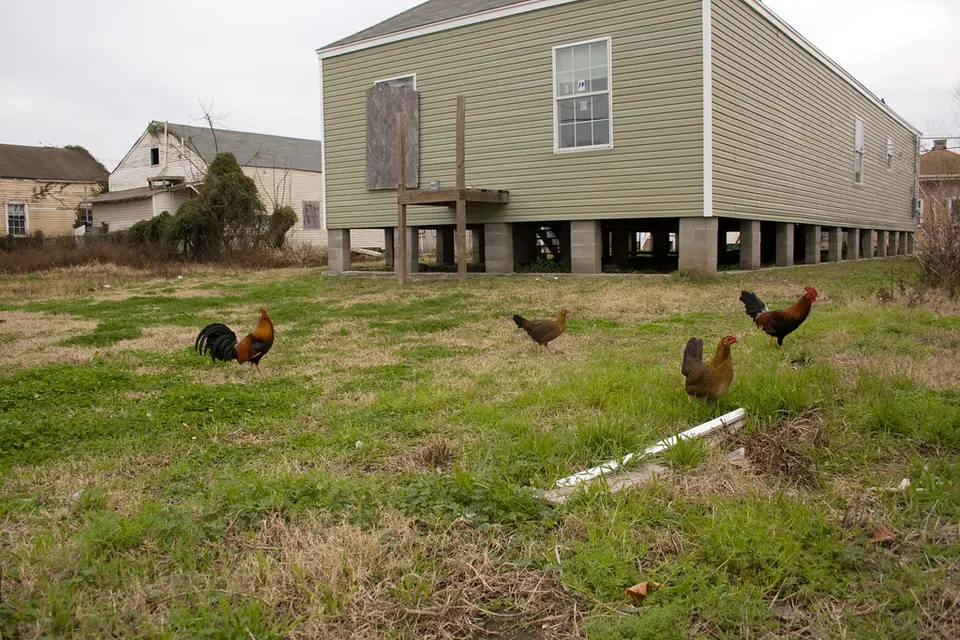
- Backyard chicken laws are local: your city or county code, your zoning district and any HOA covenants decide whether you can keep hens, how many and where.
- Common restrictions include limits on the number of birds, coop setbacks from neighboring property, bans on roosters and bans on roaming poultry; many are enforced on complaint (UF/IFAS).
- Chickens may be allowed where ducks or turkeys are not, and some codes exempt student or 4-H projects (UF/IFAS).
- Selling eggs falls under state rules. FDA's Egg Safety Rule covers farms with 3,000 or more hens; small direct sellers follow their state department of agriculture.
- Get answers in writing from your planning or zoning department, and talk to your neighbors before the chicks arrive.
Backyard chicken laws are the first thing to check before you buy a coop or order chicks, and they are also the thing most often skipped. There is no single US rule: what is allowed changes from one city to the next, sometimes from one zoning district or subdivision to the next. A coop that is fine in one town can draw a violation notice a mile away.
This guide explains the general patterns found in local codes, how to look up the rules for your own address, how HOAs fit in, how roosters and other birds are usually treated, what permits may involve, and where egg-sale rules come from. It does not list rules for specific cities, because codes change; it shows you where to look and what to ask.
Who makes backyard chicken laws?
Several layers can apply to the same backyard, and the strictest one wins:
Layers of rules and where to check them
| Layer | What it usually covers | Where to check |
|---|---|---|
| City or county code | Whether poultry are allowed, how many, roosters, setbacks, permits, nuisance rules (noise, odor, flies) | Your city's online municipal code; search "chickens", "poultry", "fowl", "livestock" |
| Zoning district | Animals allowed by district (residential, agricultural), accessory structure rules for coops | Planning and zoning department; zoning map |
| Building and setback rules | Coop size, height and distance from property lines and homes | Building or permitting office |
| HOA or deed covenants | Can ban or limit poultry even where the city allows them | Your HOA's covenants (CC&Rs) and rules; board approval |
| Lease | Landlord permission for animals and structures | Your lease; written landlord consent |
| State agriculture rules | Egg sales, poultry movement, disease reporting, NPIP testing | State department of agriculture; state veterinarian |
| Federal | FDA egg rule for 3,000+ hen farms; disease reporting to USDA | FDA; USDA APHIS |
Source: UF/IFAS AN239; FDA; USDA APHIS
UF/IFAS Extension, in its guide to raising backyard chickens for eggs, starts with exactly this step: before getting started, consider whether it is legal to keep chickens where you live, confirm your zoning designation with your city or county planning and zoning department, and search your local ordinances online (it points Florida readers to municode).
What do backyard chicken laws usually say?
Codes differ, but the same kinds of rules come up again and again. UF/IFAS lists the common ones: limits on the number of birds, a setback from neighboring property for housing, a general prohibition of roosters, and prohibitions on roaming poultry, often enforced on complaint. Ordinances sometimes exempt student educational projects, and chickens may be permitted where ducks or turkeys are not.
- Hen limits. A maximum number of hens per lot, sometimes scaled by lot size.
- Rooster bans. Common in residential areas because of noise. Roosters are not needed for eggs (UF/IFAS); they are needed only for fertile eggs.
- Setbacks. Minimum distances from property lines, neighbors' homes, wells or streams.
- Containment. Birds kept in a coop and run, no free roaming beyond your lot.
- Sanitation and nuisance. Rules on odor, flies, rodents and manure storage.
- Permits. A one-time or annual permit, sometimes with an inspection or neighbor notice.
- Slaughter. Some codes restrict home processing.
- Other species. Ducks, geese, turkeys, guineas and quail may be treated differently from chickens.
How to check the rules for your address, step by step
- Find your jurisdiction
Are you inside city limits, or in an unincorporated part of the county? Your property tax bill or the county GIS map will tell you.
- Search the municipal code
Most cities publish codes online. Search for chickens, poultry, fowl, fowl and livestock, and animals. Read the definitions, since "livestock" or "fowl" may include ducks and quail.
- Check your zoning district
Look up your parcel on the zoning map and read what animals and accessory structures are allowed in that district. UF/IFAS suggests confirming your zoning designation with the planning and zoning department.
- Read your HOA covenants and lease
Covenants can be stricter than the city. If they are silent, ask the board in writing. Renters need landlord consent.
- Ask about permits and coop placement
Ask whether a coop counts as an accessory structure, how far it must sit from lot lines and neighbors, and whether a permit or inspection is needed.
- Size the coop to the hen limit
Use published space norms to size the coop for the number of hens you are allowed, not the number a listing claims.
- Talk to your neighbors
UF/IFAS advises making friends with your neighbors and verifying any regulations to avoid problems. Many complaints start with noise, smell or rats; good management prevents all three.
Space norms and listed coop capacity
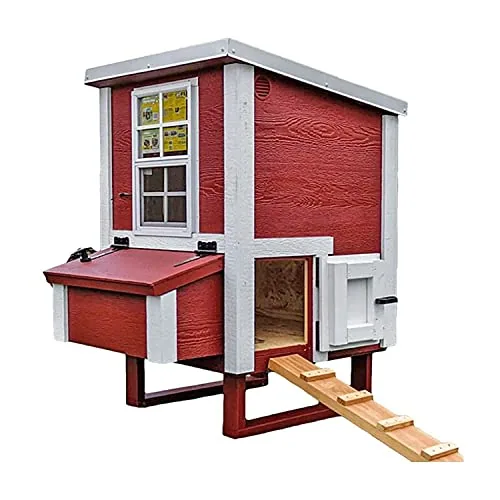
Codes rarely set floor space, but welfare guidance does, and neighbors notice crowded, smelly coops. Penn State Extension's minimum is 1.5 sq ft per laying hen inside and 8 sq ft in the run; University of Minnesota suggests 3 to 5 sq ft indoors. Many prefab coops are listed for more birds than those norms allow, so recount before you buy.
Space per bird, square feet: inside the coop / in the run
| Birds | Penn State | UMN | 4 + 10 rule |
|---|---|---|---|
| Standard laying hens | 1.5 / 8 | 3–5 / — | 4 / 10 |
| Large breeds | 2 / 10 | 3–5 / — | 4 / 10 |
| Bantams | 1 / 4 | 3–5 / — | — |
| Ducks | 3 / 15 | — | — |
| Geese | 6 / 18 | — | — |
| Quail | 1 / 4 | — | — |
Sources: Penn State Extension, Small-Scale Poultry Housing, Table 1 (Minimum Space Requirements for Poultry); University of Minnesota Extension, Raising chickens for eggs (“a minimum of 3 to 5 square feet of indoor space per bird”); Widely repeated hobby guideline (4 sq ft inside, 10 sq ft in the run per standard chicken), e.g. GRIT, Chicken Coop Space Requirements. — = not given by that source.
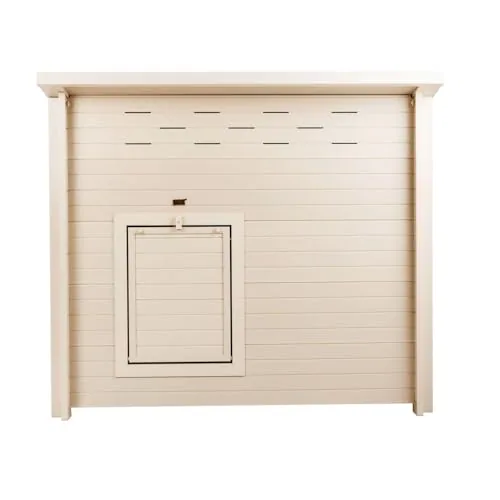
For example, the New Age Pet ECOFLEX Fontana Jumbo is listed for 4–6 chickens; the box below recounts its inside floor by the published norms.
Realistic capacity
Maker says 4–6 chickens. By the Penn State Extension minimum norm (1.5 sq ft per laying hen inside) this coop fits ≈ 6 standard hens.
| Norm (source) | Inside, sq ft per hen | Fits in the coop |
|---|---|---|
| Penn State Extension minimum | 1.5 | 6 |
| University of Minnesota Extension | 3–5 | 2–3 |
| Common 4 + 10 rule of thumb | 4 | 2 |
Coop floor 10 sq ft (listing: interior ~41 x 36.8 x 35 in). Counts are rounded down, for standard-size laying hens; bantams need less (Penn State: 1 sq ft inside). Nest boxes and roosts are not counted. These are published planning figures, not a test of this coop: measure the inside floor before you add birds. Check your own flock in the coop size calculator.
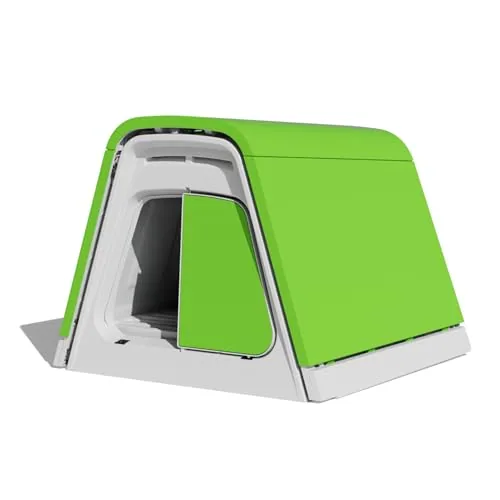
Plastic coops such as Omlet's Eglu range are popular in small yards. Buy them from the official Omlet listing and read how to spot a fake Omlet Eglu. Compare more options in best chicken coops for 4 chickens.
Being a good neighbor: the practical side of the law
Most enforcement starts with a complaint, so the best compliance strategy is a coop nobody notices. Keep it clean and dry (see how to clean a chicken coop), store feed in sealed bins and use a rodent-resistant feeder, place the coop away from neighbors' windows, skip the rooster if your code bans one, and share a few eggs.
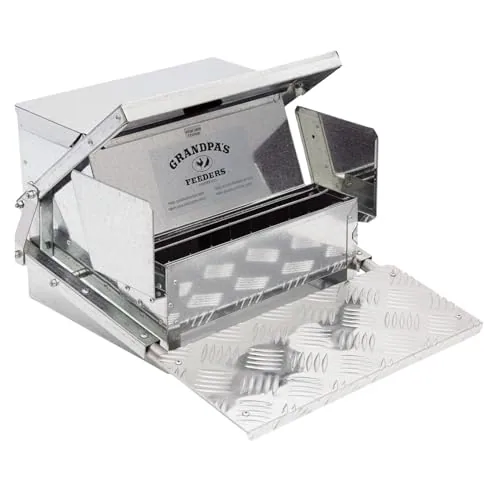
Grandpa's Feeders 20 lb Galvanized Treadle Feeder
- Type
- Treadle
- Capacity
- 20 lb
- Material
- Galvanized steel
Best for Small flocks with rodent pressure
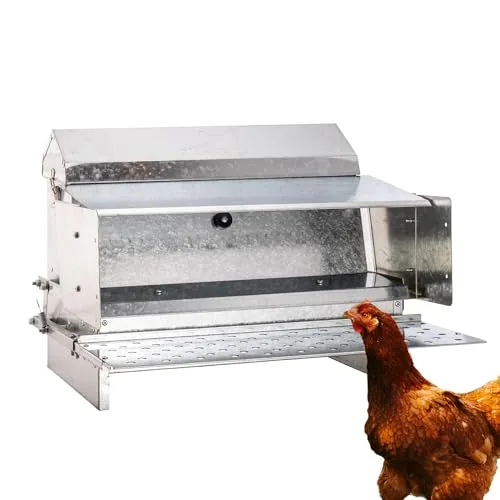
RentACoop Metal Treadle Feeder, 25 lb
- Type
- Treadle
- Capacity
- 25 lb
- Material
- Galvanized steel
Best for Small flocks with rodent pressure
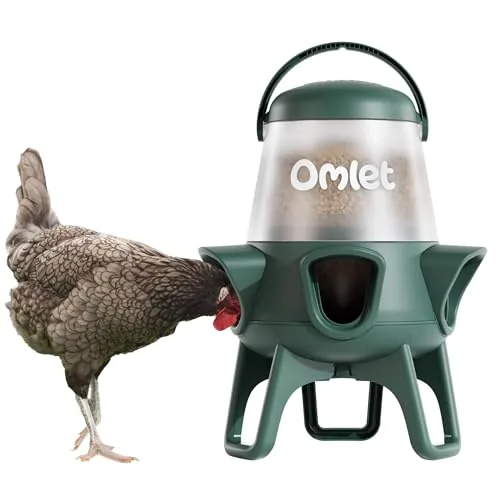
Omlet No-Waste Chicken Feeder, 12 lb
- Type
- Port feeder, 5 ports
- Capacity
- 12 lb
- Mount
- Hanging or free-standing
Best for Small backyard flocks
- Lock birds in at night; predators raiding a coop create noise and mess. See how to protect chickens from predators.
- Compost manure properly and keep the pile away from lot lines.
- Follow CDC hygiene: keep birds out of the house and keep children under 5 from handling poultry (see Salmonella and backyard chickens).
- Report sick birds or unusual deaths to your state veterinarian or USDA (1-866-536-7593).
Egg-selling laws: a separate set of rules
Selling eggs brings in state rules on handling, refrigeration and labeling, and sometimes local business or zoning rules for a farm stand. Federally, FDA's Egg Safety Rule applies to producers with 3,000 or more hens who don't sell all their eggs directly to consumers. States then set their own requirements: North Carolina, for example, exempts sellers of fewer than 30 dozen eggs a week from washing and grading if cartons say "ungraded eggs" with name and address, while Minnesota requires candling and grading and a detailed label. Details in how to sell eggs locally.
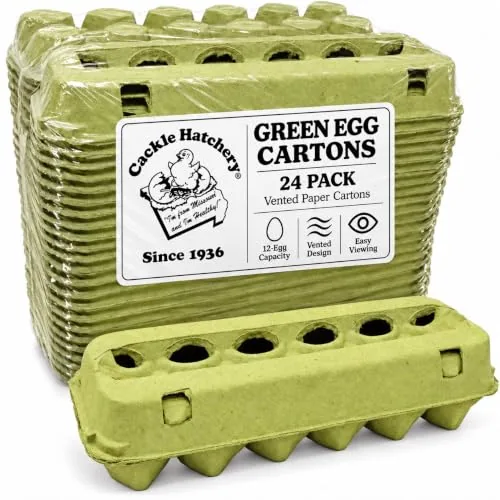
Cackle Hatchery Vented Pulp Egg Cartons, Green, 24-Pack
- Capacity
- 1 dozen, small to XL
- Count
- 24
- Material
- 100% reclaimed paper pulp
Best for Selling or gifting eggs
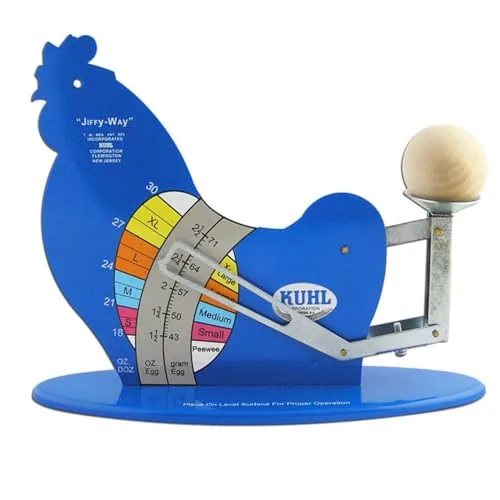
Kuhl Jiffy-Way Egg Grading Scale
- Capacity
- Max 2-1/2 oz (71 g)
- Material
- Metal
- Type
- Gravity-operated egg scale
Best for Grading eggs for sale
Mistakes that lead to violations
- Buying birds before checking the code and the HOA.
- Relying on a neighbor's example. They may be grandfathered, in another district or simply not reported.
- Straight-run chicks in a no-rooster area; plan what you will do with cockerels.
- Building the coop on the lot line without checking setbacks.
- Letting birds roam into neighbors' gardens.
- Assuming ducks or quail count as chickens under your code.
- Selling eggs without checking state rules.
Planning your first flock? Start with how to start raising backyard chickens and the first flock and small backyards hubs.
Coop size calculatorEnter your hens, bantams, ducks or quail: see coop floor, run area, roost length and nest boxes under three…Feed and egg cost calculatorType your bag price and size, flock size and eggs per week: see feed per day, how long a bag lasts, monthly…Questions
Are backyard chickens legal in my city?
How many chickens can I have in my backyard?
Can I have a rooster in town?
Can my HOA ban chickens if the city allows them?
Do I need a permit for backyard chickens?
Is it legal to sell eggs from backyard chickens?
Sources
- UF/IFAS Extension, AN239 Raising Backyard Chickens for Eggs (check your local ordinances)
- Penn State Extension, Small-Scale Poultry Housing (space per bird)
- University of Minnesota Extension, Raising chickens for eggs
- FDA, Small entity compliance guide: Prevention of Salmonella Enteritidis in shell eggs
- NC State Extension, Growing Small Farms: meat and eggs
- Minnesota Department of Agriculture, Sale of eggs in Minnesota
- USDA APHIS, Defend the Flock (reporting sick birds)
- CDC, Backyard Poultry (Healthy Pets, Healthy People)