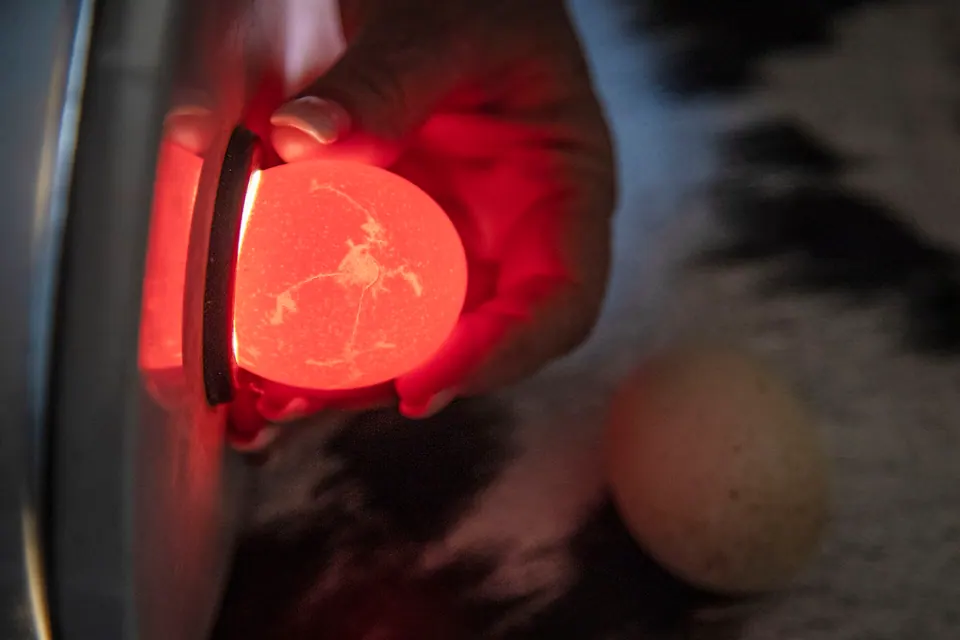
- Candle chicken eggs on days 7 and 14, with an optional check at lockdown on day 18 (4-H embryology).
- A growing embryo looks like a red spot with spreading veins, like a small red spider (Illinois Extension).
- Remove clear eggs and eggs with a blood ring or streaks; a blood ring means the embryo has died.
- The air cell tells you about humidity: too big means too dry, too small means too humid (Missouri Extension).
- Dark or speckled shells (Marans, quail, many duck eggs) need a high-intensity candler and a fully dark room.
Knowing how to candle eggs lets you see inside the shell without opening it. You shine a bright light through the egg in a dark room and read the shadows: veins, the embryo, the air cell. Candling helps you remove infertile or dead eggs before they spoil, and the air cell tells you whether your humidity is on track.
This guide covers when to candle, how to hold the egg, what each stage looks like and which candler works best for pale or dark shells. Timings are for chicken eggs, from 4-H embryology programs, the University of Illinois Extension and the University of Missouri Extension.
When should you candle eggs?
4-H embryology programs candle chicken eggs on day 7 and day 14, and many add a quick look on day 18 just before lockdown. Illinois Extension notes that white-shelled eggs can show development as early as day 3, while brown-shelled eggs are hard to read before day 5 or 6.
Other species run on different clocks. The incubation chart by species lists lockdown days for ducks, quail, turkeys and geese, and the incubation calculator puts candling days on your calendar from your set date.
How to candle eggs, step by step
- 1. Darken the room
The darker the room, the more you see. Close curtains or candle at night. Illinois Extension suggests resting the candler on a box or table about 38–44 in off the floor so the light is not in your eyes.
- 2. Wash and dry your hands
Clean, grease-free hands protect the shell's pores (MSU). Wash again afterward: eggs and incubators can carry Salmonella (CDC).
- 3. Work fast and gently
Take out a few eggs at a time so the rest stay warm, and handle them softly. MSU warns that early embryos' blood vessels can rupture if eggs are jarred, especially in the first week.
- 4. Hold the large end to the light
Illinois Extension: hold the egg at a slant with the large end against the candler, gripping the small end between thumb and first two fingers. A quick twist moves the contents closer to the shell.
- 5. Read and record
Mark each egg in pencil (number, or a ✓ / ✗) and write results in a hatch log. Remove clear eggs and eggs with a blood ring on day 7 or later.
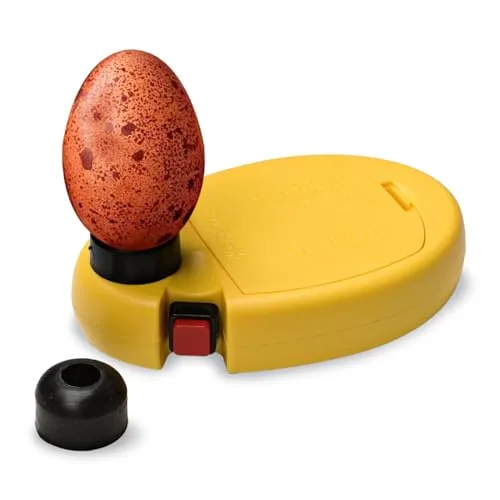
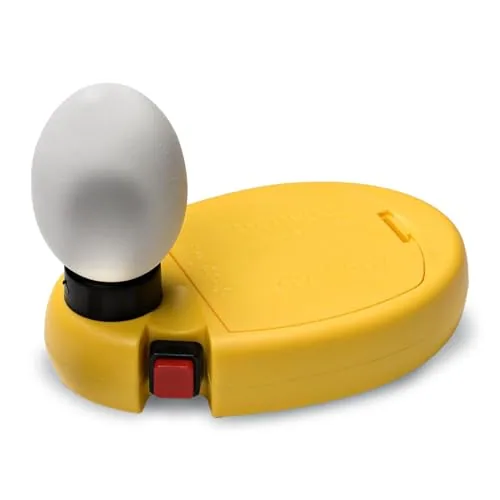
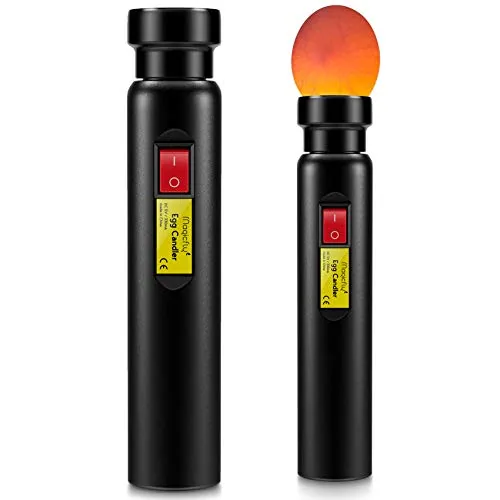
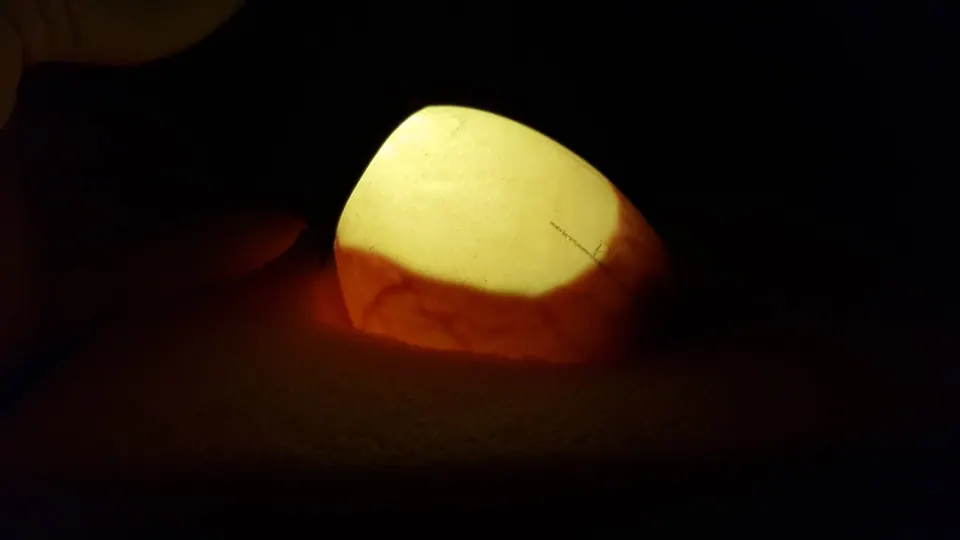
If your incubator has a fixed tray, many keepers candle on the tray in a darkened room with a small handheld light rather than lifting every egg. Follow your incubator's manual on how long the lid can stay open.
What does a fertile egg look like when candling?
Illinois Extension describes a developing embryo as a small reddish area with blood vessels spreading out from it, like a "huge red spider". Here is what to expect at each check:

What you see in a chicken egg
| Check | Developing egg | Remove it if you see |
|---|---|---|
| Day 3–7 | Red spot with thin veins spreading from it; the embryo may twitch | ✗ Clear egg with only a faint yolk shadow (infertile or very early death) |
| Day 7 | Clear network of veins, dark spot (the eye) may be visible | ✗ Blood ring or streaks; dark spot with no veins |
| Day 14 | Dark mass fills much of the egg; veins near the air cell; movement | ✗ No growth since day 7; blood ring; cloudy or smelly egg |
| Day 18 | Egg nearly dark; air cell larger with a sloped edge | ~ Hard to read; remove only clearly dead or leaking eggs |
Source: University of Illinois Extension; University of Missouri Extension G8353
A blood ring forms when blood pulls away from a dead embryo and settles in a circle (Illinois). Missouri ties clear eggs with a blood ring to death in the first three days, often from incubator trouble or poor egg storage. Remove these eggs: Illinois notes early-dead embryos decompose quickly and can look like rotten eggs, and Missouri says leaking or cracked eggs can burst.
What does the air cell tell you about humidity?
The air cell is the pocket at the large end of the egg. It grows as the egg loses water through the shell. Missouri Extension says chicken eggs should lose about 11–14% of their weight by day 18, and uses air-cell size as the guide: a large air cell means humidity should go up; a small one means it should come down.
Trace the air-cell edge in pencil at each candling so you can compare. By day 18 it typically takes up a noticeable part of the large end and may slope to one side. If it looks much bigger than in comparison photos in your incubator's manual, raise humidity slightly for the rest of the incubation, within the range your manual gives. Humidity targets by species are in the chart guide; Brinsea gives 45–50% RH for chicken eggs before lockdown and 65% or more after.
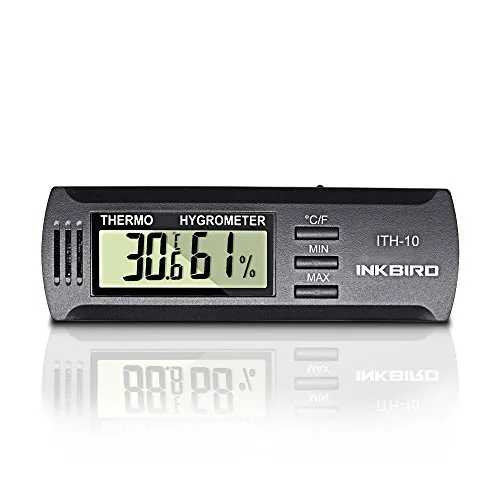
Inkbird ITH-10 Thermometer Hygrometer
- Accuracy
- ±3% RH, ±1.8°F
- Memory
- Min/max
Best for General humidity checks
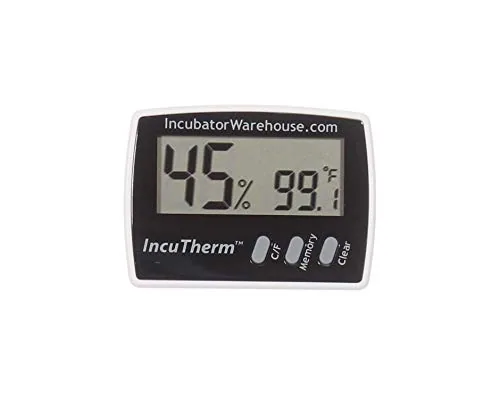
Incubator Warehouse IncuTherm Thermo-Hygrometer
- Measures
- Temperature and humidity
- Display
- Large digital, min/max memory
- Mount
- Magnetic back, pop-out stand
Best for Cross-checking an incubator's readout
How do you candle dark, brown or speckled eggs?
Illinois Extension notes that brown shells are harder to candle than white ones. Very dark eggs (Marans), speckled quail eggs and thick duck or goose shells can look almost opaque under a weak light. Three fixes help:
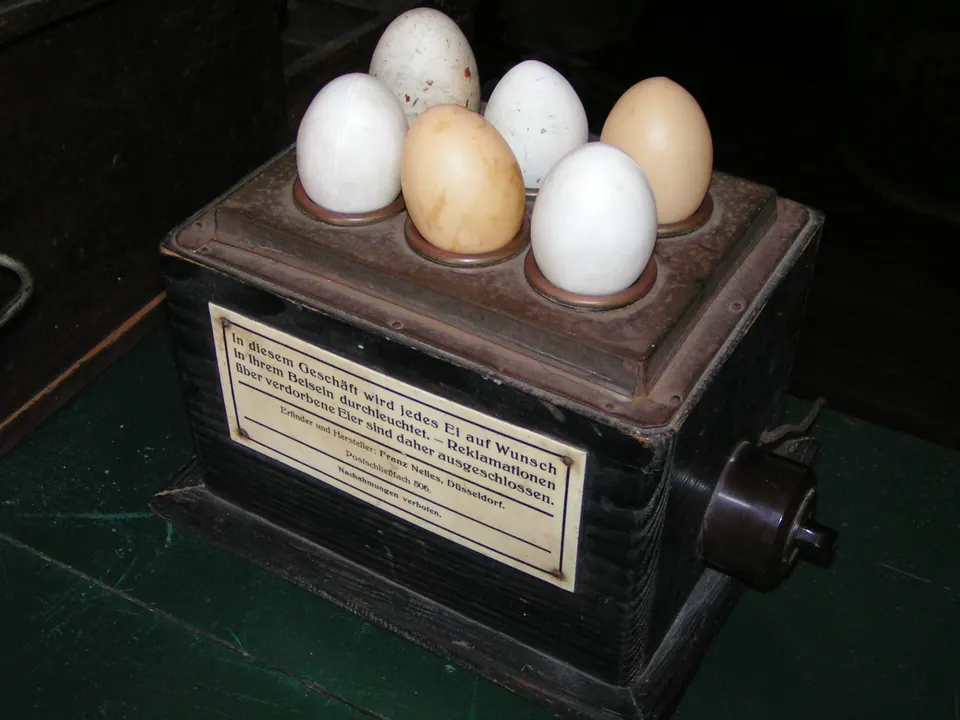
- Use a high-intensity candler. Brinsea markets its OvaView High Intensity for dark or mottled shells such as Marans, quail and pheasant; Incubator Warehouse lists 250 lumens for its Incu-Bright.
- Wait a day or two longer for the first check: day 7 rather than day 3–5.
- Make the room completely dark and seal the egg tightly against the candler's rubber ring so no light leaks around it.
| Product | Light type | Power | Best shells | Egg sizes |
|---|---|---|---|---|
| Brinsea OvaView High Intensity Egg Candler | Extra-bright high-efficiency LED | 4 rechargeable AA batteries (not included) | Dark or mottled (Marans, quail, pheasant) | — |
| Brinsea OvaView Standard Egg Candler | High-efficiency cool LED | 4 AA batteries (included) | Plain or pale (hen, duck, goose) | — |
| Incubator Warehouse Incu-Bright LED Egg Candler | 250-lumen CREE LED | Cordless (portable) | — | — |
| Titan High Intensity LED Egg Candler | High-output cold LED | Battery (not included) | — | Budgie to ostrich |
| Magicfly Rechargeable LED Egg Candler | Cool LED | Rechargeable (3 h charge, about 6 h use per maker) | — | — |
| Brinsea OvaScope Egg Viewer | LED, with slight magnification | 4 AA batteries (included) | — | Any size up to goose |
Specs as listed by the maker or seller; check the listing before you buy.
Brinsea OvaView High Intensity Egg Candler
- Light type
- Extra-bright high-efficiency LED
- Power
- 4 rechargeable AA batteries (not included)
- Best shells
- Dark or mottled (Marans, quail, pheasant)
Best for Candling dark and quail eggs
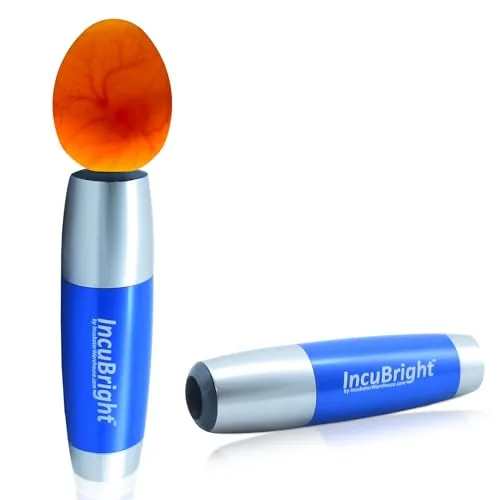
Incubator Warehouse Incu-Bright LED Egg Candler
- Light type
- 250-lumen CREE LED
- Power
- Cordless (portable)
- Body
- Aluminum case, silicone ring
Best for Candling dark or varied eggs
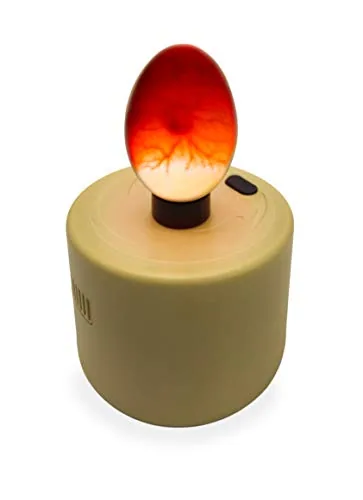
Titan High Intensity LED Egg Candler
- Light type
- High-output cold LED
- Power
- Battery (not included)
- Egg sizes
- Budgie to ostrich
Best for Candling dark or thick shells
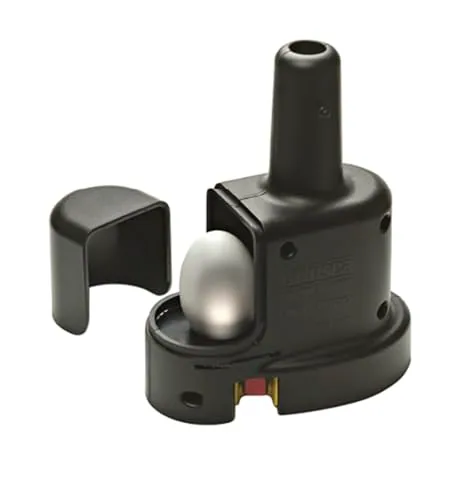
Brinsea OvaScope Egg Viewer
- Light type
- LED, with slight magnification
- Power
- 4 AA batteries (included)
- Egg sizes
- Any size up to goose
Best for Classrooms watching embryos develop
More options and side-by-side picks are in best egg candlers and the incubation hub.
Candling mistakes to avoid
- Candling too often. Each session cools the eggs. Stick to the planned checks.
- Throwing out eggs too early. Brown and dark eggs can look empty on day 3–5. If unsure, mark the egg and check again on day 7 or 10.
- Rough handling in week one. Fragile vessels can rupture (MSU).
- Leaving dead eggs in. They can rot, leak or burst and contaminate the others.
- A hot incandescent bulb held against the shell. Cool LED candlers avoid heating the egg.
- Opening the incubator during lockdown to candle. After day 18, humidity matters more than a look.
- Letting young kids handle eggs. CDC advises that children under 5 should not handle chicks or poultry, and everyone should wash hands after touching eggs and incubators.
Doing this with a class? See hatching projects at school and home and the hatching project hub, and keep a hatch log of each candling session.
Candle chicken eggs on days 7 and 14 in a dark room with a bright LED candler, remove clear eggs and blood rings, and use the air cell to adjust humidity. For dark or speckled shells, buy a high-intensity candler and give the first check a few extra days.
Questions
When should you candle chicken eggs?
What does a fertile egg look like when candled?
What does a blood ring mean?
Can you candle eggs with a phone flashlight?
How long can eggs be out of the incubator for candling?
Should I candle eggs during lockdown?
Sources
- University of Illinois Extension, Candling eggs
- Virginia Cooperative Extension 4-H, Embryology record sheet (candle days 7, 14 and 18)
- University of Missouri Extension, Incubation of poultry (G8353)
- Mississippi State University Extension, Important Incubation Factors
- Brinsea, Humidity during incubation
- CDC Healthy Pets, Backyard Poultry