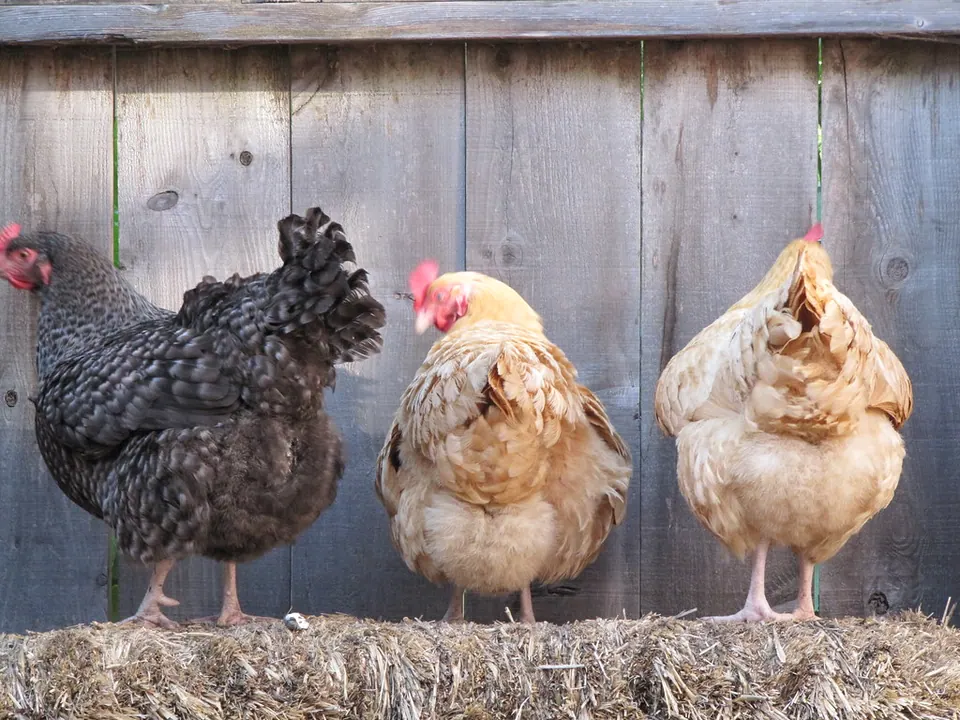
- Get at least 3 hens: chickens are flock animals and a lone bird is stressed.
- A hen at her peak lays about 6 eggs a week (UMN), fewer in winter, during molt and as she ages.
- Your coop's inside floor usually sets the real limit: 1.5 sq ft per laying hen minimum (Penn State), 3–5 sq ft for comfort (UMN).
- Budget about ¼ lb of feed per hen per day, roughly 1¾ lb a week.
- Check your city's hen limit and rooster rules before you choose a number.
How many chickens should I get? For most families the answer lands between three and six hens. That range gives a steady supply of eggs, keeps birds company and fits the coops most backyards can hold. But the right number for you depends on four things you can actually measure: the eggs you want, the coop floor you have, the time you can spend and what your local rules allow.
Below you will find a quick way to work out your number, a table for 3 to 10 hens with published space, nest, roost and feed figures, and the most common reasons people end up with too many birds.
What is the minimum number of chickens to keep?
Three. Chickens are social birds that sleep, dust-bathe and forage together, and a single hen tends to be anxious and noisy. Two can work, but if one dies or falls ill the other is left alone, and introducing new birds to a lone hen is stressful for everyone. Many hatcheries also set a minimum order for shipped chicks, especially in the colder months.
With three or more, losing a bird does not leave a single survivor, and the flock settles into a calm pecking order.
How many eggs will each hen lay?
University of Minnesota Extension puts a good laying hen at about six eggs a week. That is a peak figure, not a yearly average. Three things pull the real number down:
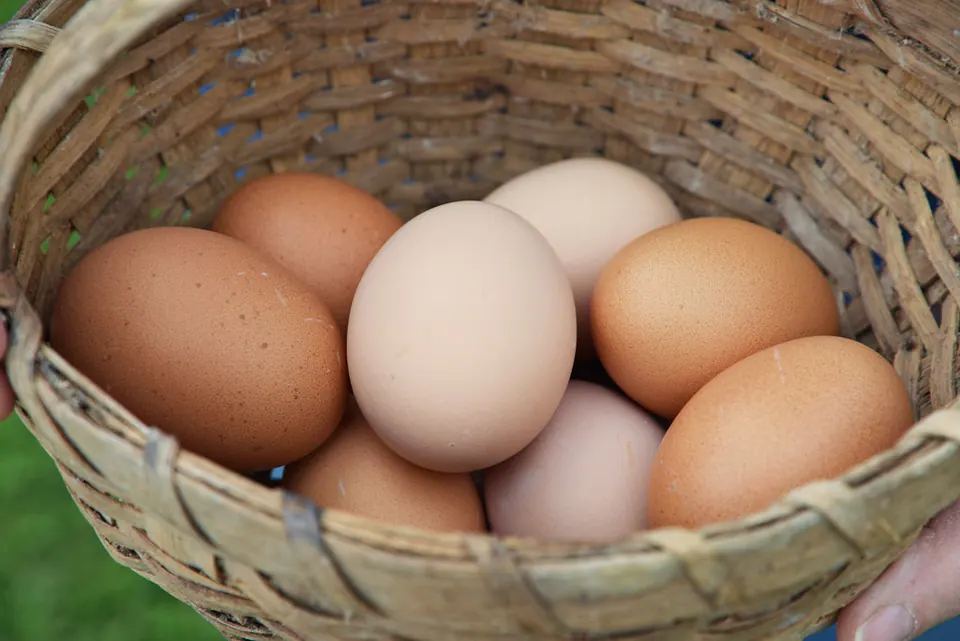
- Daylight. UMN says hens need at least 12–14 hours of light a day to keep laying, so most flocks slow down in late fall and winter.
- Molt. Hens replace their feathers once a year, usually in fall, and many stop laying while they do. The Merck Veterinary Manual says a molt typically lasts 3–4 months.
- Age. UMN notes that production peaks in the first two years, while hens can live and lay at a lower rate for 5–10 years.
So plan on the peak figure in spring and summer and expect much less from November to February. If your family uses a dozen eggs a week year-round, four hens give you a cushion in summer and just about cover winter. Breed matters too: see chicken breeds for beginners for high-production layers versus calmer dual-purpose birds.
How many chickens fit in your coop?
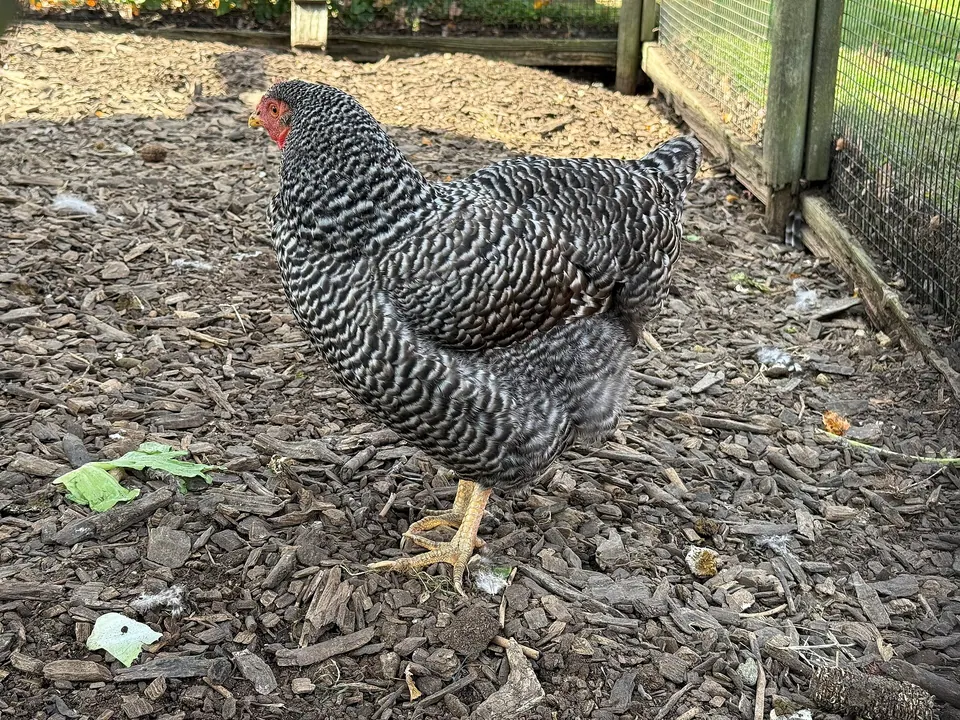
This is where most plans change. Prefab coops are usually listed for more birds than published space norms allow, so measure the inside floor (the house, not the run) and divide. Here is what six standard laying hens need inside under each common norm:
Inside floor for 6 standard hens
Square feet, house only (run not included)
Two coop listings show how wide the gap can be. The boxes below recount each one from its listed inside floor.
Realistic capacity
Maker says 2–4 chickens. By the Penn State Extension minimum norm (1.5 sq ft per laying hen inside) this coop fits ≈ 2 standard hens.
| Norm (source) | Inside, sq ft per hen | Fits in the coop |
|---|---|---|
| Penn State Extension minimum | 1.5 | 2 |
| University of Minnesota Extension | 3–5 | 0–1 |
| Common 4 + 10 rule of thumb | 4 | 1 |
Coop floor 4.0 sq ft (listing: Main house 4 sq ft; nest box 2 sq ft). Counts are rounded down, for standard-size laying hens; bantams need less (Penn State: 1 sq ft inside). Nest boxes and roosts are not counted. These are published planning figures, not a test of this coop: measure the inside floor before you add birds. Check your own flock in the coop size calculator.
Realistic capacity
Maker says 4–6 chickens. By the Penn State Extension minimum norm (1.5 sq ft per laying hen inside) this coop fits ≈ 6 standard hens.
| Norm (source) | Inside, sq ft per hen | Fits in the coop |
|---|---|---|
| Penn State Extension minimum | 1.5 | 6 |
| University of Minnesota Extension | 3–5 | 2–3 |
| Common 4 + 10 rule of thumb | 4 | 2 |
Coop floor 10 sq ft (listing: interior ~41 x 36.8 x 35 in). Counts are rounded down, for standard-size laying hens; bantams need less (Penn State: 1 sq ft inside). Nest boxes and roosts are not counted. These are published planning figures, not a test of this coop: measure the inside floor before you add birds. Check your own flock in the coop size calculator.
If your coop is already built, measure the floor in inches, multiply length by width and divide by 144 to get square feet. The coop size calculator does the math and checks the run, roosts and nests at the same time.
Flock size at a glance: 3 to 10 hens
This table pulls the published figures together for standard laying hens. Egg numbers are the peak-season upper bound from UMN's six-a-week figure; real yearly totals are lower.
What 3–10 standard hens need
| Hens | Eggs/week at peak (up to) | Inside floor: Penn State / UMN | Run: Penn State | Nest boxes: Penn State / UMN | Roost: 6 in / 9 in per bird | Feed per week (about) |
|---|---|---|---|---|---|---|
| 3 | 18 | 4.5 / 9–15 sq ft | 24 sq ft | 2 / 1 | 18 / 27 in | 5¼ lb |
| 4 | 24 | 6 / 12–20 sq ft | 32 sq ft | 2 / 1 | 24 / 36 in | 7 lb |
| 6 | 36 | 9 / 18–30 sq ft | 48 sq ft | 3 / 2 | 36 / 54 in | 10½ lb |
| 8 | 48 | 12 / 24–40 sq ft | 64 sq ft | 3 / 2 | 48 / 72 in | 14 lb |
| 10 | 60 | 15 / 30–50 sq ft | 80 sq ft | 4 / 2–3 | 60 / 90 in | 17½ lb |
Large breeds such as Brahmas and Orpingtons need more: Penn State lists 2 sq ft inside and 10 sq ft in the run per large bird, and bantams need about half as much as standard hens. The full side-by-side is in the coop size guide.
How much time and feed does each extra hen add?
Chores do not scale much between three and eight hens: you still open the coop, check water and collect eggs once or twice a day. What does grow is feed, bedding, cleaning and the chance that one bird needs attention.
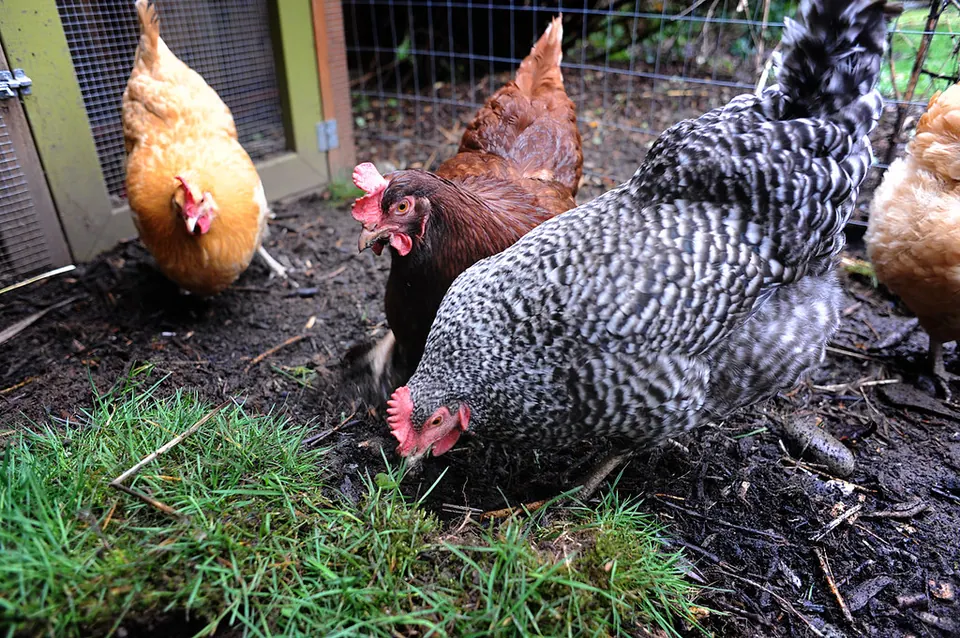
Bigger flocks also need bigger feeders and waterers so you are not refilling every day. A 20 lb treadle feeder is listed by its maker for about six hens for up to 10 days; the 40 lb version for 6–12 hens. Plug your own bag price into the feed and egg cost calculator to see what each extra hen costs per month.
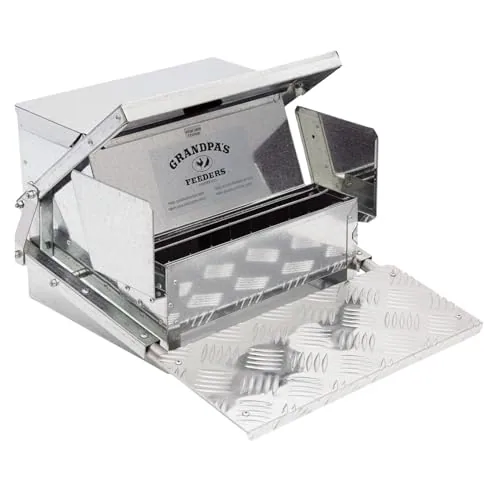
Grandpa's Feeders 20 lb Galvanized Treadle Feeder
- Type
- Treadle
- Capacity
- 20 lb
- Material
- Galvanized steel
Best for Small flocks with rodent pressure
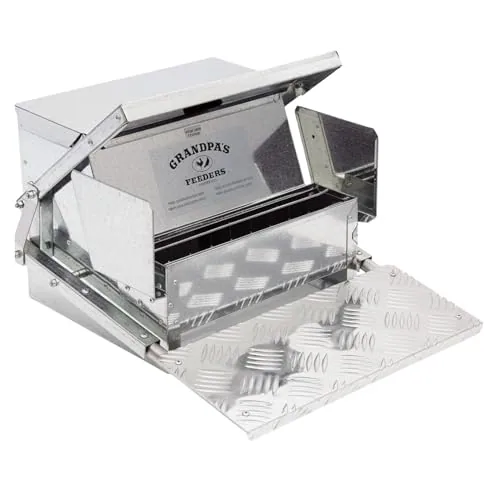
Grandpa's Feeders 40 lb Galvanized Treadle Feeder
- Type
- Treadle
- Capacity
- 40 lb
- Material
- Galvanized steel
Best for Mid-size flocks with rodent pressure
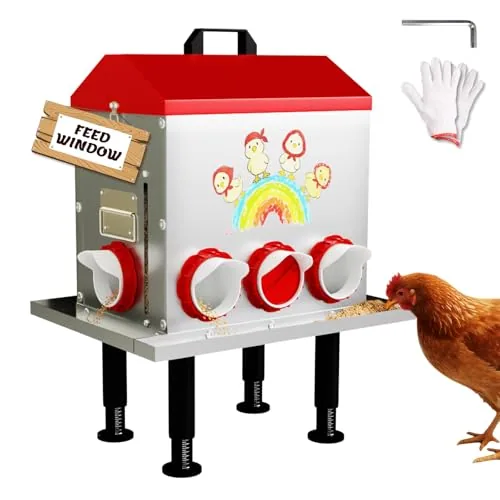
StellarStar 55 lb Metal Feeder, 8 Ports
- Type
- Port feeder, 8 ports
- Capacity
- 55 lb
- Material
- Rust-proof metal
Best for Large flocks
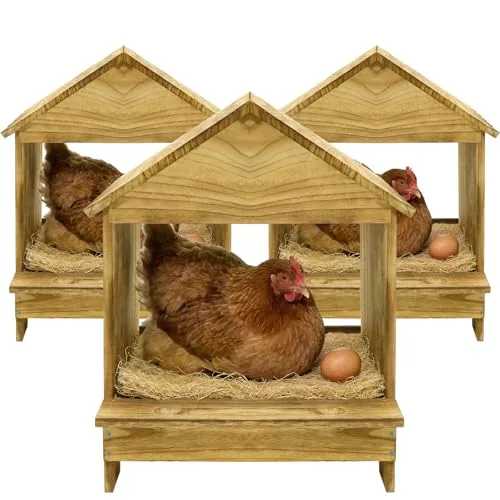
TRINFREE Farmhouse Wooden Nesting Boxes, 3-Pack
- Maker says
- 4–5 hens per compartment
- Material
- Carbonized solid wood
- Nest boxes
- 3
Best for Small backyard flocks
Does your city limit how many chickens you can keep?
Very often, yes. UMN notes that many cities cap animal numbers, require permits or ban poultry outright, and hen limits of a handful of birds are common in suburbs. Roosters are banned in many towns regardless of flock size.
What is chicken math, and how do you avoid it?
"Chicken math" is the hobby joke for how three planned hens become twelve: an extra chick "in case one is a rooster", a broody hen's surprise clutch, a neighbor's rehomed birds. It is funny until the coop is crowded. Crowding brings feather pecking, wet bedding, more disease pressure and fewer eggs.
Some ways to keep the number honest:
- Write down your coop's inside floor and your city's hen limit, and divide the floor by at least 3 sq ft (UMN low end). That is your ceiling.
- Order one extra chick at most, and buy sexed pullets from a hatchery or feed store if roosters are not allowed.
- Quarantine any new adult birds away from your flock before mixing them. USDA APHIS recommends isolating new birds as part of everyday biosecurity, and asks keepers to report sick birds or unusual deaths to the state veterinarian or 1-866-536-7593.
- Plan for older hens: they lay less but may live for years. Decide ahead of time whether you will keep them as pets.
Mistakes to avoid when choosing your flock size
- Buying for the listing's hen count. Recount by the floor area; the capacity boxes above show why.
- Ignoring winter. Shorter days and molt cut eggs; do not add hens just to cover a winter gap you could fill with a light timer or patience.
- Getting one or two birds. Too few for a stable, calm flock.
- Forgetting roosters in a straight-run order or a hatch. Roughly half will be males; have a plan if your town bans them.
- Mixing new birds straight in. Quarantine first, then introduce slowly.
Ready to buy a house for the number you picked? Compare coops for 4 chickens, coops for 6 chickens, or browse the small backyard and coops hubs.
For most first flocks, four to six hens is the sweet spot: enough eggs for a family in season, still a small daily job, and easy to house in a coop with 12–30 sq ft of inside floor. Let your coop floor and your local hen limit set the ceiling, not the chick bin at the feed store.
Questions
How many chickens should I get for a family of four?
Is 2 chickens enough?
How many chickens do I need for a dozen eggs a week?
How many chickens can I fit in a 4 x 8 coop?
How many nest boxes do I need?
How much does each chicken eat?
Sources
- University of Minnesota Extension, Raising chickens for eggs
- Penn State Extension, Small-Scale Poultry Housing
- Merck Veterinary Manual, Laying and reproduction in backyard poultry
- Alabama Cooperative Extension, Nutrition for backyard chicken flocks (ANR-1317)
- University of Minnesota Extension, Caring for chickens in cold weather
- USDA APHIS, Defend the Flock
- CDC Healthy Pets, Backyard Poultry