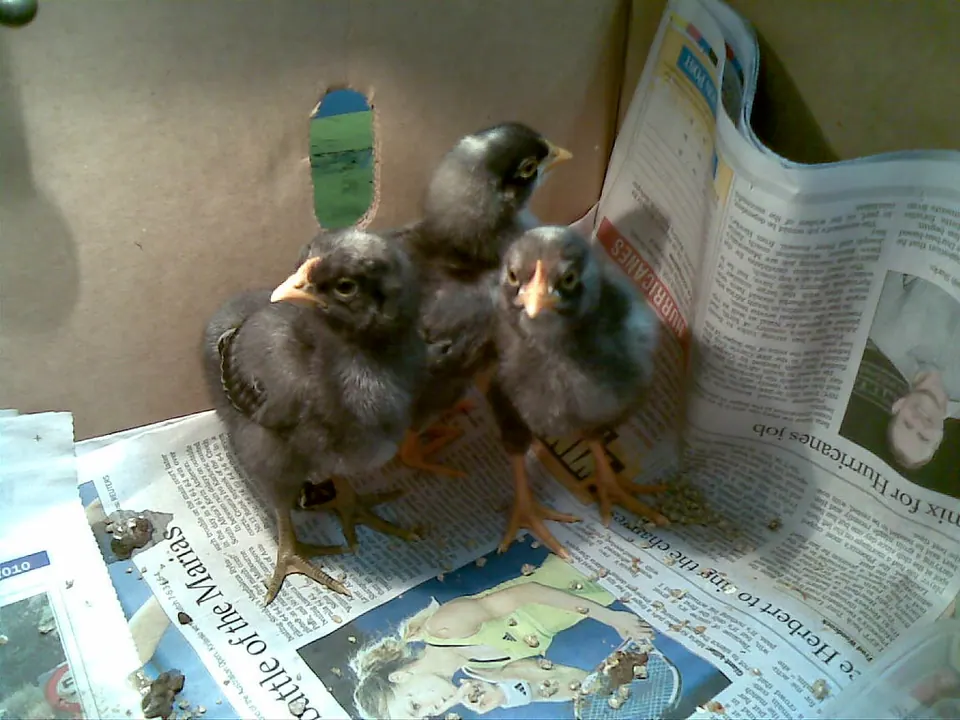
- School hatching projects work best when the chicks' destination is settled before any eggs are set: a 4-H program pickup, a farm, or a family with a coop and local permission.
- Chicken eggs take about 21 days; turning stops around day 18 (Mississippi State Extension). Use the incubation calculator so lockdown and hatch day don't fall on a weekend or holiday.
- Follow CDC: no live poultry in schools or childcare that serve children under 5, supervised handwashing after every contact, no kissing or snuggling chicks, no eating near the birds.
- Many 4-H embryology programs supply eggs, incubators, lessons and chick pickup; check with your county Extension office first.
- Hatch rates vary a lot with egg quality, shipping and incubator management. Prepare students for eggs that don't develop.
School hatching projects are among the most memorable science lessons a class can have: students turn eggs, candle them, record the data and watch chicks pip and zip their way out. Family hatches at home teach the same things. They also come with responsibilities that are easy to overlook in the excitement: live animals that need care every day including weekends, real Salmonella risk for young children, and a group of chicks that will need a permanent home within days.
This guide walks teachers, homeschoolers and parents through planning a hatch: deciding whether to do it at all, finding a 4-H program, picking an incubator, setting up a timeline, handling eggs and chicks safely according to CDC, and arranging what happens to the chicks afterward. Incubation figures come from Mississippi State University Extension and 4-H embryology guides.
Before you start: plan where the chicks will go
The most common problem with classroom hatches is not a failed hatch; it is a box of healthy chicks with nowhere to go. Settle this before you order eggs:
- Program pickup. Many 4-H embryology programs take chicks back after the hatch. University of Delaware's program, for example, delivers pre-incubated eggs and incubators, hatches midweek and picks chicks up on Friday. Illinois Extension's Cook County program lists a chick drop-off date.
- A local farm or experienced keeper who has agreed in writing to take every chick, including the roosters. Straight-run hatches are usually about half males, and many towns ban roosters.
- A family adoption plan only where the family has a coop, local permission (see backyard chicken laws) and no children under 5 handling the birds.
- Never release chicks or hand them out as gifts to young children (CDC advises against giving chicks to young children).
Find a 4-H embryology program
Cooperative Extension 4-H embryology programs exist in many states and take a lot of the risk out of a first hatch. They typically provide fertile eggs, incubators or loan kits, curriculum and teacher training. Missouri 4-H runs the "Show Me Embryology" curriculum with five lessons aligned to science standards; Illinois Extension provides training, classroom resources and egg ordering with chick feed; Delaware's program delivers pre-incubated eggs so the classroom portion lasts about one week. Contact your county Extension office and ask for a 4-H youth development professional.
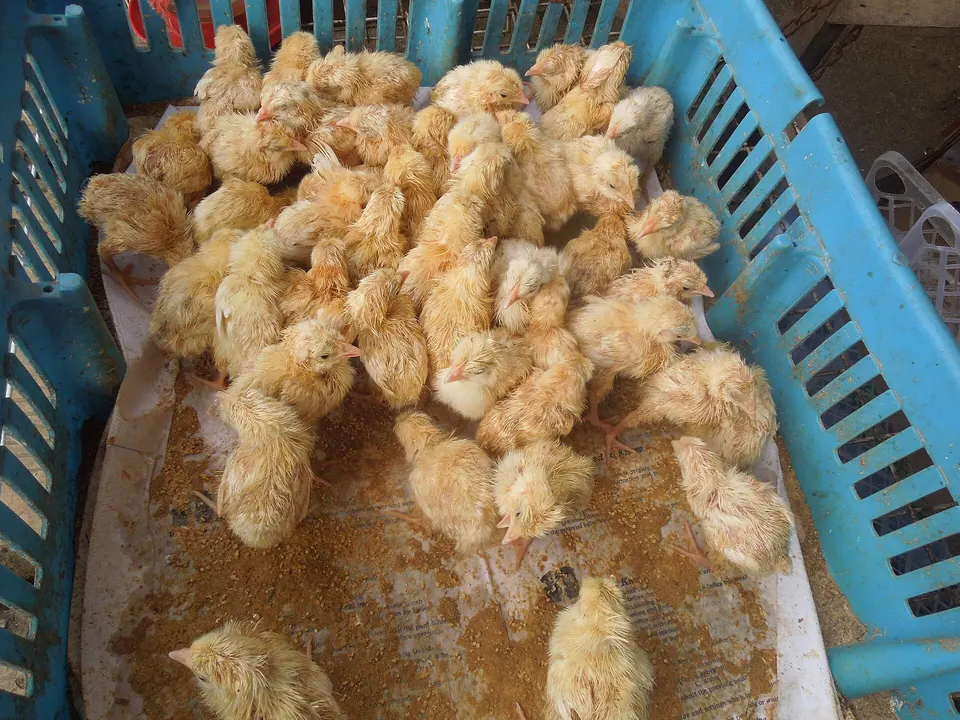
If no program is available, you can run a hatch independently with your own incubator and eggs from an NPIP-participating hatchery or flock. Live hatching eggs are not sold through our links; buy them from hatcheries or local breeders.
Hatching timeline: day by day
Chicken eggs hatch in about 21 days. Mississippi State Extension's table gives 100°F in a forced-air incubator, stopping turning on day 18, and raising humidity for the last three days. 4-H embryology record sheets schedule candling on days 7 and 14, plus a final check at lockdown on day 18. Always follow your incubator's manual first.
A classroom hatch, chicken eggs
| When | What happens | Who / note |
|---|---|---|
| 4–6 weeks before | Book a 4-H program or order eggs; confirm chick destination; check rules | Teacher; Delaware asks for 6 weeks' notice |
| 2–3 days before | Run the incubator empty and check temperature and humidity with a second thermometer | Teacher |
| Day 0 | Set eggs, large end up or as the manual says; record set time | Use the incubation calculator for dates |
| Days 1–17 | Automatic or hand turning (an odd number of times a day by hand); keep the lid closed | MSU: turn at least 4–6 times a day |
| Day 7 | First candling: veins and a dark spot in fertile eggs | 4-H record sheet |
| Day 14 | Second candling: embryo fills more of the egg | 4-H record sheet |
| Day 18 | Lockdown: stop turning, raise humidity, don't open | MSU; check this is a school day |
| Days 20–21 | Pipping and hatching; leave chicks to dry in the incubator | Plan weekend coverage if needed |
| Day 21–22 | Move dry, fluffy chicks to a pre-warmed brooder | Brooder at 92–95°F at chick level (Penn State) |
| Days 22–24 | Chicks go to their arranged home | Program pickup or adopter |
Source: Mississippi State University Extension; Virginia 4-H embryology record sheet; Penn State Extension
Choosing an incubator for a classroom
For a classroom, the priorities are a clear view, automatic turning that stops for lockdown, alarms, simple humidity top-up without lifting the lid, and a small enough capacity that every chick has a home. A forced-air (fan) model holds temperature more evenly than still air. Brinsea sells a classroom kit built around the Mini II Advance, with an OvaScope egg viewer, a radiant brooder plate and lesson plans; the Nurture Right 360 gives a larger, 22-egg view with a turner that stops before hatch, per its listing.
| Product | Egg capacity | Turning | Fan | Includes |
|---|---|---|---|---|
| Brinsea Mini II Advance Classroom Hatching Kit | 7 chicken eggs | Automatic with auto-stop | Forced-air | OvaScope egg viewer, radiant heat brooder plate, lesson plans |
| Brinsea Mini II Advance 7-Egg Incubator | 7 chicken eggs; 12 small eggs with optional insert | Automatic with auto-stop | Forced-air (fan-assisted) | — |
| Nurture Right 360 Incubator, 22 Eggs, Auto Turner | 22 chicken, 12–18 duck or 22–24 pheasant eggs | Automatic with auto-stop | Forced-air (360° induced airflow) | — |
Specs as listed by the maker or seller; check the listing before you buy.
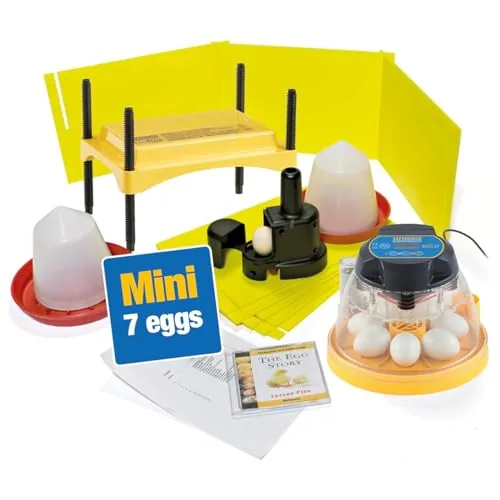
Brinsea Mini II Advance Classroom Hatching Kit
- Egg capacity
- 7 chicken eggs
- Turning
- Automatic with auto-stop
- Fan
- Forced-air
Best for School and homeschool hatching projects
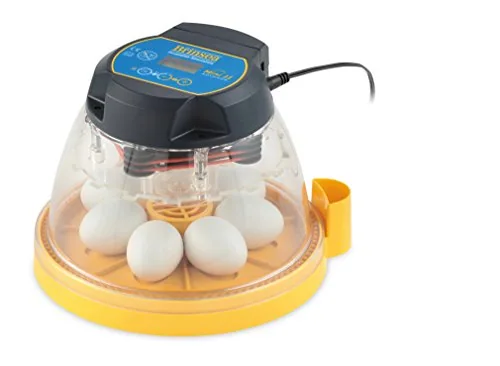
Brinsea Mini II Advance 7-Egg Incubator
- Egg capacity
- 7 chicken eggs; 12 small eggs with optional insert
- Turning
- Automatic with auto-stop
- Humidity
- Manual, external water top-up
Best for Small first hatches at home
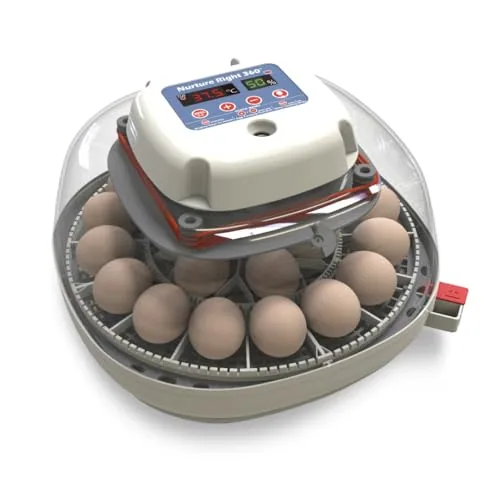
Nurture Right 360 Incubator, 22 Eggs, Auto Turner
- Egg capacity
- 22 chicken, 12–18 duck or 22–24 pheasant eggs
- Turning
- Automatic with auto-stop
- Humidity
- Display and control knob
Best for Family first hatches
Whatever you choose, run it empty for a couple of days and check it with an independent thermometer-hygrometer placed at egg height. Compare options in best incubators for beginners and Brinsea vs Nurture Right.
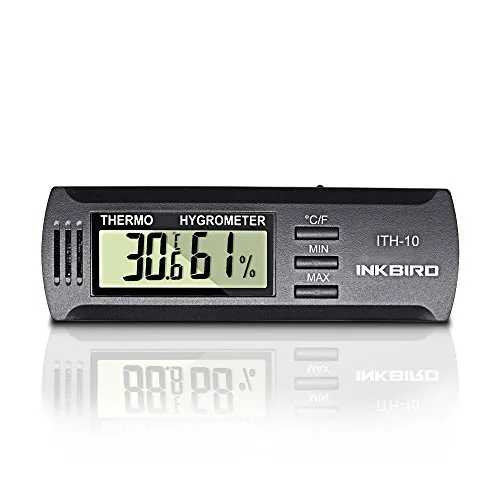
Inkbird ITH-10 Thermometer Hygrometer
- Accuracy
- ±3% RH, ±1.8°F
- Memory
- Min/max
Best for General humidity checks
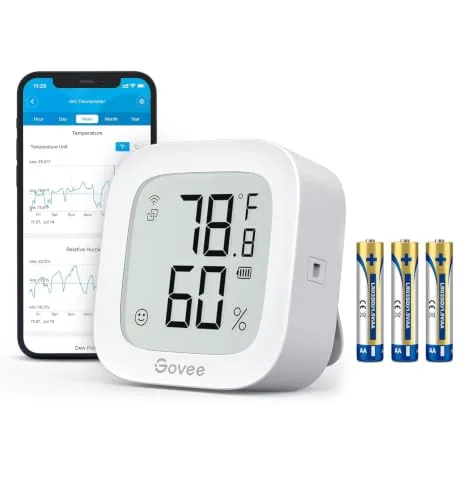
Govee H5103 WiFi Thermometer Hygrometer
- Accuracy
- ±0.54°F, ±3%RH
- Connectivity
- 2.4G Wi-Fi and Bluetooth
Best for General room monitoring
Candling with students
Candling is the highlight of the middle weeks. Darken the room, hold the egg to a bright cool LED and look for veins and movement. Work quickly so eggs don't cool, and let an adult do the handling while students watch and record, then everyone washes hands. Dark or speckled shells need a brighter light.
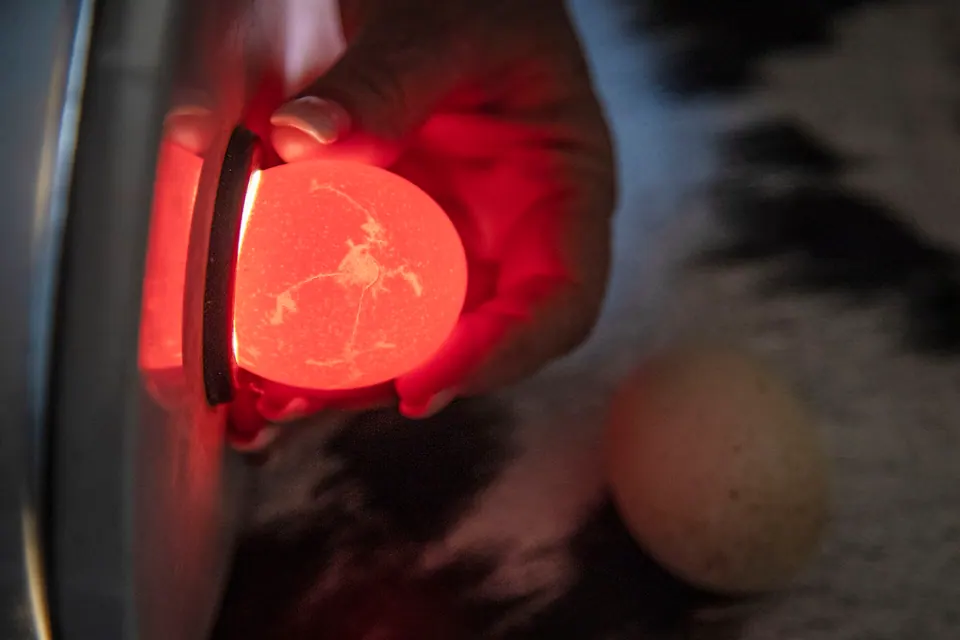
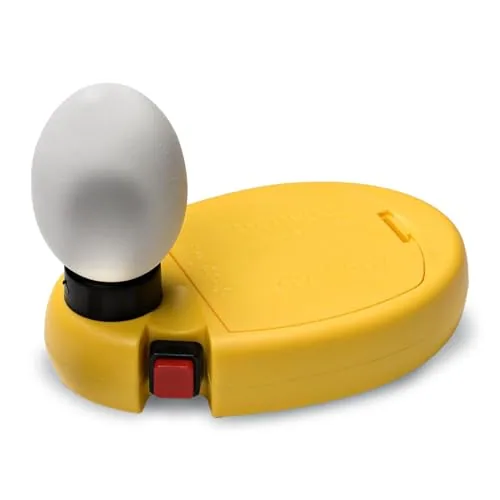
Brinsea OvaView Standard Egg Candler
- Light type
- High-efficiency cool LED
- Power
- 4 AA batteries (included)
- Best shells
- Plain or pale (hen, duck, goose)
Best for Candling pale chicken and duck eggs
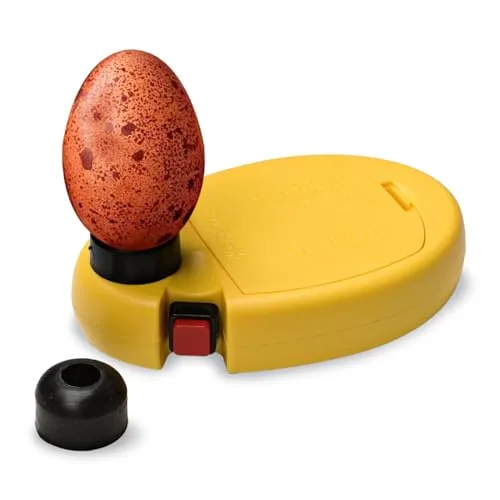
Brinsea OvaView High Intensity Egg Candler
- Light type
- Extra-bright high-efficiency LED
- Power
- 4 rechargeable AA batteries (not included)
- Best shells
- Dark or mottled (Marans, quail, pheasant)
Best for Candling dark and quail eggs
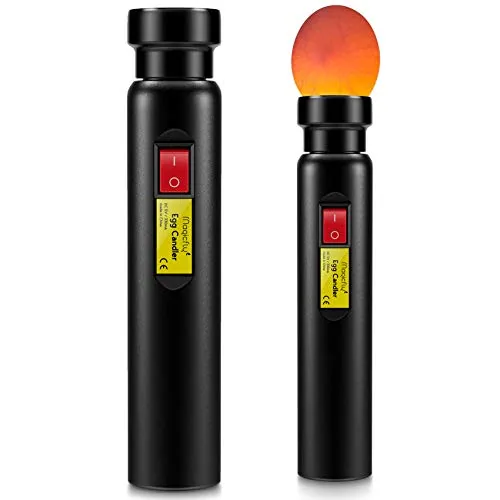
Magicfly Rechargeable LED Egg Candler
- Light type
- Cool LED
- Power
- Rechargeable (3 h charge, about 6 h use per maker)
- Covers
- Two rubber covers (duck to quail)
Best for Cordless candling
Step-by-step help is in how to candle eggs, and students can log every reading in the printable hatch log.
Hygiene rules for students and teachers
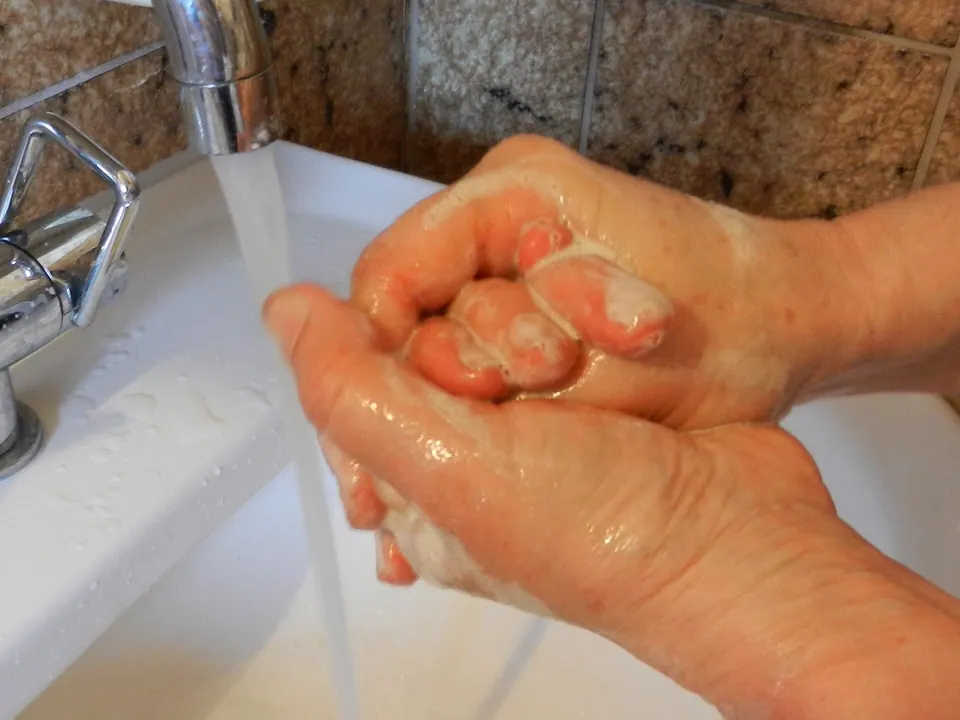
- Put a handwashing step on the class schedule after each session, not just a reminder.
- Let older students handle chicks only seated, over a table, with an adult present.
- Keep a sign-in sheet so substitutes and custodians know who checks the incubator.
- Send a note home explaining the Salmonella rules; see Salmonella and backyard chickens.
Brooding the chicks for the first days
Have the brooder warm before the first chick hatches. Penn State Extension gives 92–95°F at chick level in week one, dropping about 5°F a week. A heat plate is the safer choice in a classroom: low wattage, no exposed bulb, and chicks regulate themselves by moving in and out from under it. If you must use a lamp, follow fire-safety rules strictly (see heat lamp fire safety).
Brooder temperature at chick level, under the heat source
| Chick age | °F | °C | Floor space per chick |
|---|---|---|---|
| Week 1 | 92–95°F | 33–35°C | ¼ sq ft |
| Weeks 2–3 | 85–90°F | 29–32°C | ½ sq ft |
| Weeks 3–5 | 80–85°F | 27–29°C | ¾ sq ft |
| Weeks 5–8 | 70–80°F | 21–27°C | 1 sq ft |
| Week 8 on | Room temperature | — | 1½ sq ft, more for large breeds |
Source: Penn State Extension, Brooding of Domestic Fowl. Watch the chicks too: huddled under the heat means cold, crowded at the edges means too hot.
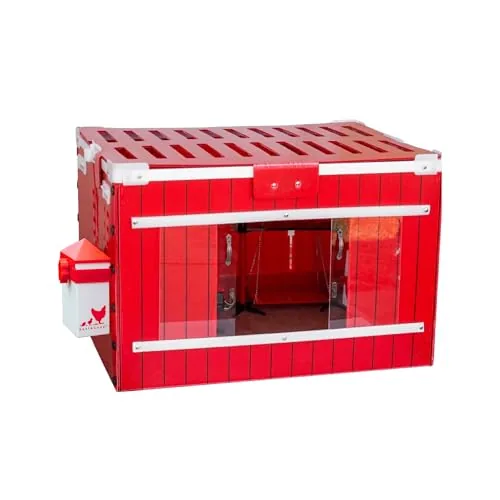
RentACoop Little Red Barn Brooder Set with Heat Plate
- Chicks
- Up to 8 chicks for first 6 weeks
- Includes
- Heating plate, feeder, waterer, liners, LED light, latch
- Material
- Plastic, folds flat
Best for A complete small first brooder
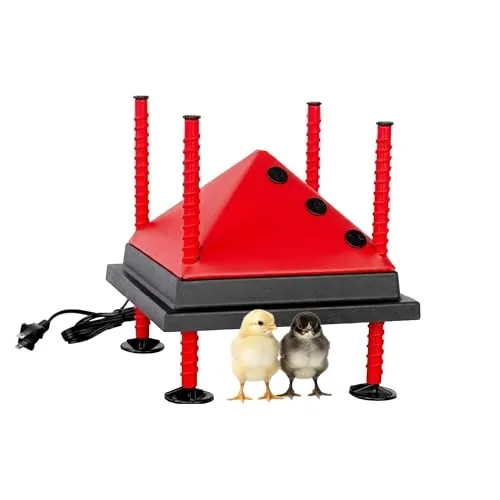
RentACoop 10x10 Heating Plate, Anti-Roost Cone
- Chicks
- Up to 15 chicks
- Heated area
- 10 x 10 in
- Wattage
- 15 W
Best for Small batches of up to 15
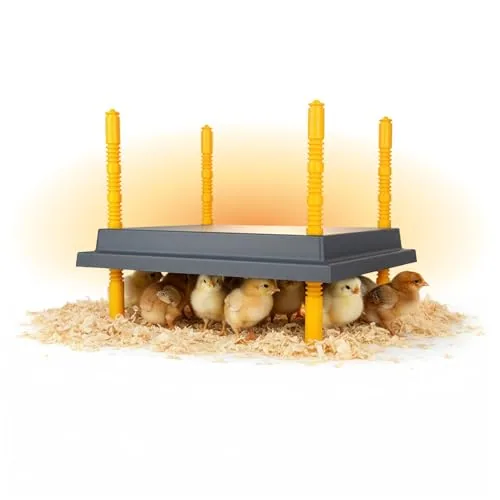
Hatching Time Warmzy 10x10 Brooder Plate, 15W
- Chicks
- 15–20 chicks (by breed and setup)
- Heated area
- 10 x 10 in
- Wattage
- 15 W
Best for Small backyard chick batches
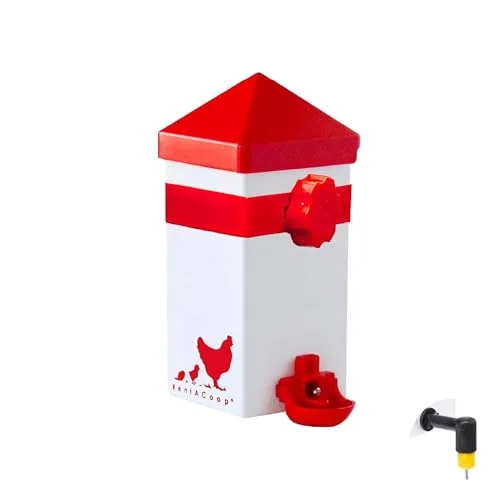
RentACoop 32oz Chick Drinker with 2 Nipples
- Capacity
- 32 oz (1 L)
- Nipples
- Vertical (chicks) and horizontal (older birds)
- Mount
- Coop Clip for wire or wood
Best for Chicks and quail
Full setup steps are in how to set up a brooder.
Mistakes that spoil a hatch
- No chick plan. Arrange the destination first, every time.
- Lockdown on a Friday. Count forward with the calculator and avoid weekend or holiday hatches.
- Opening the lid during lockdown to look; humidity drops fast.
- Trusting one thermometer. Check with a second instrument.
- Setting the incubator by a window or heater vent; sun and drafts swing the temperature.
- Helping chicks out of the shell without guidance; ask your 4-H contact first.
- Promising a hatch. Shipped eggs and first-time setups often hatch fewer chicks than eggs set; make that part of the lesson.
Browse classroom-friendly gear in Hatching at home or school and Incubation & hatching.
Incubation calculator by speciesPick a species and the day you set the eggs: get candling days, the stop-turning (lockdown) day and the…Brooder temperature chart by weekBrooder temperature for chicks week by week, in °F or °C, with floor space per chick, a heat-plate capacity…Printable hatch logKeep a hatch log in your browser: set date, species, eggs set, daily temperature, humidity, turning and…Questions
How long does a school hatching project take?
What happens to the chicks after a classroom hatch?
Is it safe to hatch chicks in a classroom?
What is the best incubator for a school hatching project?
When do you candle eggs in a classroom hatch?
What if the eggs don't hatch?
Sources
- CDC, Backyard Poultry (Healthy Pets, Healthy People)
- Mississippi State University Extension, Important Incubation Factors
- Virginia Cooperative Extension 4-H, Embryology record sheet (candling days 7, 14, 18)
- University of Delaware Cooperative Extension, 4-H Embryology Program
- University of Missouri Extension, Hatching chicks in the classroom with Missouri 4-H
- University of Illinois Extension, Cook County 4-H Embryology
- Penn State Extension, Brooding of Domestic Fowl