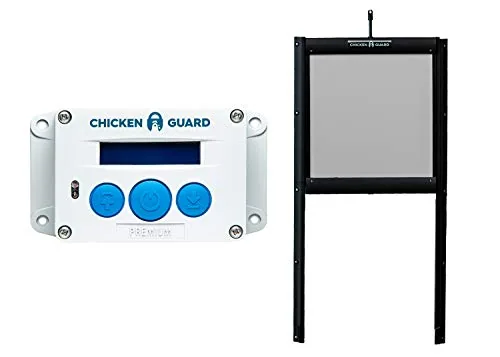
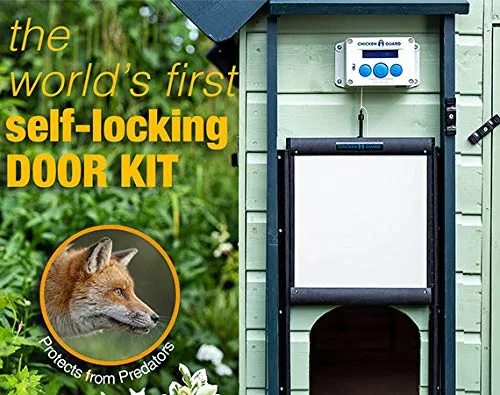
- Cord-lift opener for vertical doors; Premium lifts up to 1 kg (2.2 lb).
- Timer or adjustable LUX light sensor, plus a manual button and LCD screen.
- 4 × AA alkaline batteries included; optional USB power (cable and charger not included).
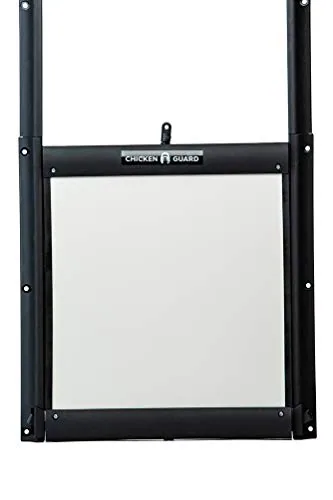
- Self-locking aluminum door kit included: 10 × 12 in door on about 23.5 in runners (retailer listings).
- Three-year warranty, per ChickenGuard.
This ChickenGuard automatic door review covers the ChickenGuard Premium sold with the self-locking door kit (part ASTILDK on the listing). ChickenGuard is a UK maker whose box-shaped openers are a common retrofit on wooden coops. The Premium sits between the timer-only Standard and the higher-lift Extreme, and the newer PRO adds solar charging.
We worked from the listing, ChickenGuard’s site and help-center instructions, and retailer specs for the door kit. We did not install it. Check your unit’s model (ChickenGuard changes generations) and follow its manual.
Who it’s for, and who should skip it
- Have a wooden coop with a vertical pop hole and space above it
- Want both a timer and a light sensor, with a manual override button
- Like a door that locks itself when closed, against predators that pry from below
- Want a battery opener with a low-battery warning and an optional USB power supply
- Would like a door-closed indicator you can see from the house
- Have little height above the pop hole (a sideways door like Omlet’s fits better)
- Want app control or phone alerts
- Plan to lift a heavy wooden door over 2.2 lb (look at the PRO or Extreme)
- Want a fully solar setup with no battery changes (see the PRO Solar kit)
Pros and cons
- Timer or adjustable LUX light sensor, with manual button control
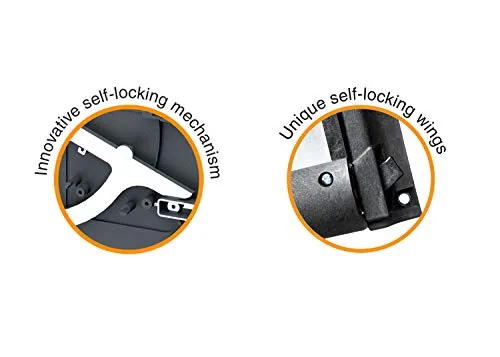
- Self-locking door kit included; locks engage on both sides when lowered
- Lifts up to 1 kg (2.2 lb); no minimum or maximum door heights, per the listing
- Runs on 4 AA alkaline batteries, included, with a low-battery warning
- Can be powered by USB with a separate cable and charger
- Door-closed indicator light visible up to 100 yards, per the listing
- Three-year warranty
- Needs vertical space above the pop hole for the door runners
- Cord-lift design: the cord and pulley path must stay clear of bedding and ice
- No app control on the Premium
- Closed position must be calibrated so the locks engage
- No operating temperature range is stated on the listing
Specs
| Power | Battery |
|---|---|
| Trigger | Timer or light sensor |
| Predator lock | Self-locking pop-hole door |
| Lift capacity | 1 kg (2.2 lb) |
As stated by the maker or seller; confirm on the listing before you buy.
How does the ChickenGuard Premium work?
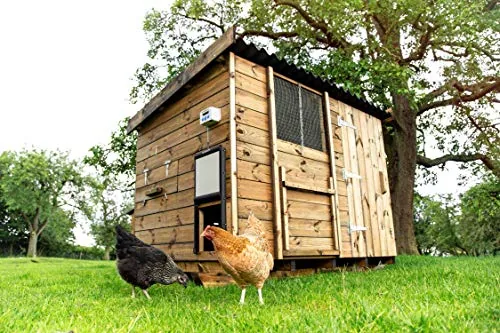
The ChickenGuard unit mounts on the coop wall above the pop hole. A cord runs from its motor to the top of the door, and the unit winds the cord in to lift the door and lets it out to lower it. You choose when that happens. The timer sets fixed times, and the LUX light sensor can be adjusted so the door closes at the light level you choose. A button opens or closes it by hand. The listing says there are no minimum or maximum door heights, and the cord has a breaking strain of 25 kg (50 lb).
On the Premium, the motor lifts doors up to 1 kg (2.2 lb). That is the spec to check if you plan to reuse your own door. Plywood doors get heavy fast once wet. The supplied self-locking aluminum door is the simpler route.
The self-locking door kit: why it matters
A plain guillotine door held closed only by its own weight can be pushed up from below by a determined raccoon. ChickenGuard’s self-locking door kit addresses that. Once the door is fully lowered, locking wings release on either side and engage the runners, so lifting the door from outside does not open it. When the unit lifts the door, the cord pulls the locks free first.
Retailer listings and the kit manual give the aluminum door as 10 × 12 in (25 × 30 cm) with runners about 23.5 in long. Measure your pop hole and the wall above it before you order. The runners need that height, plus room for the unit itself above them.
Setting up a ChickenGuard on your coop
- Check the model
ChickenGuard has changed generations (MK4, then the 2022 S5/P5/X5). Download the manual that matches your unit from ChickenGuard’s instructions page.
- Fit the runners
Screw the self-locking door runners over the pop hole, square and plumb, so the door drops freely under its own weight.
- Mount the unit above
Fix the ChickenGuard above the door so the cord runs straight down to the top of the door without rubbing.
- Set travel and lock
Calibrate the open and closed positions and confirm the locks engage at the bottom.
- Choose timer or light sensor
Set opening and closing times, or adjust the LUX setting so the door closes after the last hen goes in.
- Watch the first week
Count birds at dusk for several nights. Adjust the closing time or light level if a hen gets locked out.
Battery-powered doors are simplest where the coop has no power. ChickenGuard says the unit runs on four AA alkaline batteries, has a low-battery warning, and can be powered through USB if you add a cable and charger. In winter, keep the runners clear of ice and frozen bedding so the door falls fully and locks. Our winter care guide covers the rest of the coop.
Does an automatic door make the coop predator-proof?
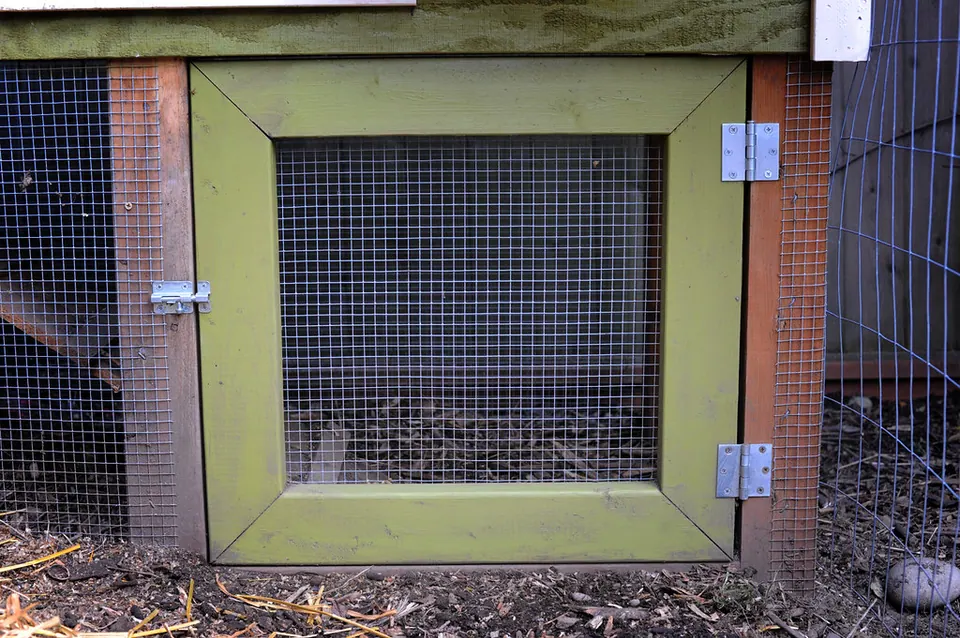
No door does that alone. The self-locking kit closes off the pop hole well, but raccoons also work at nest-box lids, window latches and chicken wire. Weasels and rats use small gaps. Use hardware cloth on vents and windows, two-step latches on lids, and a buried or apron skirt around the run. Our predator protection guide goes predator by predator, and best predator protection covers lights, latches and wire. Put the nightly headcount on your flock care checklist.
ChickenGuard vs Omlet Autodoor and Run-Chicken
ChickenGuard’s vertical cord lift suits coops with height above the opening. Omlet’s Autodoor slides sideways and fits Eglu Cube and Pro coops directly. Run-Chicken’s T50 is a one-piece vertical door with a built-in motor lock and Bluetooth app control. If you want the lock without changing to an app, ChickenGuard Premium is the straightforward choice. If you want app schedules and battery status on your phone, look at Run-Chicken. See ChickenGuard vs Omlet Autodoor, Run-Chicken vs ChickenGuard and best automatic chicken coop doors.
More doors, coop lights and cameras are in the coop automation hub, and starter gear for new keepers is in the first flock hub.
Alternatives worth a look
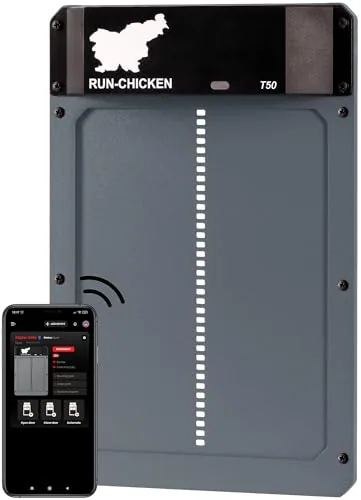
RUN-CHICKEN T50 Automatic Coop Door, Aluminum
- Power
- Battery
- Trigger
- App, timer or light sensor
- Connectivity
- Bluetooth app
Best for App-controlled door schedules
Why consider it: Run-Chicken T50 is a complete aluminum vertical door with app, timer or light-sensor control, a motor lock and anti-pinch reversing.
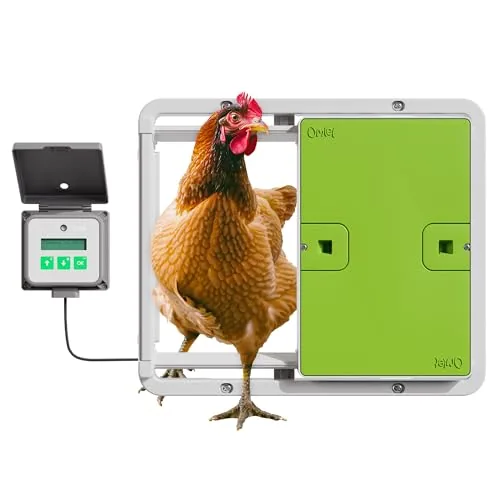
Omlet Autodoor Automatic Coop Door Opener
- Power
- Battery
- Trigger
- Light sensor or timer
- Safety
- Built-in safety sensors
Best for Eglu owners and small coops
Why consider it: Omlet Autodoor slides sideways, fits Eglu Cube and Pro coops directly and has built-in safety sensors; buy it from Omlet’s official listing.
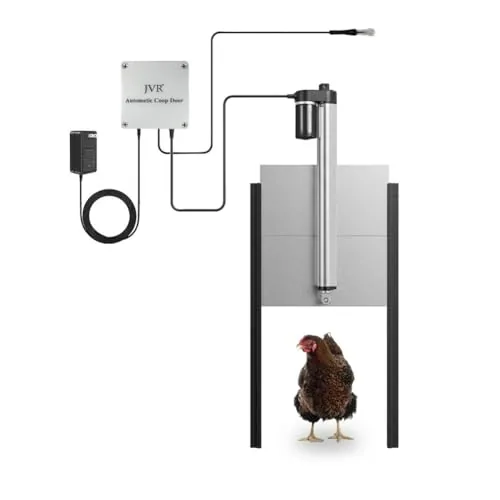
JVR Light-Sensor Automatic Coop Door, Aluminum
- Power
- Battery
- Trigger
- Light sensor
- Door size
- 11 x 12 in opening
Best for Doors that follow the seasons
Simple light-sensor door: JVR’s aluminum light-sensor door lists an 11 × 12 in opening and a screw-rod actuator.
We read the maker’s specs, manual and the current listing, and checked them against extension, CDC, USDA and FDA guidance where it applies. We did not hatch eggs in, house birds in, install or lab-test this product. We never show scores, star ratings or prices.