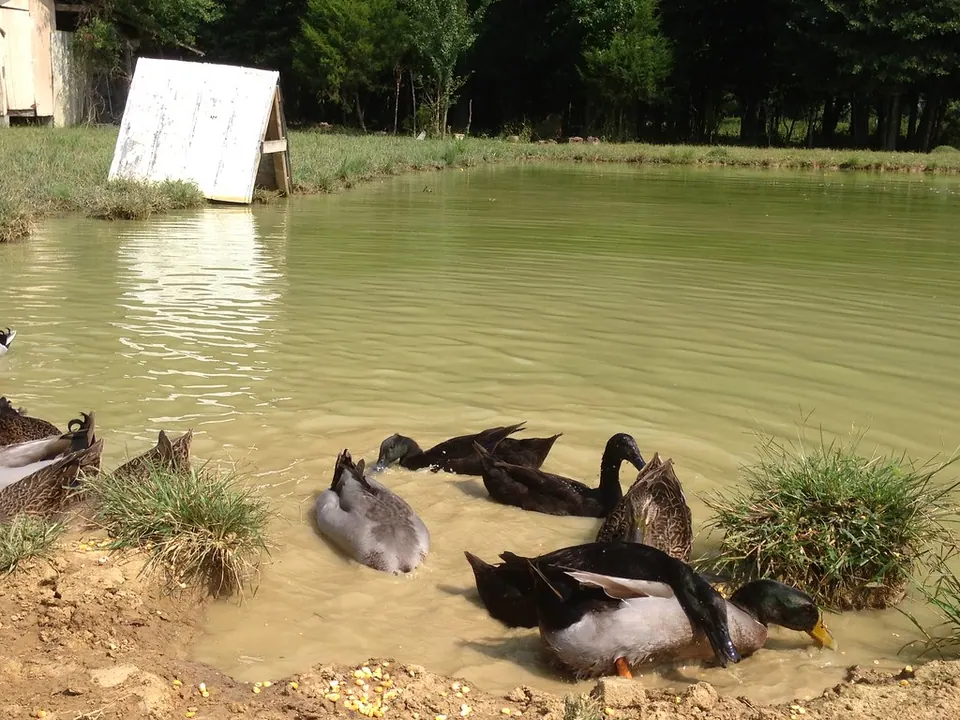
- Raising backyard ducks takes more space than chickens: Penn State's minimum is 3 sq ft per duck inside and 15 sq ft in the run, versus 1.5 and 8 for laying hens.
- Ducks are messy with water. Put drinkers over a drained area, keep bedding dry and supervise ducklings in water until they are fully feathered (Penn State).
- Feed a waterfowl starter, then a duck or all-flock feed; Penn State suggests a 20–22% protein waterfowl starter where available. Read the label for species and age.
- Most duck eggs take 28 days and Muscovy 35–37 (Mississippi State Extension), with higher humidity than chicken eggs (Brinsea).
- Ducklings carry Salmonella like chicks do: wash hands, no snuggling, and children under 5 should not handle them (CDC). Check local rules too, since some towns allow chickens but not ducks.
Raising backyard ducks is a different hobby from keeping chickens, even though the gear overlaps. Ducks rarely roost, they lay in the bedding rather than a nest box, they handle cold and rain well, and they turn any water into mud within hours. In return you get large eggs, excellent slug control in the garden and some of the most entertaining birds in the backyard.
This guide covers what you need to know before you start: local rules, how much space ducks need by published norms, housing that stays dry, water, feed, brooding ducklings, hatching duck eggs, predators, health and safety. Figures come from Penn State, Mississippi State and UF/IFAS Extension, Brinsea and CDC.
Are ducks allowed where you live?
Check before you buy. UF/IFAS notes that even where chickens are permitted, ducks or turkeys may not be, and that local rules commonly cap bird numbers, set coop setbacks from neighbors and prohibit roaming poultry. Ducks are noisier than many people expect (female ducks quack loudly; drakes are quieter but often counted as "roosters" in ordinances). Read backyard chicken and egg-selling laws for how to look up your city code and HOA rules.
How much space do backyard ducks need?
Ducks need about twice the floor space of laying hens under Penn State's minimums. They spend more time on the ground, they are wetter, and crowded duck houses get filthy fast.
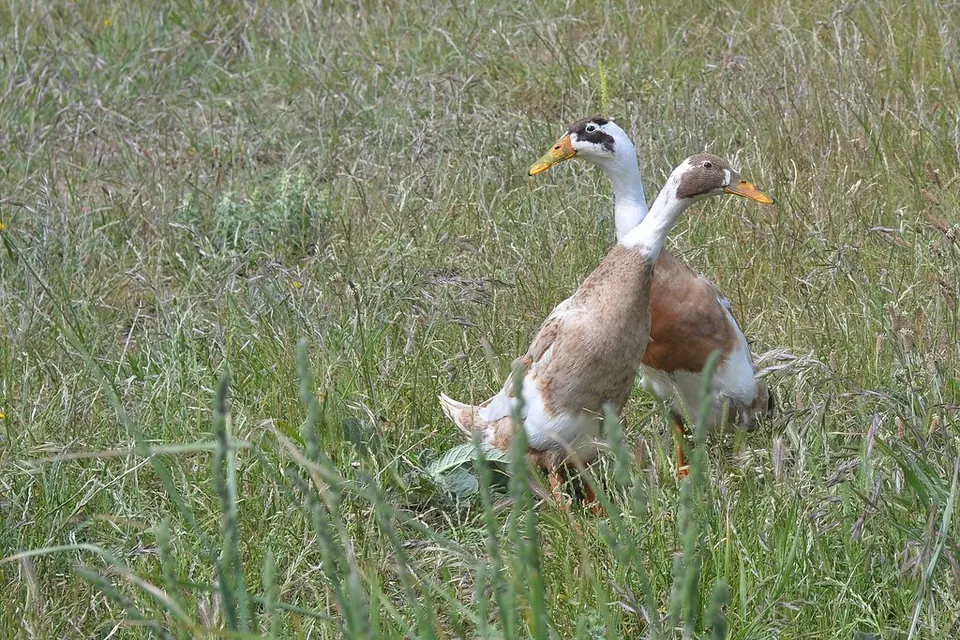
Space per bird, square feet: inside the coop / in the run
| Birds | Penn State | UMN | 4 + 10 rule |
|---|---|---|---|
| Standard laying hens | 1.5 / 8 | 3–5 / — | 4 / 10 |
| Large breeds | 2 / 10 | 3–5 / — | 4 / 10 |
| Bantams | 1 / 4 | 3–5 / — | — |
| Ducks | 3 / 15 | — | — |
| Geese | 6 / 18 | — | — |
| Quail | 1 / 4 | — | — |
Sources: Penn State Extension, Small-Scale Poultry Housing, Table 1 (Minimum Space Requirements for Poultry); University of Minnesota Extension, Raising chickens for eggs (“a minimum of 3 to 5 square feet of indoor space per bird”); Widely repeated hobby guideline (4 sq ft inside, 10 sq ft in the run per standard chicken), e.g. GRIT, Chicken Coop Space Requirements. — = not given by that source.
These are minimums. More room means less mud, cleaner eggs and calmer birds.
Duck housing: dry, ventilated and low
Ducks don't need perches or raised nest boxes. They sleep on the floor and lay in a corner, so a low, wide house with a wide door and a gentle ramp (or no ramp) works best. The essentials:
- Dry floor. Thick, absorbent bedding such as pine shavings or chopped straw, changed often. Avoid deep litter indoors with ducks; they splash.
- Ventilation up high. Ducks breathe out a lot of moisture. Vents above head height keep air dry without drafts at floor level.
- Predator-resistant walls and door. Ducks can't fly up to escape predators and are easy prey at night. Use hardware cloth, not chicken wire, and lock them in at dusk.
- No water inside overnight unless it is in a spill-proof drinker over a tray, or the bedding will be soaked by morning.
Walk-in runs and coops marketed for chickens can house ducks if you skip roosts and add floor space. Electric poultry netting is a common way to give ducks a larger, movable grazing area; it needs an energizer and regular checks.
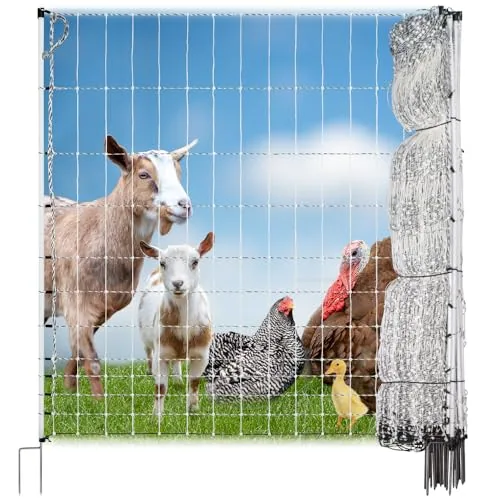
Premier 1 PoultryNet 48" x 164' Electric Netting
- Size
- 164 ft
- Height
- 48 in
- Electric
- Yes, energizer sold separately
Best for Rotating free-range areas
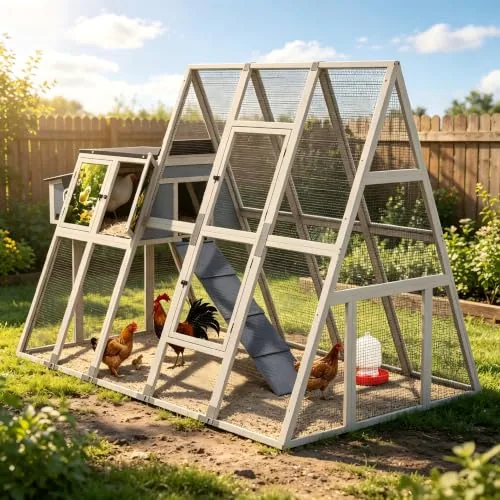
COZIWOW 114" Walk-in Chicken Coop & Run
- Maker says
- 4–10 chickens
- Material
- Cedar frame, galvanized mesh
- Nest boxes
- Yes, asphalt roof
Best for Small flocks or ducks in a big yard
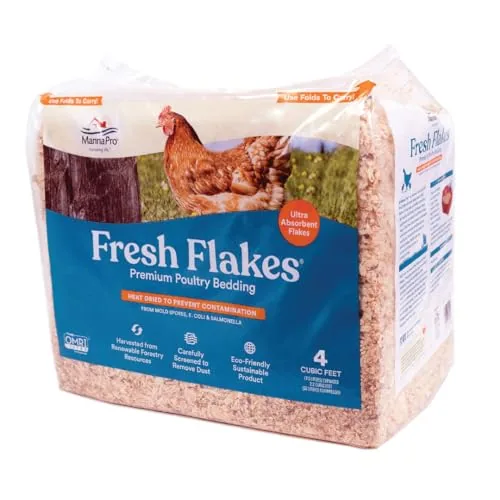
Manna Pro Fresh Flakes Pine Shavings, 4 cu ft
- Size
- 4 cu ft
- Material
- Pine shavings
Best for Everyday coop bedding
See also best electric poultry netting and predator protection.
Water for ducks: drinking, washing and swimming
Water is the biggest difference between chickens and ducks. Ducks drink while they eat to help swallow, and they like to dip their heads to clean their bills and eyes, so many duck keepers offer drinkers deep enough for a duck to dip its bill. Nipple drinkers alone do not suit most ducks.
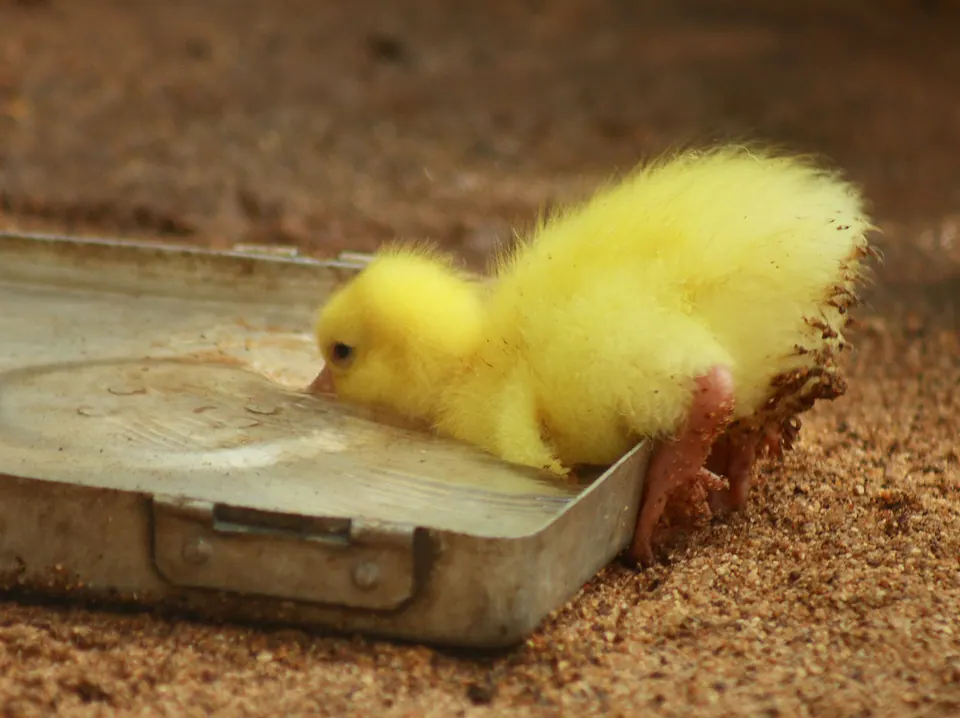
- Place drinkers on a slatted platform or a gravel bed with drainage so splashed water doesn't turn the run into a swamp.
- A hose-fed bell drinker or a large hanging waterer saves refilling; clean it often, since ducks fill water with feed and mud. Move ground-level drinkers every few days so the same patch of run doesn't stay soaked.
- A kiddie pool or tub for bathing is a treat, not a necessity. Empty and scrub it often, and keep it away from wild waterfowl (see bird flu biosecurity).
- Penn State Extension advises not letting young waterfowl swim unsupervised until they are fully feathered. Ducklings chill and can drown.
| Product | Capacity | Type | Pressure |
|---|---|---|---|
| FARM-TUFF Automatic Hose-Fed Hanging Waterer | Continuous (hose-fed) | Hanging bell, hose hookup | 20-50 PSI |
| Little Giant PPF7 7-Gallon Hanging Waterer | 7 gal | Hanging gravity | — |
| Little Giant Automatic Poultry Fount, 1.5 Qt | 1.5 qt bowl (continuous) | Automatic bowl, 1/2 in NPT | 20-50 PSI |
Specs as listed by the maker or seller; check the listing before you buy.
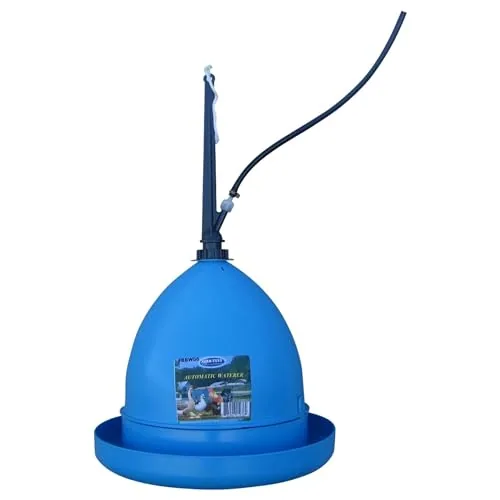
FARM-TUFF Automatic Hose-Fed Hanging Waterer
- Type
- Hanging bell, hose hookup
- Capacity
- Continuous (hose-fed)
- Material
- HDPE plastic
Best for Hands-off watering for bigger flocks
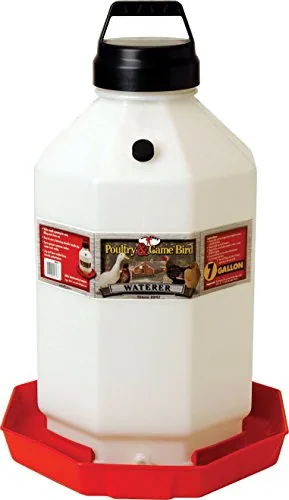
Little Giant PPF7 7-Gallon Hanging Waterer
- Type
- Hanging gravity
- Capacity
- 7 gal
- Material
- Plastic
Best for Larger flocks and mixed poultry
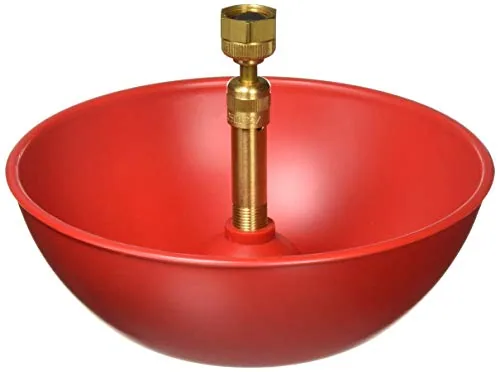
Little Giant Automatic Poultry Fount, 1.5 Qt
- Type
- Automatic bowl, 1/2 in NPT
- Capacity
- 1.5 qt bowl (continuous)
- Material
- Plastic
Best for Plumbed watering for bigger flocks
What do ducks eat?
Feed a ration made for waterfowl or one whose label includes ducks. Penn State Extension recommends a 20–22% protein waterfowl starter for ducklings where one is available and says waterfowl should not be fed medicated starter diets; read the bag label for species and age, and if your only option is a chick feed, ask the feed maker or your Extension office whether it suits ducklings. UF/IFAS notes that all-flock feeds are formulated for mixed flocks, and that layer feed is only for laying-age females.
| Product | Type | Protein % | Bag size |
|---|---|---|---|
| Manna Pro Duck Starter Grower 8 lb + Chick Grit Bundle | Duck starter/grower | 22% | 8 lb + 5 lb grit |
| Kalmbach Non-GMO Flock Maker 20% Crumble, 50 lb | All-flock crumbles | 20% | 50 lb |
| Purina Flock Raiser Crumbles, 5 lb x2 | Starter/grower crumbles (all-flock) | — | 5 lb, pack of 2 |
| Scratch and Peck Organic Layer Mash, 10 lb | Layer mash (organic, fermentable) | 16% | 10 lb |
Specs as listed by the maker or seller; check the listing before you buy.
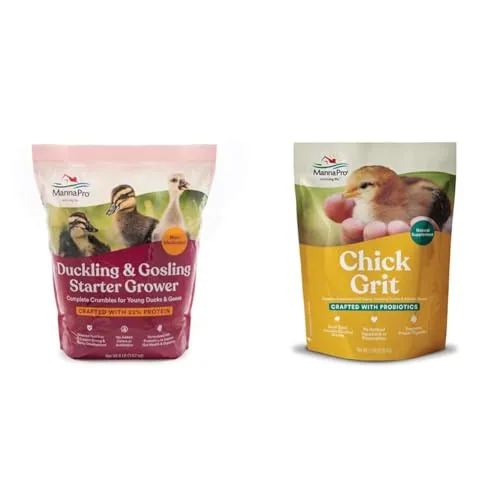
Manna Pro Duck Starter Grower 8 lb + Chick Grit Bundle
- Type
- Duck starter/grower
- Bag size
- 8 lb + 5 lb grit
- Protein %
- 22%
Best for Raising ducklings
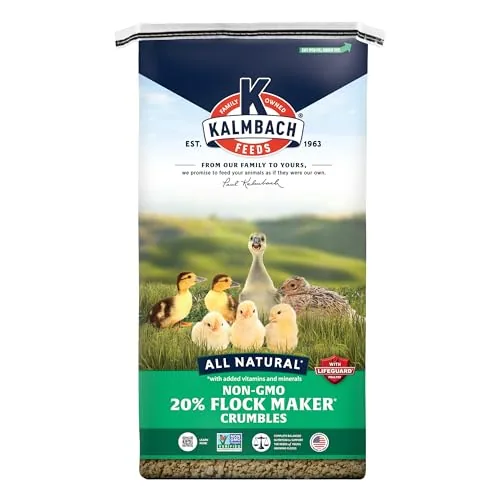
Kalmbach Non-GMO Flock Maker 20% Crumble, 50 lb
- Type
- All-flock crumbles
- Bag size
- 50 lb
- Protein %
- 20%
Best for Mixed flocks with ducks or geese
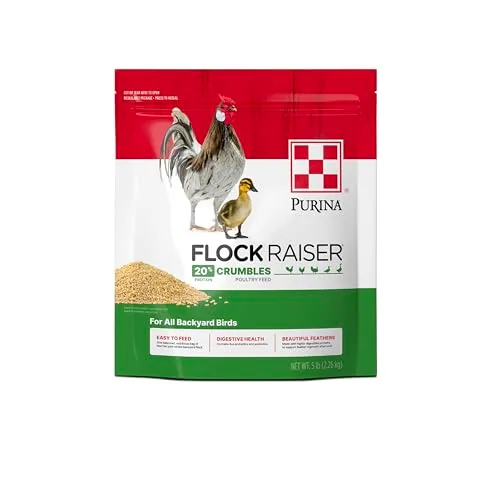
Purina Flock Raiser Crumbles, 5 lb x2
- Type
- Starter/grower crumbles (all-flock)
- Bag size
- 5 lb, pack of 2
Best for Mixed hatches of chicks and ducklings
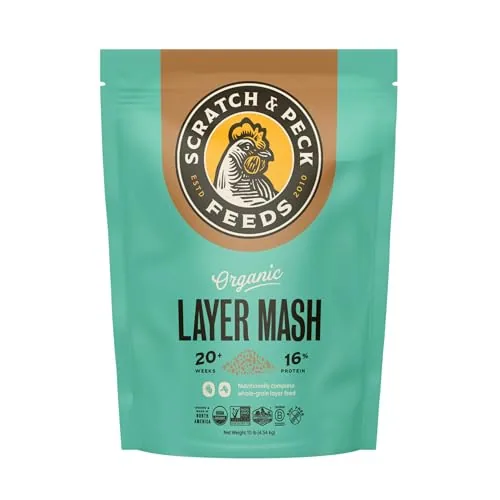
Scratch and Peck Organic Layer Mash, 10 lb
- Type
- Layer mash (organic, fermentable)
- Bag size
- 10 lb
- Protein %
- 16%
Best for Organic, soy-free layer diets
Ducks are messy eaters: a wide, heavy trough or a large-port feeder under cover cuts waste and keeps feed dry. Offer insoluble grit and, for laying ducks, oyster shell on the side.
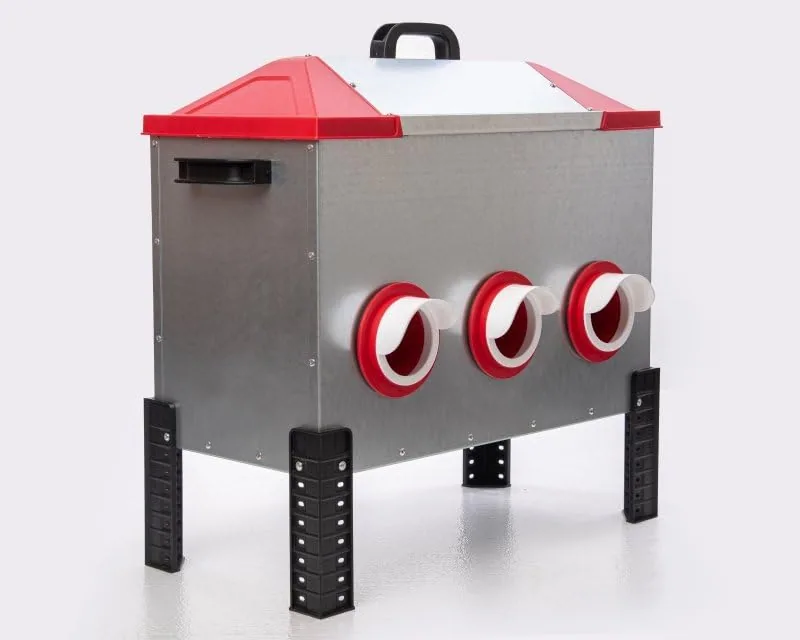
RentACoop 6-Port Metal Feeder, 65 lb
- Type
- Port feeder, 6 ports
- Capacity
- 65 lb
- Material
- Metal
Best for Large flocks
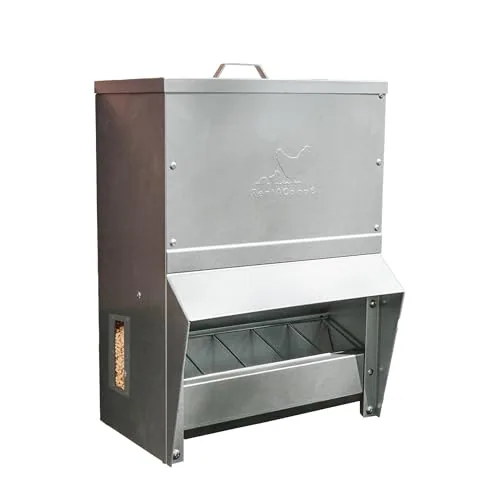
RentACoop Galvanized Trough Feeder, 25 lb
- Type
- Gravity trough
- Capacity
- 25 lb
- Material
- Galvanized steel
Best for Inside or outside the coop
Raising ducklings: brooder basics
Ducklings grow faster than chicks and make a much bigger mess. Use a roomy brooder with a waterproof floor, change bedding often and put the drinker on a tray. Penn State's brooding schedule for chicks starts at 92–95°F at chick level and drops about 5°F a week, and its brooder notes add that ducklings, poults and quail may differ, so follow your hatchery's guidance as well. Watch the ducklings: huddled means cold, spread out and panting means hot.
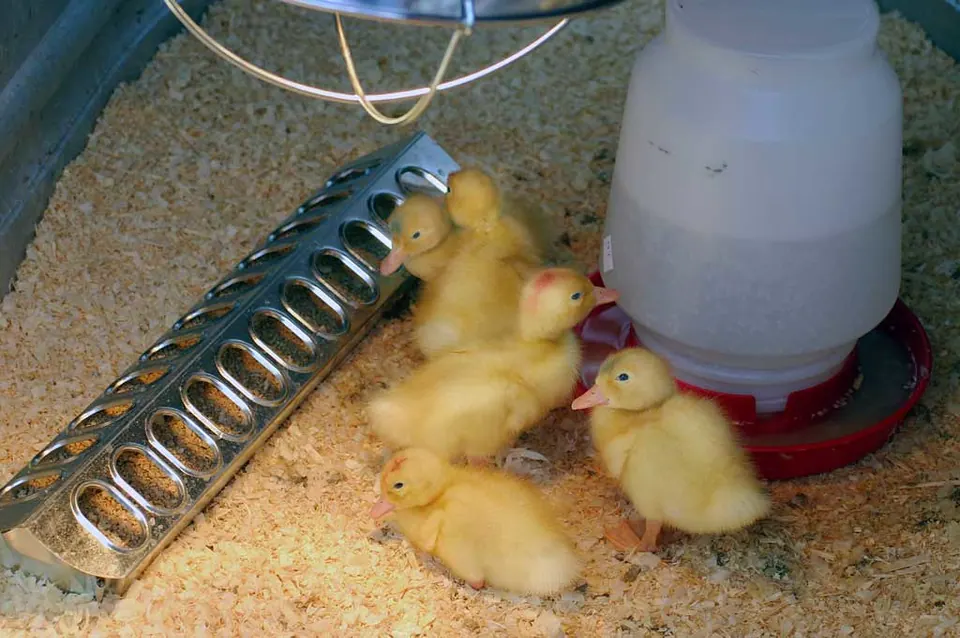
Brooder temperature at chick level, under the heat source
| Chick age | °F | °C | Floor space per chick |
|---|---|---|---|
| Week 1 | 92–95°F | 33–35°C | ¼ sq ft |
| Weeks 2–3 | 85–90°F | 29–32°C | ½ sq ft |
| Weeks 3–5 | 80–85°F | 27–29°C | ¾ sq ft |
| Weeks 5–8 | 70–80°F | 21–27°C | 1 sq ft |
| Week 8 on | Room temperature | — | 1½ sq ft, more for large breeds |
Source: Penn State Extension, Brooding of Domestic Fowl. Watch the chicks too: huddled under the heat means cold, crowded at the edges means too hot.
Heat plates suit ducklings well because there is no bulb to splash; raise the plate as they grow. Several plates in the catalogue list ducklings among suitable birds.
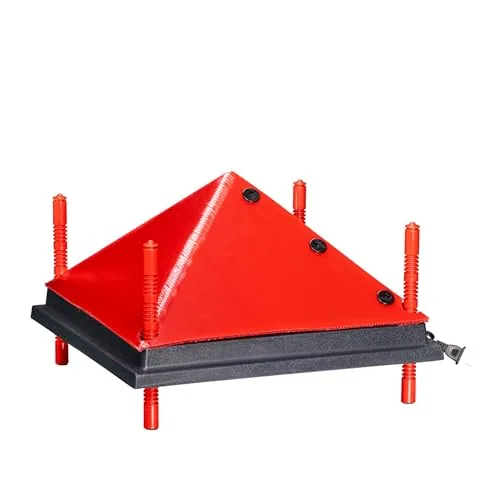
RentACoop 16x16 Heating Plate, Up to 30 Chicks
- Chicks
- Up to 30 chicks
- Heated area
- 16 x 16 in
- Wattage
- 42 W
Best for Larger brooder batches
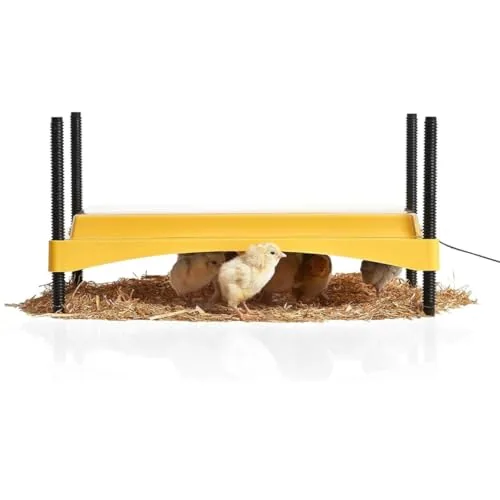
Brinsea EcoGlow Safety 1200 Brooder, Up to 35 Chicks
- Chicks
- Up to 35 newly hatched or 20 older chicks
- Wattage
- 18 W, low voltage
- Height adjustment
- Screw-on legs, height and angle
Best for Larger chick or duckling batches
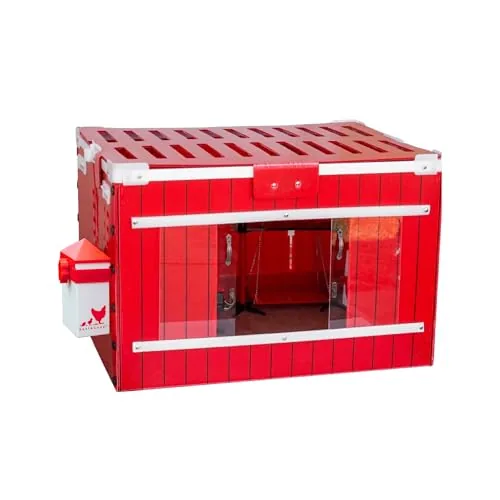
RentACoop Little Red Barn Brooder Set with Heat Plate
- Chicks
- Up to 8 chicks for first 6 weeks
- Includes
- Heating plate, feeder, waterer, liners, LED light, latch
- Material
- Plastic, folds flat
Best for A complete small first brooder
Penn State also warns against raising miniature waterfowl on wire floors, because hocks can get trapped. For full setup steps see how to set up a brooder and best brooder heat plates.
Hatching duck eggs
Duck eggs take longer and like more humidity than chicken eggs. Mississippi State Extension gives 28 days for most breeds at 100°F in forced air, with turning stopped on day 25; Muscovy eggs take 35–37 days with turning stopped on day 31. Brinsea suggests 55–60% relative humidity during incubation, rising to 70% or more at hatch. Large duck eggs also need incubator space and turner rails that fit them.
Incubation by species: forced-air settings, with the still-air offset
| Species | Days to hatch | Forced-air temp | Still-air temp | Wet-bulb, days 1 to lockdown → last 3 days | Relative humidity | Stop turning (day) |
|---|---|---|---|---|---|---|
| Chicken | 21 | 100°F (37.8°C) | 102–103°F | 85–87°F → 90°F | 45–50% → 65% or more | 18 |
| Duck (most breeds) | 28 | 100°F (37.8°C) | 102–103°F | 85–86°F → 90°F | 55–60% → 70% or more | 25 |
| Muscovy duck | 35–37 | 100°F (37.8°C) | 102–103°F | 85–86°F → 90°F | 58–60% → 65% or more | 31 |
| Coturnix quail | 17 | 100°F (37.8°C) | 102–103°F | 85–86°F → 90°F | 40–50% → 65% or more | 15 |
| Bobwhite quail | 23–24 | 100°F (37.8°C) | 102–103°F | 84–87°F → 90°F | 40–50% → 65% or more | 20 |
| Turkey | 28 | 99°F (37.2°C) | 101–102°F | 84–86°F → 90°F | 58–60% → 65% or more | 25 |
| Goose | 28–34 | 99°F (37.2°C) | 101–102°F | 86–88°F → 90°F | 58–60% → 65% or more | 25 |
| Guinea fowl | 28 | 100°F (37.8°C) | 102–103°F | 85–87°F → 90°F | 58–60% → 65% or more | 25 |
| Pheasant | 23–28 | 100°F (37.8°C) | 102–103°F | 86–88°F → 92°F | 58–60% → 65% or more | 21 |
| Peafowl | 28–30 | 99°F (37.2°C) | 101–102°F | 84–86°F → 90°F | 58–60% → 65% or more | 25 |
| Chukar partridge | 23–24 | 100°F (37.8°C) | 102–103°F | 81–83°F → 90°F | 58–60% → 65% or more | 20 |
Days, temperatures, wet-bulb and stop-turning days: Mississippi State University Extension, Important Incubation Factors. Still-air: add 2–3°F, measured at the top of the eggs (MSU). Relative humidity: Brinsea, Humidity during incubation for chickens, ducks and quail; other species show MSU's general 58–60%. Follow your incubator's manual first.
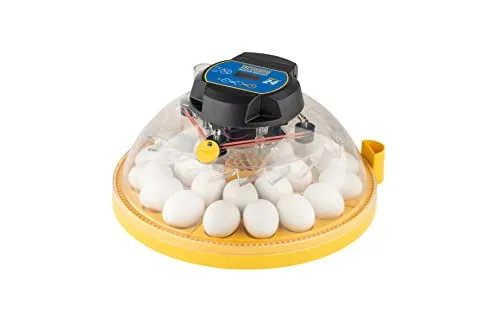
Brinsea Maxi 24 Advance Incubator, Auto Turner
- Egg capacity
- 24 chicken eggs or 12 large eggs
- Turning
- Automatic with auto-stop
- Humidity
- Manual, external water top-up
Best for Mid-size hatches of mixed egg sizes
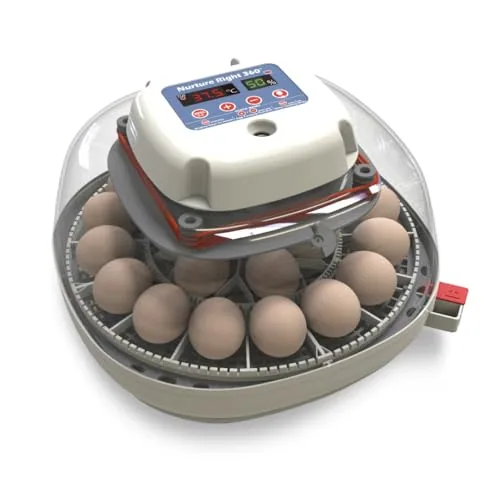
Nurture Right 360 Incubator, 22 Eggs, Auto Turner
- Egg capacity
- 22 chicken, 12–18 duck or 22–24 pheasant eggs
- Turning
- Automatic with auto-stop
- Humidity
- Display and control knob
Best for Family first hatches
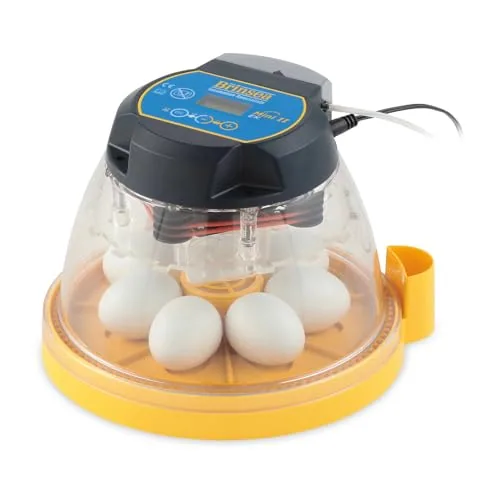
Brinsea Mini II EX 7-Egg Incubator, Auto Humidity
- Egg capacity
- 7 chicken eggs or 12 small eggs (inserts included)
- Turning
- Automatic, programmable intervals
- Humidity
- Automatic, integrated humidity pump
Best for Small hatches with hands-off humidity
Brinsea lists 12 large eggs for the Maxi 24 Advance and the Nurture Right 360 listing gives 12–18 duck eggs; capacities are maker figures. More choices: best incubators for duck eggs. Live hatching eggs and ducklings come from hatcheries and local breeders, not through our links.
Incubation calculator by speciesPick duck or Muscovy to get candling, lockdown and hatch dates.Ducklings, Salmonella and families
Ducklings are messier than chicks and often end up in bathtubs and kitchens, which is exactly where CDC asks you not to keep them. More in Salmonella and backyard chickens.
Duck-keeping mistakes to avoid
- Planning chicken-sized space. Penn State's duck minimums are twice the hen figures.
- Water inside the house overnight without a spill tray.
- Unsupervised swimming for ducklings before they are feathered.
- Feeding layer feed to ducklings or drakes. Layer feed is for laying females (UF/IFAS).
- Ignoring predators. Ducks can't roost out of reach; lock them in every night.
- Sharing ponds with wild waterfowl. A biosecurity risk.
- Skipping the local rules check; ducks may not be allowed where chickens are.
Shop duck-ready incubators, feeders and brooders in Ducks, quail & turkeys. A good reference book helps too:
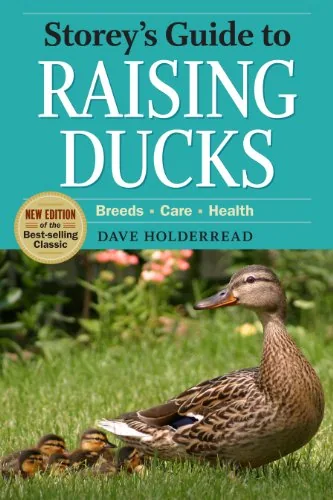
Storey's Guide to Raising Ducks, 2nd Edition
- Format
- Paperback
- Published
- 2011
- Edition
- 2nd edition
Best for Duck keepers
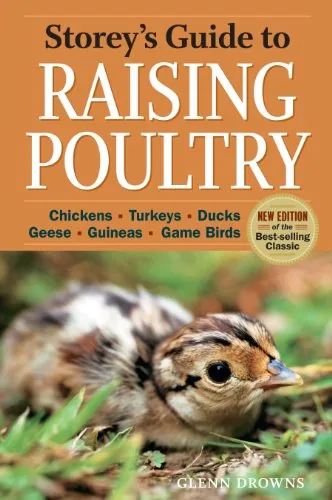
Storey's Guide to Raising Poultry, 4th Edition
- Format
- Paperback
- Published
- 2012
- Edition
- 4th edition
Best for Mixed-poultry homesteads
Questions
Is raising backyard ducks harder than chickens?
Do ducks need a pond?
What do you feed ducklings?
Can ducks and chickens live together?
How long do duck eggs take to hatch?
Can kids hold ducklings?
Sources
- Penn State Extension, Small-Scale Poultry Housing (space per duck)
- Penn State Extension, Brooding of Domestic Fowl (waterfowl starter, swimming, wire floors)
- Mississippi State University Extension, Important Incubation Factors
- Brinsea, Humidity during incubation
- UF/IFAS Extension, AN239 Raising Backyard Chickens for Eggs (ordinances, feed types)
- CDC, Backyard Poultry (Healthy Pets, Healthy People)