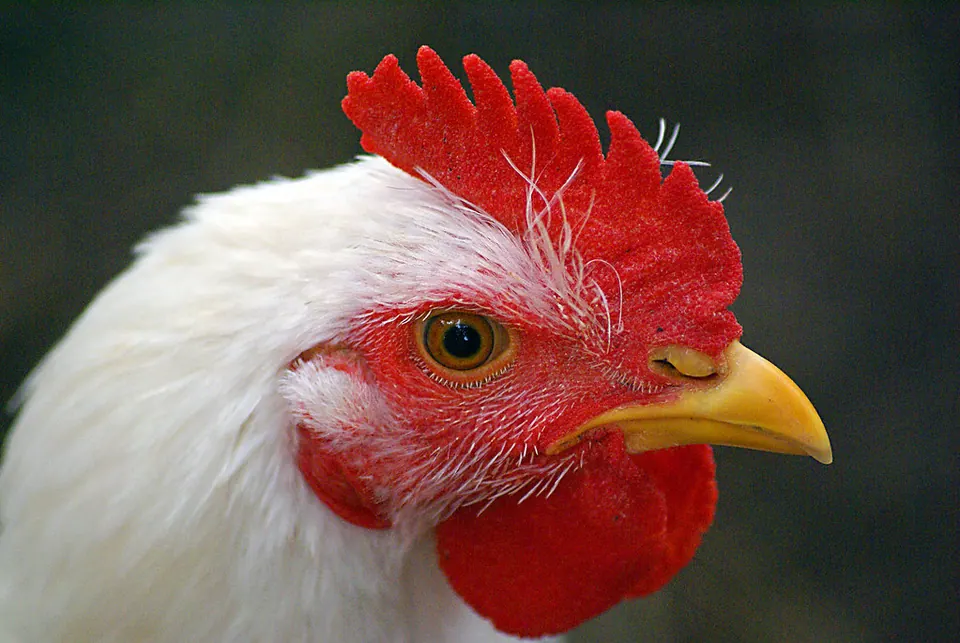
- This chicken keeping glossary groups terms by topic: birds and ages, breeds and buying, eggs, incubation and hatching, brooding, housing, feed, health and rules.
- Hens lay without a rooster; roosters are needed only for fertile eggs (UF/IFAS).
- Chicken eggs take about 21 days to hatch, and "lockdown" (stop turning, raise humidity) starts around day 18 (Mississippi State Extension).
- Brooder temperature starts around 92–95°F at chick level in week one and drops about 5°F a week (Penn State).
- Where a term has a safety side (Salmonella, HPAI, egg withdrawal, VFD), the definition points to CDC, USDA or FDA guidance.
This chicken keeping glossary explains the words that confuse new keepers most: the difference between a pullet and a point-of-lay hen, why an incubator manual talks about wet-bulb readings, what "straight run" means on a hatchery order, and what "egg withdrawal" on a product label is asking you to do. Terms are grouped by topic so related words sit together, and definitions are short.
Where a definition includes a number or a rule, it comes from an extension service or agency (Penn State, Mississippi State, University of Minnesota, UF/IFAS, CDC, USDA APHIS, FDA) and the source is named. Follow the links for the full guides.
Birds, ages and sexes
What to call a chicken at each stage
| Term | Meaning |
|---|---|
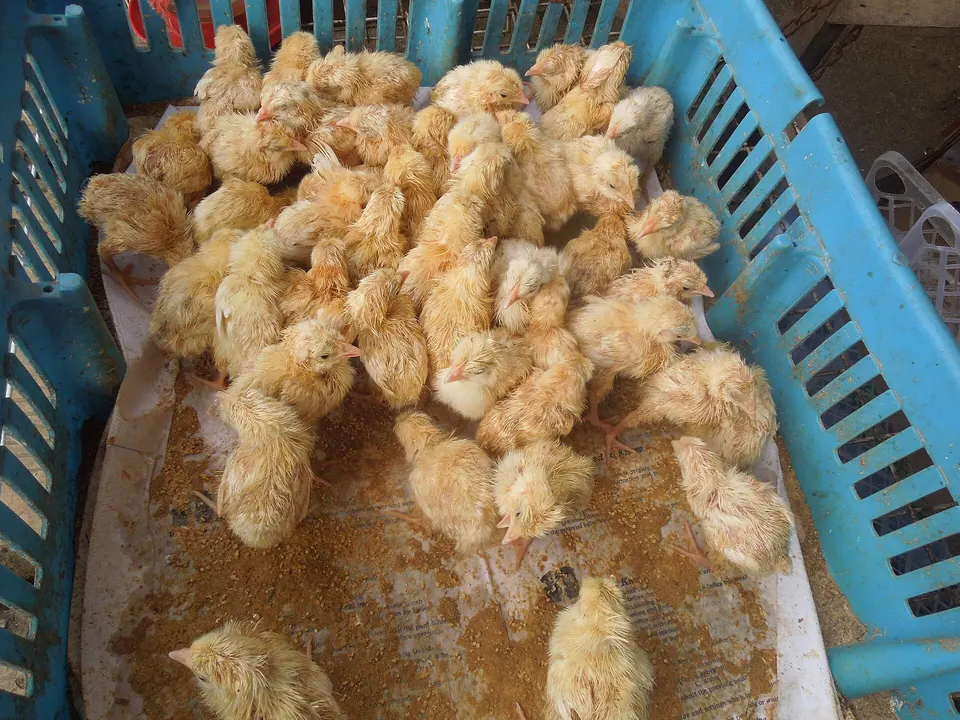
| Chick | A newly hatched or young bird, still in down or early feathers, usually kept in a brooder |
| Pullet | A young female chicken that has not started laying, or is in her first laying season |
| Cockerel | A young male chicken, typically under a year old |
| Hen | An adult female chicken |
| Rooster (cock) | An adult male chicken; not needed for eggs, only for fertile eggs (UF/IFAS) |
| Point of lay (POL) | A pullet about to start laying; sold by some breeders so you skip the brooder stage |
| Bantam | A small chicken, either a miniature of a large breed or a true bantam breed; needs less space (Penn State: 1 sq ft inside) |
| Standard / large fowl | Full-size chicken breeds, as opposed to bantams |
| Capon | A castrated male raised for meat; uncommon in backyard flocks |
| Poult | A young turkey |
| Duckling / gosling / keet | Young duck, goose and guinea fowl |
Source: UF/IFAS AN239; Penn State Extension
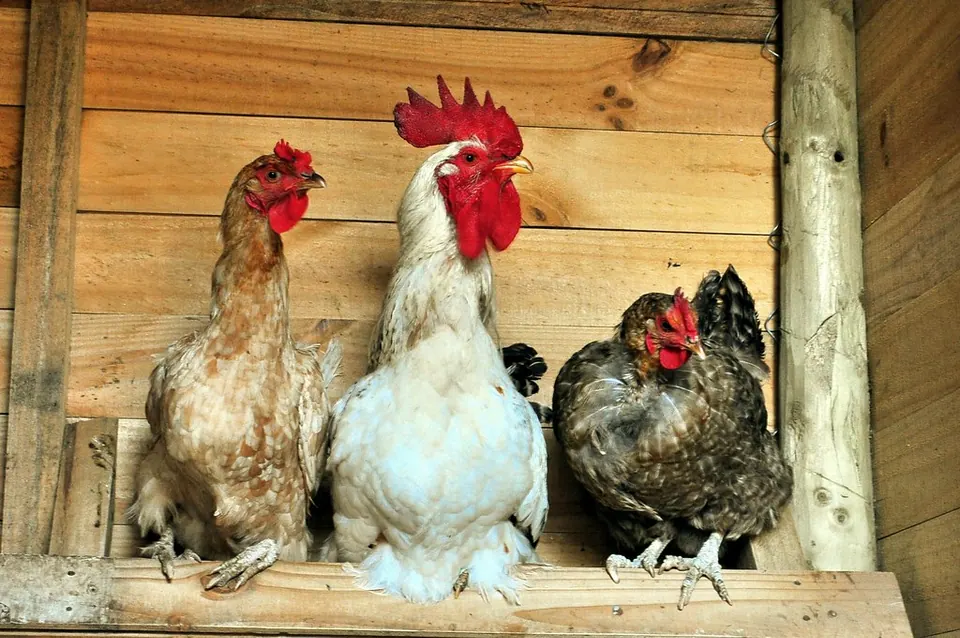
- Flock: your group of birds. Chicken math is the hobby joke that a flock always ends up bigger than planned; plan space first with the coop size calculator.
- Pecking order: the social ranking in a flock; it causes squabbles when new birds are added.
- Layer: a hen kept for eggs, or a breed selected for egg production.
- Broiler: a chicken raised for meat; commercial meat crosses grow very fast.
- Dual-purpose breed: a breed kept for both eggs and meat. UF/IFAS groups breeds as laying, meat and dual-purpose types and notes there are over 400 formally recognized poultry breeds worldwide.
Buying birds: hatchery and breeder terms
- Straight run: chicks sold unsexed, as hatched. Expect roughly half to be males, which matters if your town bans roosters (see backyard chicken laws).
- Sexed / pullets only: chicks sorted as female by the hatchery. Sexing is not perfect, so the odd cockerel still turns up.
- Sex-link: a cross whose chicks can be sexed by down color at hatch.
- Autosexing breed: a pure breed whose males and females look different at hatch.
- Heritage breed: a traditional, slower-growing breed, often listed by the Livestock Conservancy.
- NPIP: the National Poultry Improvement Plan, a cooperative industry, state and federal program dating from the 1930s that tests and monitors flocks for diseases such as Pullorum, fowl typhoid, several Mycoplasma species and avian influenza. Buying from NPIP-participating sources is a good biosecurity habit.
- Vaccinated chicks: many hatcheries vaccinate for Marek's disease at hatch; UF/IFAS notes chicks can be bought already vaccinated.
- Hatching eggs: fertile eggs sold for incubation. These come from hatcheries and breeders, not through our product links.
Eggs and egg handling
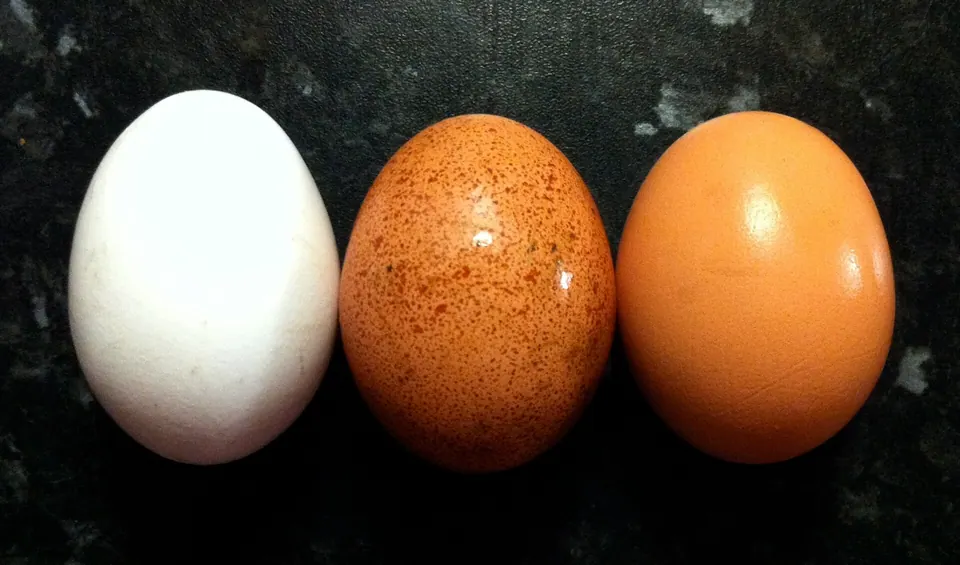
- Bloom (cuticle): the thin protective coating a hen puts on each egg as it is laid. Washing removes it, which is why washed eggs must be refrigerated (UF/IFAS).
- Air cell: the air pocket at the large end of an egg. It grows as the egg ages, which is why older eggs float.
- Float test: a rough age check in water. It is not a safety test. See egg freshness, cleaning and storage.
- Dry cleaning: removing light soil from eggs with fine sandpaper, a brush or a cloth (CDC).
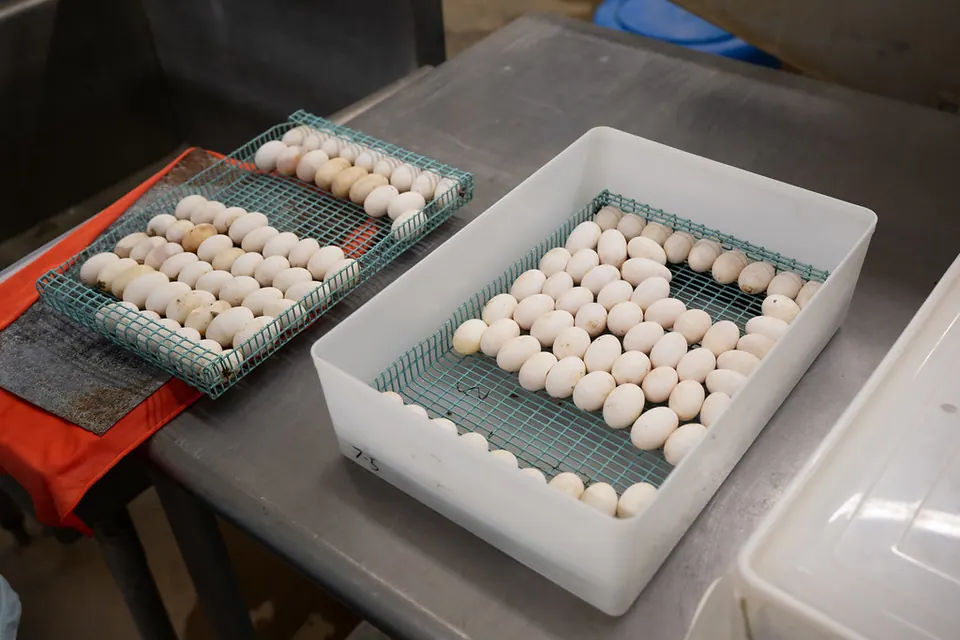
- Candling (eggs for eating): holding eggs to a bright light to check for cracks, blood spots and the air cell; some states require it before sale.
- Grading: sorting eggs by quality (AA, A, B) and size (by weight). Some states require it for sale; North Carolina exempts small sellers who label eggs "ungraded".
- Ungraded eggs: eggs sold without grading where a state allows it.
- Blood spot / meat spot: a small spot in the egg from a broken blood vessel or tissue; visible when candling.
- Soft-shelled egg / shell-less egg: an egg with a thin or missing shell; occasional ones happen, but more than usual is one of the APHIS warning signs to report alongside other changes.
- Egg skelter: a spiral rack that rolls the oldest egg to the front.
- Nest box: where hens lay. Penn State suggests two nests for the first four hens plus one per four more; UMN suggests one per 4–5 hens.
- Egg withdrawal: the period on a medication or pesticide label during which eggs must not be eaten or sold. Always use products per the product label and follow its egg-withdrawal time.
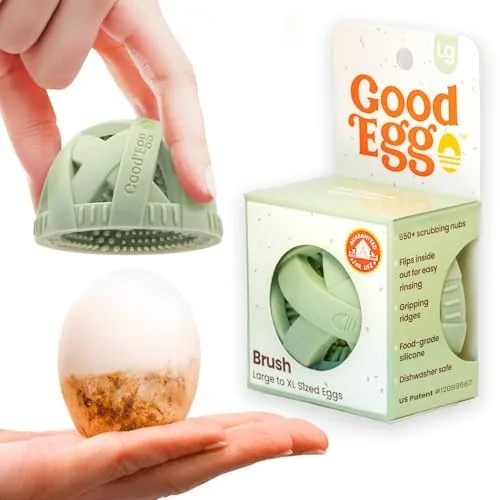
GoodEgg Original Silicone Egg Brush, Large/XL
- Capacity
- Fits large to XL eggs
- Material
- Food-grade silicone
Best for Cleaning dirty eggs
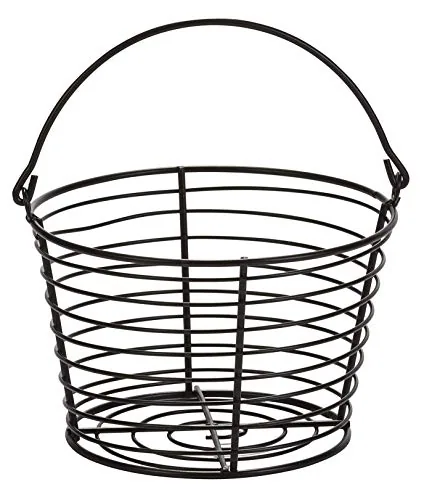
Little Giant Small Wire Egg Basket
- Material
- Heavy-duty coated wire
- Size
- Small
Best for Daily egg gathering
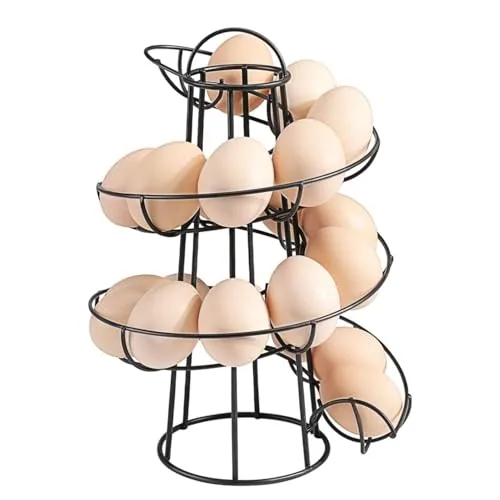
Flexzion Spiral Egg Skelter, Medium
- Capacity
- Up to 20 eggs
- Material
- Metal wire
Best for Rotating fresh eggs
Incubation and hatching
- Incubator: a box that keeps eggs at hatching temperature and humidity.
- Forced air: an incubator with a fan. Mississippi State Extension gives 100°F for chicken eggs in forced air.
- Still air: an incubator without a fan; it runs warmer at the top, so MSU adds 2–3°F, measured at the top of the eggs.
- Auto turner: a motor that tilts or rolls eggs. Hand turning is done an odd number of times a day so eggs don't rest on the same side every night (MSU: at least 4–6 times a day).
- Wet-bulb temperature: a humidity reading taken with a thermometer whose bulb is wrapped in a wet wick; MSU's species table gives humidity this way.
- Relative humidity (%RH): the more common digital reading. Brinsea suggests 45–50% for chicken eggs during incubation and 65% or more at hatch.
- Dry hatching: incubating with little or no added water and watching egg weight loss instead; follow your incubator's manual.
- Candling: shining a bright light through an incubating egg to check development. 4-H record sheets use days 7 and 14 for chicken eggs.
- Clear / infertile: an egg that shows no development when candled.
- Quitter / early dead: an egg that started developing and stopped.
- Lockdown: the last days before hatch when you stop turning, raise humidity and keep the lid closed. MSU gives day 18 for chicken eggs.
- Internal pip: the chick breaks into the air cell and starts breathing air.
- Pip (external pip): the first hole in the shell.
- Zip / zipping: the chick cracks around the shell before pushing out.
- Hatch rate: chicks hatched divided by eggs set (or by fertile eggs). Track it with the hatch log.
- Hatcher: a separate unit used just for the last days, common in larger setups.
- Broody hen: a hen that wants to sit on eggs. UF/IFAS notes that eggs left to accumulate in nests can trigger broodiness. See molting and broody hens.
Incubation by species: forced-air settings, with the still-air offset
| Species | Days to hatch | Forced-air temp | Still-air temp | Wet-bulb, days 1 to lockdown → last 3 days | Relative humidity | Stop turning (day) |
|---|---|---|---|---|---|---|
| Chicken | 21 | 100°F (37.8°C) | 102–103°F | 85–87°F → 90°F | 45–50% → 65% or more | 18 |
| Duck (most breeds) | 28 | 100°F (37.8°C) | 102–103°F | 85–86°F → 90°F | 55–60% → 70% or more | 25 |
| Muscovy duck | 35–37 | 100°F (37.8°C) | 102–103°F | 85–86°F → 90°F | 58–60% → 65% or more | 31 |
| Coturnix quail | 17 | 100°F (37.8°C) | 102–103°F | 85–86°F → 90°F | 40–50% → 65% or more | 15 |
| Bobwhite quail | 23–24 | 100°F (37.8°C) | 102–103°F | 84–87°F → 90°F | 40–50% → 65% or more | 20 |
| Turkey | 28 | 99°F (37.2°C) | 101–102°F | 84–86°F → 90°F | 58–60% → 65% or more | 25 |
| Goose | 28–34 | 99°F (37.2°C) | 101–102°F | 86–88°F → 90°F | 58–60% → 65% or more | 25 |
| Guinea fowl | 28 | 100°F (37.8°C) | 102–103°F | 85–87°F → 90°F | 58–60% → 65% or more | 25 |
| Pheasant | 23–28 | 100°F (37.8°C) | 102–103°F | 86–88°F → 92°F | 58–60% → 65% or more | 21 |
| Peafowl | 28–30 | 99°F (37.2°C) | 101–102°F | 84–86°F → 90°F | 58–60% → 65% or more | 25 |
| Chukar partridge | 23–24 | 100°F (37.8°C) | 102–103°F | 81–83°F → 90°F | 58–60% → 65% or more | 20 |
Days, temperatures, wet-bulb and stop-turning days: Mississippi State University Extension, Important Incubation Factors. Still-air: add 2–3°F, measured at the top of the eggs (MSU). Relative humidity: Brinsea, Humidity during incubation for chickens, ducks and quail; other species show MSU's general 58–60%. Follow your incubator's manual first.
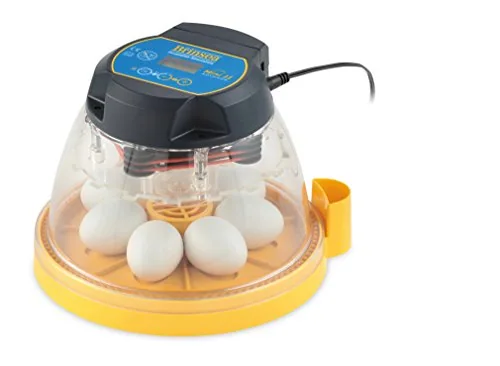
Brinsea Mini II Advance 7-Egg Incubator
- Egg capacity
- 7 chicken eggs; 12 small eggs with optional insert
- Turning
- Automatic with auto-stop
- Humidity
- Manual, external water top-up
Best for Small first hatches at home
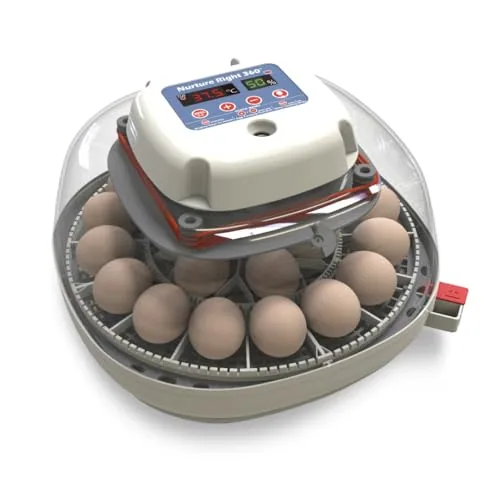
Nurture Right 360 Incubator, 22 Eggs, Auto Turner
- Egg capacity
- 22 chicken, 12–18 duck or 22–24 pheasant eggs
- Turning
- Automatic with auto-stop
- Humidity
- Display and control knob
Best for Family first hatches
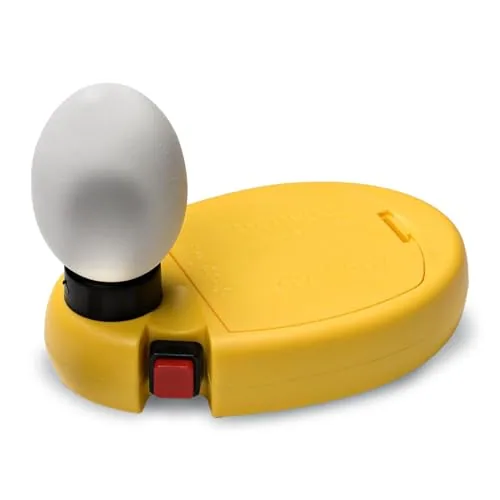
Brinsea OvaView Standard Egg Candler
- Light type
- High-efficiency cool LED
- Power
- 4 AA batteries (included)
- Best shells
- Plain or pale (hen, duck, goose)
Best for Candling pale chicken and duck eggs
Brooding chicks
- Brooder: the warm, enclosed space where chicks live for their first weeks.
- Heat plate (brooder plate): a low, flat heater chicks sit under, like a hen. No exposed bulb.
- Heat lamp: an infrared bulb in a reflector; a known fire risk. Penn State says to hang it by chain or cable at least 20 inches from flammable material, and UMN says never to hang it by the cord. See heat lamp fire safety.
- Brooder guard / draft shield: a ring of cardboard or panel around the heat source; Mississippi State recommends an 18-inch-high solid guard 3–4 ft from the brooder edge in commercial-style setups.
- Pasty butt (pasting up): droppings stuck over a chick's vent; check young chicks daily and gently clean it off.
- Spraddle leg (splay leg): legs sliding out sideways, often linked to slippery floors; use a textured surface such as paper towels.
- Hardening off: gradually getting fully feathered young birds used to outdoor temperatures.
- Medicated starter: chick feed with a coccidiostat, used per the feed label.
Brooder temperature at chick level, under the heat source
| Chick age | °F | °C | Floor space per chick |
|---|---|---|---|
| Week 1 | 92–95°F | 33–35°C | ¼ sq ft |
| Weeks 2–3 | 85–90°F | 29–32°C | ½ sq ft |
| Weeks 3–5 | 80–85°F | 27–29°C | ¾ sq ft |
| Weeks 5–8 | 70–80°F | 21–27°C | 1 sq ft |
| Week 8 on | Room temperature | — | 1½ sq ft, more for large breeds |
Source: Penn State Extension, Brooding of Domestic Fowl. Watch the chicks too: huddled under the heat means cold, crowded at the edges means too hot.
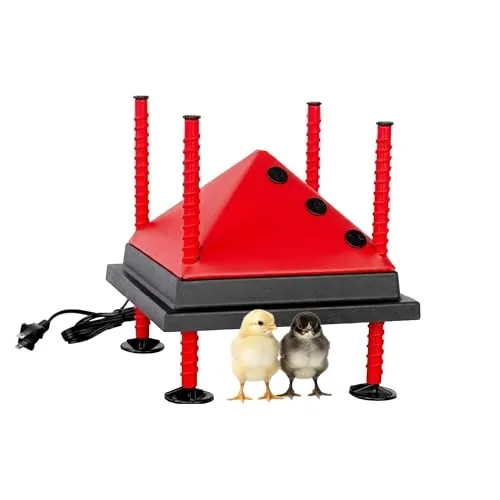
RentACoop 10x10 Heating Plate, Anti-Roost Cone
- Chicks
- Up to 15 chicks
- Heated area
- 10 x 10 in
- Wattage
- 15 W
Best for Small batches of up to 15
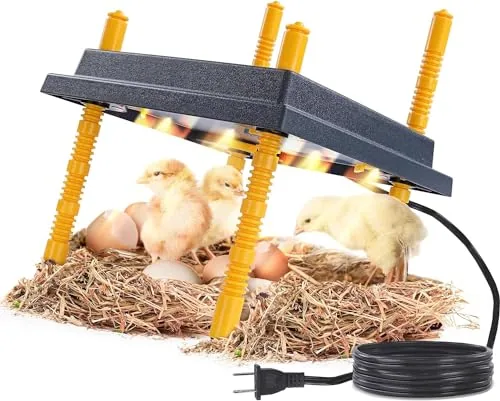
Premier 1 Chick Heating Plate 12x12, 20 Chicks
- Chicks
- Up to 20 chicks
- Heated area
- 12 x 12 in
- Wattage
- 22 W
Best for Home batches up to 20
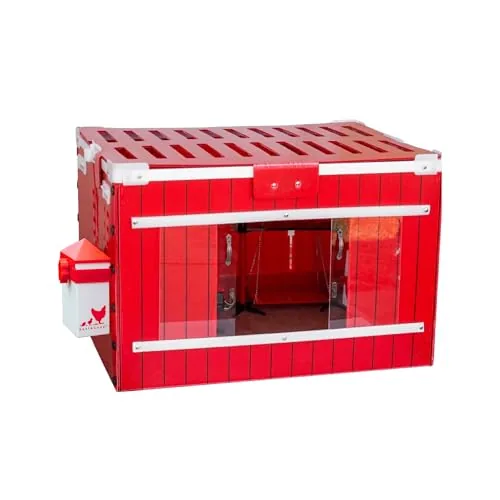
RentACoop Little Red Barn Brooder Set with Heat Plate
- Chicks
- Up to 8 chicks for first 6 weeks
- Includes
- Heating plate, feeder, waterer, liners, LED light, latch
- Material
- Plastic, folds flat
Best for A complete small first brooder
Coops, runs and equipment
- Coop / hen house: the shelter where birds roost at night and lay. Penn State's minimum is 1.5 sq ft per laying hen inside; UMN suggests 3–5 sq ft.
- Run: the fenced outdoor area attached to a coop (Penn State: 8 sq ft per laying hen minimum).
- 4 + 10 rule: a common hobby rule of thumb of 4 sq ft inside and 10 sq ft in the run per standard chicken.
- Roost / perch: the bar chickens sleep on. Penn State gives 6 inches per standard bird and 4 per bantam; UMN suggests 9 inches in cold weather.
- Droppings board / tray: a board or slide-out tray under the roosts that catches overnight droppings.
- Chicken tractor: a movable, floorless coop and run you shift onto fresh ground.
- Walk-in coop: a coop tall enough to stand in.
- Hardware cloth: welded, galvanized mesh, usually 1/4 or 1/2 inch; much stronger against predators than chicken wire.
- Electric poultry netting: portable electrified fence net that needs an energizer.
- Treadle feeder: a feeder whose lid opens when a bird steps on a plate, to keep rodents and wild birds out.
- Nipple / cup waterer: closed drinkers that keep water clean.
- Deep litter: adding fresh bedding on top of old and stirring it, with full clean-outs a few times a year. See the deep litter method.
- Ventilation: high vents that let moist air out without drafts on the birds; UMN links poor ventilation to ammonia and frostbite.
Space per bird, square feet: inside the coop / in the run
| Birds | Penn State | UMN | 4 + 10 rule |
|---|---|---|---|
| Standard laying hens | 1.5 / 8 | 3–5 / — | 4 / 10 |
| Large breeds | 2 / 10 | 3–5 / — | 4 / 10 |
| Bantams | 1 / 4 | 3–5 / — | — |
| Ducks | 3 / 15 | — | — |
| Geese | 6 / 18 | — | — |
| Quail | 1 / 4 | — | — |
Sources: Penn State Extension, Small-Scale Poultry Housing, Table 1 (Minimum Space Requirements for Poultry); University of Minnesota Extension, Raising chickens for eggs (“a minimum of 3 to 5 square feet of indoor space per bird”); Widely repeated hobby guideline (4 sq ft inside, 10 sq ft in the run per standard chicken), e.g. GRIT, Chicken Coop Space Requirements. — = not given by that source.
Feed and nutrition
- Starter / grower / layer: feeds for chicks, growing pullets and laying hens. UF/IFAS warns that layer feed's extra calcium can harm chicks and is not for roosters; only laying-age females should eat it.
- All-flock / flock raiser: feeds formulated for mixed flocks of chickens, ducks, turkeys and geese (UF/IFAS).
- Crumbles / pellets / mash: the physical forms of complete feed.
- Scratch: mixed grains fed as a treat; not a complete feed.
- Grit: small insoluble stones that birds keep in the gizzard to grind food.
- Oyster shell: a calcium supplement offered free-choice to laying hens.
- Fermented feed: feed soaked so it ferments slightly; optional.
- Feed intake: extension figures put a laying hen at about ¼ lb of feed a day, more in cold weather (UMN: up to 25%). Work out costs with the feed and egg cost calculator.
Kalmbach Feeds Layer Pellets, 25 lb
- Type
- Layer pellets
- Bag size
- 25 lb
- Medicated?
- Antibiotic free
Best for Everyday laying-hen feed
Manna Pro Oyster Shell & Poultry Grit Bundle
- Type
- Pullet-size oyster shell plus granite grit
- Size
- 5 lb packs (6-pack bundle)
- Calcium %
- Not listed
Best for Stocking up on layer supplements
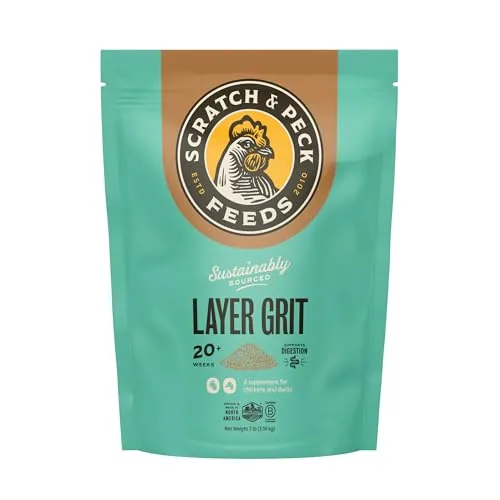
Scratch and Peck Layer Grit, 7 lb
- Type
- Insoluble grit (layer size)
- Size
- 7 lb
Best for Laying hens on whole grains
Health, biosecurity and rules
- Biosecurity: habits that keep disease out of your flock: controlling what comes in, protecting birds from wildlife, a clean routine, knowing warning signs and reporting sick birds (USDA APHIS Defend the Flock).
- HPAI (highly pathogenic avian influenza, bird flu): a serious viral disease of birds. Report sick or dying birds to your state veterinarian or USDA at 1-866-536-7593. See bird flu and backyard biosecurity.
- Quarantine: keeping new birds apart; CDC recommends at least 30 days.
- Salmonella: bacteria that backyard poultry can carry while looking healthy. CDC: wash hands, no kissing or snuggling birds, children under 5 should not handle poultry. See Salmonella and backyard chickens.
- Marek's disease: a herpesvirus that causes paralysis and tumors; vaccination is an effective control (UMN).
- Coccidiosis: a parasitic gut disease of young birds, with bloody droppings (UMN).
- Coccidiostat: an additive in medicated feed that controls coccidia; use per the feed label.
- Mites and lice: external parasites; check birds at night for mites (UMN).
- Bumblefoot: a swollen, infected foot pad, often after injury (UMN).
- Molt: the yearly loss and regrowth of feathers, when laying slows or stops for a period of weeks (UF/IFAS).
- Prolapse: tissue protruding from the vent; needs prompt veterinary advice.
- Vent: the single opening for eggs and droppings.
- Crop: the pouch at the base of the neck where food is stored before digestion.
- VFD (Veterinary Feed Directive): FDA rules under which certain drugs in feed may be used only under a licensed veterinarian's supervision.
- FARAD: the Food Animal Residue Avoidance Databank, which helps veterinarians set withdrawal times.
- State poultry lab: a diagnostic laboratory that tests sick or dead birds; contact a veterinarian or your state poultry lab about sick birds. See common chicken illnesses.
- Ordinance / zoning / HOA covenant: the local rules that decide whether and how you can keep chickens.
- Egg Safety Rule: FDA's rule for farms with 3,000 or more laying hens that don't sell all eggs directly to consumers.
Where to learn more
Your county Extension office and state 4-H program are the best free sources for local advice. A good reference book helps for everything in between; these are well-known titles in our catalogue.
Storey's Guide to Raising Chickens, 4th Edition
- Format
- Paperback
- Published
- 2017
- Edition
- 4th edition
Best for Keepers wanting a thorough reference

Chickenology: The Ultimate Encyclopedia
- Format
- Hardcover
- Published
- 2021
- Series
- The Farm Animal Series
Best for Breed lovers and gift giving
The Backyard Chicken Keeper's Bible
- Format
- Hardcover
- Published
- 2023
- Series
- The Backyard Naturalist Series
Best for New keepers who like a reference book
Hatching & Brooding Your Own Chicks
- Format
- Paperback
- Published
- 2013
Best for First hatching projects
If you are just starting, read how to start raising backyard chickens, then browse Your first flock and Hatching at home or school.
Incubation calculator by speciesPick a species and the day you set the eggs: get candling days, the stop-turning (lockdown) day and the…Coop size calculatorEnter your hens, bantams, ducks or quail: see coop floor, run area, roost length and nest boxes under three…Brooder temperature chart by weekBrooder temperature for chicks week by week, in °F or °C, with floor space per chick, a heat-plate capacity…Questions
What is the difference between a pullet and a hen?
What does straight run mean?
What is lockdown in incubation?
What does pip and zip mean?
What is the bloom on an egg?
What does egg withdrawal mean on a label?
Do hens need a rooster to lay eggs?
Sources
- UF/IFAS Extension, AN239 Raising Backyard Chickens for Eggs
- Mississippi State University Extension, Important Incubation Factors
- Brinsea, Humidity during incubation
- Penn State Extension, Small-Scale Poultry Housing
- Penn State Extension, Brooding of Domestic Fowl
- Mississippi State University Extension, Brooding chickens and quail
- University of Minnesota Extension, Diseases of small poultry flocks
- University of Minnesota Extension, Caring for chickens in cold weather
- USDA APHIS, Defend the Flock
- CDC, Backyard Poultry (Healthy Pets, Healthy People)
- FDA, Veterinary Feed Directive (VFD)
- National Poultry Improvement Plan (NPIP)
- Virginia Cooperative Extension 4-H, Embryology record sheet